
Oil Tops $100 as Strait Disruptions Hit Supply
OIL & GAS

Oil Tops $100 as Strait Disruptions Hit Supply

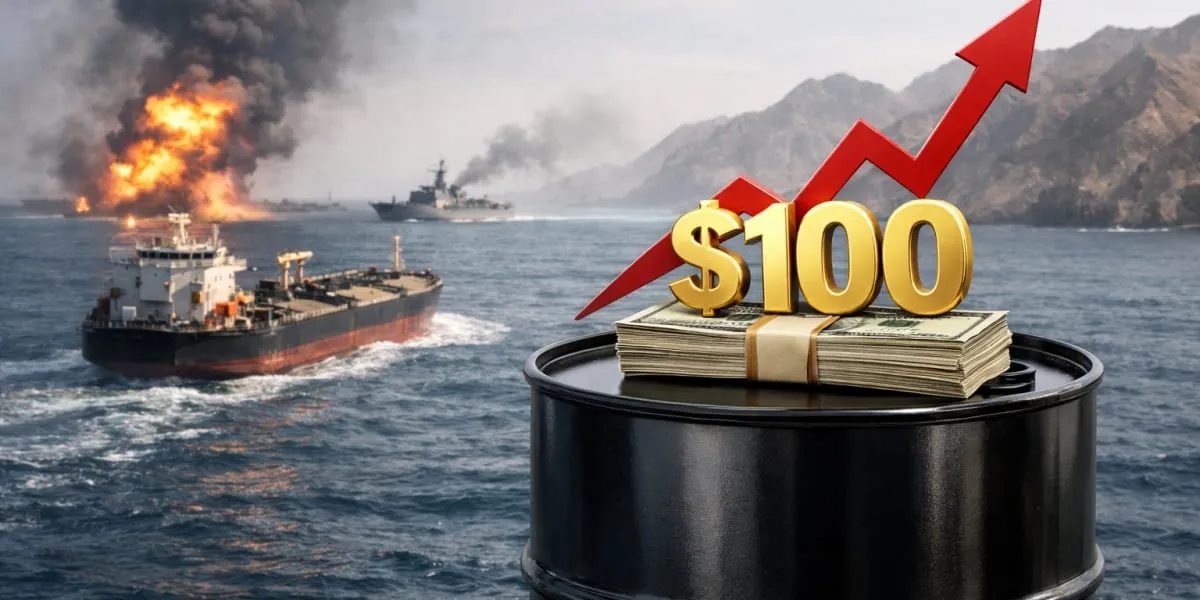
The United States and Israel launched military strikes on Iran on 28 February, prompting retaliatory attacks and severe disruption to maritime traffic in the Strait of Hormuz. The waterway between Iran and Oman carries roughly one fifth of global oil and gas shipments, making it a critical energy chokepoint. Iran has restricted passage for vessels linked to the United States, Europe and Israel while allowing limited movement for ships deemed neutral.

Early March incidents included a Thai-registered bulk carrier bound for Kandla being struck and abandoned, and explosive-laden boats setting two tankers ablaze near Iraqi waters, forcing some oil terminals to suspend operations. Brent crude has jumped by about 30–40 per cent from around $72 per barrel to above $100, after briefly touching $119, and Iran has warned prices could reach $200 per barrel if the conflict escalates. Markets have been roiled as participants reassess shipping routes and insurance costs.

Energy disruptions have spread to gas markets as European natural gas futures climbed toward €60 per megawatt-hour amid uncertainty over liquefied natural gas shipments from Qatar. About 13 million barrels per day, roughly 31 per cent of seaborne oil shipments, transit the strait along with a large share of global LNG, allowing brief disruption to ripple across markets. Market participants are monitoring shipping routes and supply chains for further volatility.

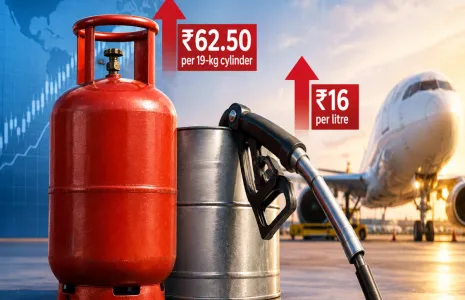
In India the crisis has tightened supplies of liquefied petroleum gas, which the country consumes at about 31.3 mn t annually with 62 per cent imported, much via the strait. The hospitality sector has reported cylinder shortages in several cities and industry estimates indicate 70–75 per cent of restaurants rely on LPG, with sustained disruption potentially costing the sector Rs 12–13 bn per day. The government said refineries have raised LPG production by around 25 per cent and household consumers have been prioritised, booking intervals were extended from 21 to 25 days and a committee of oil company executives will review allocations. Authorities are also exploring alternative suppliers and have expanded crude sourcing from 27 to about 40 countries, with two cargoes of crude oil and two LNG shipments rerouted to India.

The United States and Israel launched military strikes on Iran on 28 February, prompting retaliatory attacks and severe disruption to maritime traffic in the Strait of Hormuz. The waterway between Iran and Oman carries roughly one fifth of global oil and gas shipments, making it a critical energy chokepoint. Iran has restricted passage for vessels linked to the United States, Europe and Israel while allowing limited movement for ships deemed neutral. Early March incidents included a Thai-registered bulk carrier bound for Kandla being struck and abandoned, and explosive-laden boats setting two tankers ablaze near Iraqi waters, forcing some oil terminals to suspend operations. Brent crude has jumped by about 30–40 per cent from around $72 per barrel to above $100, after briefly touching $119, and Iran has warned prices could reach $200 per barrel if the conflict escalates. Markets have been roiled as participants reassess shipping routes and insurance costs. Energy disruptions have spread to gas markets as European natural gas futures climbed toward €60 per megawatt-hour amid uncertainty over liquefied natural gas shipments from Qatar. About 13 million barrels per day, roughly 31 per cent of seaborne oil shipments, transit the strait along with a large share of global LNG, allowing brief disruption to ripple across markets. Market participants are monitoring shipping routes and supply chains for further volatility. In India the crisis has tightened supplies of liquefied petroleum gas, which the country consumes at about 31.3 mn t annually with 62 per cent imported, much via the strait. The hospitality sector has reported cylinder shortages in several cities and industry estimates indicate 70–75 per cent of restaurants rely on LPG, with sustained disruption potentially costing the sector Rs 12–13 bn per day. The government said refineries have raised LPG production by around 25 per cent and household consumers have been prioritised, booking intervals were extended from 21 to 25 days and a committee of oil company executives will review allocations. Authorities are also exploring alternative suppliers and have expanded crude sourcing from 27 to about 40 countries, with two cargoes of crude oil and two LNG shipments rerouted to India.

Next Story
Infrastructure Urban

MIDC and Ramky Unit Sign Concession for Life Sciences Park

Maharashtra Industrial Development Corporation has signed a concession agreement with Maha Integrated Life Sciences City Limited (MILeS City), a wholly owned subsidiary of Ramky Infrastructure Limited (RIL), to develop a high-tech pharmaceutical park at Dighi Port Industrial Area in Raigad. The project will follow a public-private partnership under a DBFOT model and has an estimated cost of Rs 30 billion (Rs 30 bn). The concession will run for 95 years, including a five-year construction phase, with MILeS City responsible for development and management. The development will occupy approximatel..

Next Story
Real Estate

BuzzWorks Leases Hyderabad Office to MyComplianceOffice

Brigade Group’s managed workspace provider BuzzWorks has leased 550 seats at Mindspace Business Park in Hyderabad to Dublin based MyComplianceOffice, in what is the company’s largest office in India. With this signing, BuzzWorks' total leased office space in Hyderabad stands at zero point one one million (mn) square feet. The new premises will house core functions including product engineering, product management, customer success and global operations. Artificial intelligence enabled compliance technology initiatives will also be part of the local delivery model. BuzzWorks will provide wo..

Next Story
Infrastructure Transport

Jindal Stainless Flags Operational Strain From Middle East Crisis

Jindal Stainless warned that the Middle East war crisis has affected its operations because of dependence on industrial gases such as propane and LPG and on natural gas. The scrap-based production route used by the stainless steel maker does not generate blast furnace or coke oven gases internally, unlike the conventional steel industry. Several plant processes have been adversely impacted and production is being run at rationalised capacity. Disruptions in global shipping routes have resulted in vessel diversions, longer transit times and cargo delays, adding pressure to supply chains and to ..

Advertisement

Subscribe to Our Newsletter

Get daily newsletters around different themes from Construction world.

STAY CONNECTED

Advertisement

Advertisement

Advertisement