

ONGC and BP Tie Up Boosts Mumbai High Output
OIL & GAS

ONGC and BP Tie Up Boosts Mumbai High Output

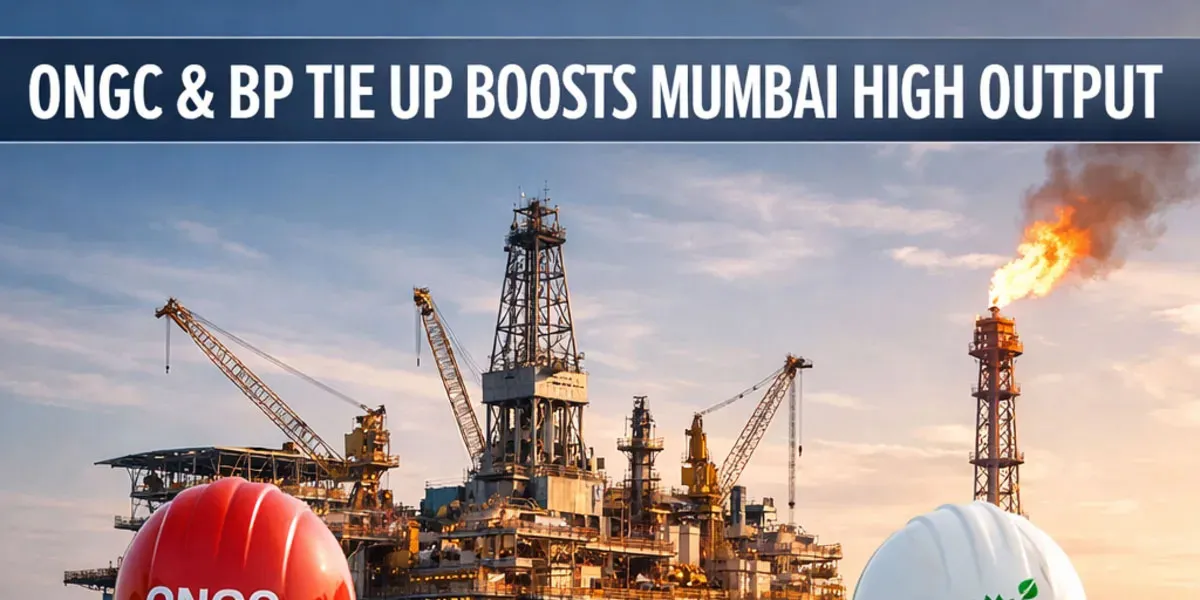
Oil and Natural Gas Corporation Ltd (ONGC) and BP plc (BP) have reported a rise in crude oil production from the Mumbai High field of between 3,500 and 4,000 barrels per day, taking total output to 126,000 bpd. The increase follows BP's engagement as Technical Services Provider for the asset in February 2025 while ONGC retained ownership and operational control. Gas production from Mumbai High has also improved by about 2.5 million standard cubic metres per day. Company officials attributed the lift to operational measures implemented after the tieup.

Under the collaboration, ONGC is targeting a 44 per cent rise in oil production and an 89 per cent jump in gas output from Mumbai High, which the company estimates could unlock up to $15 bn of incremental revenue over ten years. Peak production is expected after three to four years from the start of the project. Officials said that the previous decline in output had halted in mid 2025 and that the field has registered a steady uptick since. The firm has begun extending the technical services provider model to other western offshore blocks.

At the Krishna Godavari basin, oil production from ONGC's KG block has stabilised at around 27,000 bpd, below earlier peak estimates of 45,000 bpd. ONGC has engaged a subject matter expert to arrest declines and to boost output from the KG-98/2 block. Production from KG-98/2 began in January 2024 and fell from roughly 35,000 bpd in 2024 to about 26,500 bpd currently. The company has revised earlier peak targets for the block to 45,000 bpd for oil and 10 mscmd for gas, down from 2017 estimates.

Management said Mumbai High measures demonstrate that targeted technical interventions can stabilise ageing fields and lift near term production. The TSP model is treated as a replicable route to unlock value across mature offshore assets. Realising full potential will depend on sustained operational performance and the timeline envisaged for peak output. The company indicated that further tenders for technical services will be issued for other assets in the western offshore.

Oil and Natural Gas Corporation Ltd (ONGC) and BP plc (BP) have reported a rise in crude oil production from the Mumbai High field of between 3,500 and 4,000 barrels per day, taking total output to 126,000 bpd. The increase follows BP's engagement as Technical Services Provider for the asset in February 2025 while ONGC retained ownership and operational control. Gas production from Mumbai High has also improved by about 2.5 million standard cubic metres per day. Company officials attributed the lift to operational measures implemented after the tieup. Under the collaboration, ONGC is targeting a 44 per cent rise in oil production and an 89 per cent jump in gas output from Mumbai High, which the company estimates could unlock up to $15 bn of incremental revenue over ten years. Peak production is expected after three to four years from the start of the project. Officials said that the previous decline in output had halted in mid 2025 and that the field has registered a steady uptick since. The firm has begun extending the technical services provider model to other western offshore blocks. At the Krishna Godavari basin, oil production from ONGC's KG block has stabilised at around 27,000 bpd, below earlier peak estimates of 45,000 bpd. ONGC has engaged a subject matter expert to arrest declines and to boost output from the KG-98/2 block. Production from KG-98/2 began in January 2024 and fell from roughly 35,000 bpd in 2024 to about 26,500 bpd currently. The company has revised earlier peak targets for the block to 45,000 bpd for oil and 10 mscmd for gas, down from 2017 estimates. Management said Mumbai High measures demonstrate that targeted technical interventions can stabilise ageing fields and lift near term production. The TSP model is treated as a replicable route to unlock value across mature offshore assets. Realising full potential will depend on sustained operational performance and the timeline envisaged for peak output. The company indicated that further tenders for technical services will be issued for other assets in the western offshore.

Next Story
Infrastructure Urban

Public Capex Push In Budget To Boost Tyre Industry: ATMA

The Indian tyre industry is expected to benefit from the government’s renewed emphasis on infrastructure development outlined in the Union Budget 2026–27, according to the Automotive Tyre Manufacturers Association (ATMA).ATMA said the tyre sector is closely linked to the performance of the transport and infrastructure ecosystem, and the sharp rise in public capital expenditure to Rs 1.2 trillion is a significant positive for sustained long-term demand growth.The association noted that the enhanced capex allocation reflects the government’s continued focus on building future-ready infrast..

Next Story
Infrastructure Transport

Underground Rail Line Planned In Siliguri ‘Chicken’s Neck’

Indian Railways is planning to construct underground railway tracks along a critical 40 km stretch of the Siliguri Corridor, popularly known as the Chicken’s Neck, to strengthen connectivity between the North East and the rest of India while enhancing security preparedness. According to the Indian Railways, the underground section is strategically significant due to the corridor’s narrow geography and proximity to international borders. Chetan Kumar Srivastava, General Manager of the Northeast Frontier Railway, said the proposed underground alignment is extremely important from a security..

Next Story
Infrastructure Urban

Agriculture Infrastructure Fund Boosts Post-Harvest Assets

The Agriculture Infrastructure Fund (AIF), a Central Sector Scheme of the Government of India, continues to strengthen post-harvest management infrastructure by enabling access to medium- and long-term debt financing through interest-subvented loans. The scheme focuses on improving agri-logistics, reducing post-harvest losses, promoting modern storage, processing and value-addition facilities, and enhancing farm-gate infrastructure to support efficient agricultural supply chains. Under AIF, banks and financial institutions provide loans with an interest subvention of three per cent per annum,..

Advertisement

Subscribe to Our Newsletter

Get daily newsletters around different themes from Construction world.

STAY CONNECTED

Advertisement

Advertisement

Advertisement

Advertisement

Open In App