


+
ONGC Begins Deepwater Exploration Well Off Odisha Coast
OIL & GAS

ONGC Begins Deepwater Exploration Well Off Odisha Coast

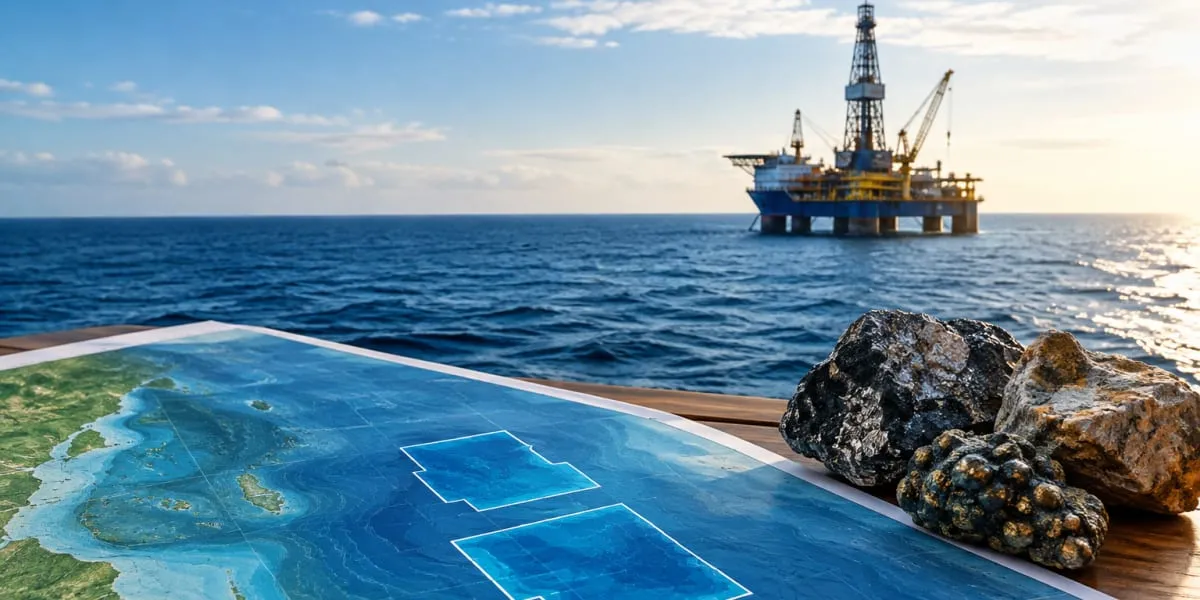
Oil and Natural Gas Corporation has begun drilling its first deepwater exploratory well in the Mahanadi offshore basin off the Odisha coast as part of a nationwide push to unlock offshore hydrocarbon resources and reduce reliance on imported crude and natural gas. The exploratory well, MN-DW18-1-H-D, lies about 23 nautical miles from ONGC's Konark discovery and was spudded virtually by Union Petroleum and Natural Gas Minister Hardeep Singh Puri from New Delhi. The operation marks the start of one of the company's most technically demanding deepwater campaigns and follows recent successes in the basin.\n\nThe campaign forms part of the Samudra Manthan initiative and follows the opening of nearly 1,000,000 square kilometres of previously restricted offshore areas under the Open Acreage Licensing Policy. India's eastern and western offshore basins extend to water depths of up to 3,000 metres and are estimated to contain more than 5.6 billion tonnes of oil equivalent (bn t), underscoring the scale of the deepwater opportunity. The company and government officials view deepwater activity as the next major frontier for domestic hydrocarbon production.\n\nOil and Natural Gas Corporation established its Deepwater Exploration Mission Centre, DeepX, in Mumbai on January five to provide integrated geoscientific interpretation, specialised technical expertise, data analytics and training under a One Company, One Data philosophy. DeepX is intended to improve success rates by enabling state of the art seismic interpretation and subsurface analysis for complex offshore prospects. The recent Utkal and Konark discoveries have enhanced prospectivity in the Mahanadi basin and the current campaign is expected to deepen geological understanding and inform future development planning.\n\nIndustry analysts note that deepwater exploration entails high technological complexity and significant investment because of extreme water depths, high pressure reservoirs and harsh operating conditions, but successful discoveries can raise long term hydrocarbon output. With drilling under way, Odisha's coastal basin assumes greater strategic importance in national energy planning and in efforts to diversify supplies and reduce exposure to global market volatility. ONGC has signalled that each evaluated prospect and discovery will contribute to enhancing domestic production and strengthening energy security.

Oil and Natural Gas Corporation has begun drilling its first deepwater exploratory well in the Mahanadi offshore basin off the Odisha coast as part of a nationwide push to unlock offshore hydrocarbon resources and reduce reliance on imported crude and natural gas. The exploratory well, MN-DW18-1-H-D, lies about 23 nautical miles from ONGC's Konark discovery and was spudded virtually by Union Petroleum and Natural Gas Minister Hardeep Singh Puri from New Delhi. The operation marks the start of one of the company's most technically demanding deepwater campaigns and follows recent successes in the basin.\n\nThe campaign forms part of the Samudra Manthan initiative and follows the opening of nearly 1,000,000 square kilometres of previously restricted offshore areas under the Open Acreage Licensing Policy. India's eastern and western offshore basins extend to water depths of up to 3,000 metres and are estimated to contain more than 5.6 billion tonnes of oil equivalent (bn t), underscoring the scale of the deepwater opportunity. The company and government officials view deepwater activity as the next major frontier for domestic hydrocarbon production.\n\nOil and Natural Gas Corporation established its Deepwater Exploration Mission Centre, DeepX, in Mumbai on January five to provide integrated geoscientific interpretation, specialised technical expertise, data analytics and training under a One Company, One Data philosophy. DeepX is intended to improve success rates by enabling state of the art seismic interpretation and subsurface analysis for complex offshore prospects. The recent Utkal and Konark discoveries have enhanced prospectivity in the Mahanadi basin and the current campaign is expected to deepen geological understanding and inform future development planning.\n\nIndustry analysts note that deepwater exploration entails high technological complexity and significant investment because of extreme water depths, high pressure reservoirs and harsh operating conditions, but successful discoveries can raise long term hydrocarbon output. With drilling under way, Odisha's coastal basin assumes greater strategic importance in national energy planning and in efforts to diversify supplies and reduce exposure to global market volatility. ONGC has signalled that each evaluated prospect and discovery will contribute to enhancing domestic production and strengthening energy security.

Related Stories

Gold Stories

Next Story
Real Estate

BMC OC Amnesty Scheme Requires Key Approvals from Mumbai Societies

The Brihanmumbai Municipal Corporation (BMC) has clarified that housing societies applying under its Occupation Certificate (OC) amnesty scheme must possess key approvals linked to the original construction. The requirements include a valid Intimation of Disapproval (IOD), an approved building plan and a Commencement Certificate (CC), along with a No Objection Certificate (NOC) from the developer or original construction applicant. The Standard Operating Procedure (SOP) makes clear that the absence of an OC alone will not qualify a building for relief. Societies must establish that their build..

Next Story
Real Estate

Gurugram Emerges as Luxury Senior Living Hub

Gurugram is emerging as a potential hub for luxury senior living, supported by available land, healthcare infrastructure, connectivity and a concentration of affluent professionals, high-net-worth individuals and non-resident Indians. These factors could give the city an advantage over land-constrained metros such as Mumbai. A report by the Association of Senior Living India (ASLI) and JLL estimates that India’s organised senior living market could represent a $10.1 bn opportunity by 2030. The sector had about 25,050 organised units as of June 2026, while penetration stood at only 1.5 per ce..

Next Story
Real Estate

Corrosion Costs India’s Infrastructure Rs. 142 bn Annually

Corrosion costs India an estimated Rs. 1.42 tn annually, equivalent to 4.3 per cent of gross domestic product, according to a report by the Confederation of Indian Industry and the National Research Institute. Infrastructure accounts for Rs. 142 bn of the annual burden, making it the sector with the largest absolute cost among those examined. The report, presented at the CII Annual Infrastructure Summit 2026, said the infrastructure-sector cost equals about 2.9 per cent of the sector’s gross domestic product. It estimated that effective measures could generate maximum savings of Rs. 495.8 bn..

Advertisement

Subscribe to Our Newsletter

Get daily newsletters around different themes from Construction world.

STAY CONNECTED

Advertisement

SPECIAL OFFER
QR Code