




ONGC Signs MoU With NSTFDC to Support EMRS Infrastructure
OIL & GAS

ONGC Signs MoU With NSTFDC to Support EMRS Infrastructure

Oil and Natural Gas Corporation (ONGC) has signed a Memorandum of Understanding (MoU) with the National Scheduled Tribes Finance and Development Corporation (NSTFDC) to support infrastructure development and student empowerment at Eklavya Model Residential Schools (EMRS) through corporate social responsibility (CSR) funding.

ONGC, a Maharatna public sector enterprise under the Ministry of Petroleum and Natural Gas, entered into the agreement with NSTFDC, an autonomous body under the Ministry of Tribal Affairs, as part of efforts to enhance educational and career opportunities for tribal youth. The collaboration focuses on career mentorship, digital education and strengthening of school infrastructure at EMRS institutions across the country.

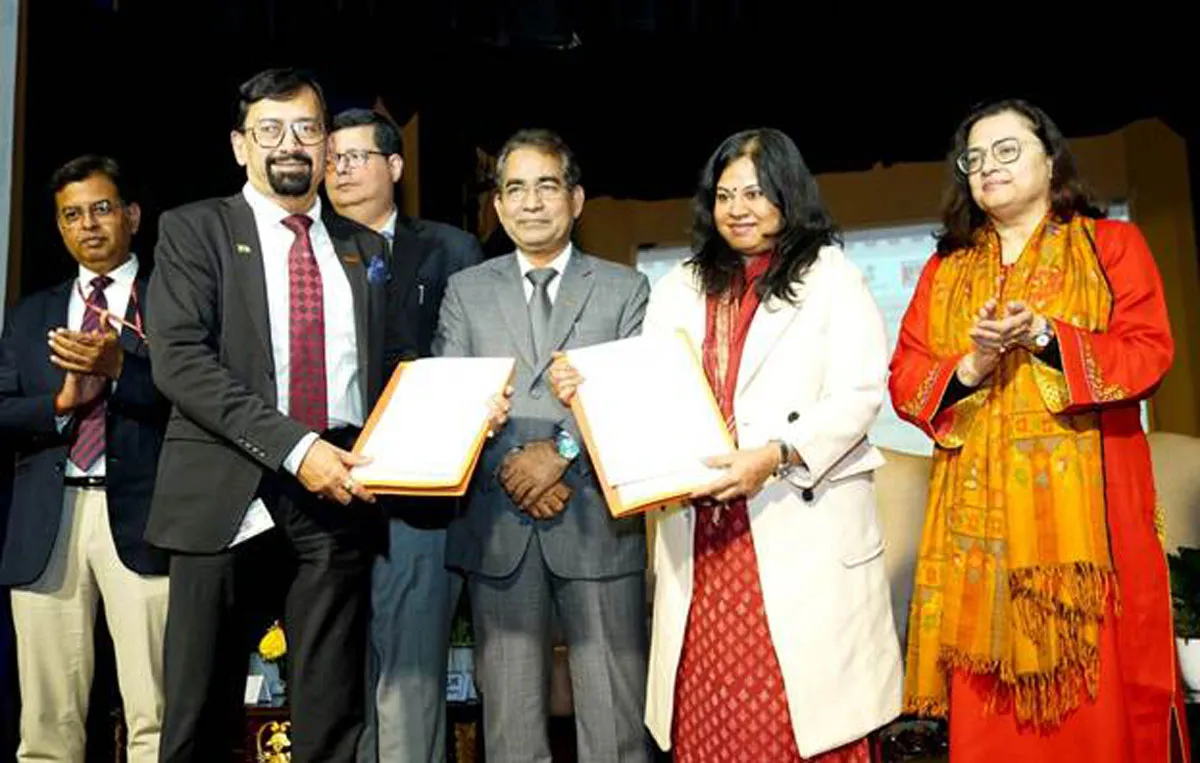
The MoU was signed on January 5, 2026, at Dr Ambedkar International Centre in New Delhi. The agreement was exchanged between Bismita Das, Deputy General Manager, NSTFDC, and Dr Debasish Mukharjee, CSR Head, ONGC, in the presence of senior officials from the Ministry of Tribal Affairs and ONGC, including Ranjana Chopra, Secretary, Ministry of Tribal Affairs, and other dignitaries.

The Ministry of Tribal Affairs is implementing the central sector scheme of Eklavya Model Residential Schools to provide quality education to tribal students through a holistic approach that integrates academics, technology and overall development. As of now, 499 EMRS are functional across the country.

Under the CSR-funded project, ONGC has sanctioned Rs 280 million to strengthen digital learning infrastructure, improve health and hygiene facilities for girl students, and support capacity building of teachers. The initiative also includes career counselling and entrepreneurship training for students. These interventions will be implemented across 144 EMRS located in 11 states and Union Territories, including Andhra Pradesh, Gujarat, Himachal Pradesh, Jammu and Kashmir, Kerala, Rajasthan, Tamil Nadu, Uttar Pradesh and Uttarakhand.

The initiative is expected to benefit over 35,000 tribal students by improving access to quality education and equal opportunities. The collaboration forms part of a broader effort between the Ministry of Tribal Affairs and the corporate sector to support the socio-economic development of tribal communities in line with the vision of Viksit Bharat.

Oil and Natural Gas Corporation (ONGC) has signed a Memorandum of Understanding (MoU) with the National Scheduled Tribes Finance and Development Corporation (NSTFDC) to support infrastructure development and student empowerment at Eklavya Model Residential Schools (EMRS) through corporate social responsibility (CSR) funding.ONGC, a Maharatna public sector enterprise under the Ministry of Petroleum and Natural Gas, entered into the agreement with NSTFDC, an autonomous body under the Ministry of Tribal Affairs, as part of efforts to enhance educational and career opportunities for tribal youth. The collaboration focuses on career mentorship, digital education and strengthening of school infrastructure at EMRS institutions across the country.The MoU was signed on January 5, 2026, at Dr Ambedkar International Centre in New Delhi. The agreement was exchanged between Bismita Das, Deputy General Manager, NSTFDC, and Dr Debasish Mukharjee, CSR Head, ONGC, in the presence of senior officials from the Ministry of Tribal Affairs and ONGC, including Ranjana Chopra, Secretary, Ministry of Tribal Affairs, and other dignitaries.The Ministry of Tribal Affairs is implementing the central sector scheme of Eklavya Model Residential Schools to provide quality education to tribal students through a holistic approach that integrates academics, technology and overall development. As of now, 499 EMRS are functional across the country.Under the CSR-funded project, ONGC has sanctioned Rs 280 million to strengthen digital learning infrastructure, improve health and hygiene facilities for girl students, and support capacity building of teachers. The initiative also includes career counselling and entrepreneurship training for students. These interventions will be implemented across 144 EMRS located in 11 states and Union Territories, including Andhra Pradesh, Gujarat, Himachal Pradesh, Jammu and Kashmir, Kerala, Rajasthan, Tamil Nadu, Uttar Pradesh and Uttarakhand.The initiative is expected to benefit over 35,000 tribal students by improving access to quality education and equal opportunities. The collaboration forms part of a broader effort between the Ministry of Tribal Affairs and the corporate sector to support the socio-economic development of tribal communities in line with the vision of Viksit Bharat.

Related Stories

Gold Stories

Next Story
Infrastructure Urban

KONE Opens India's First Digital Experience Centre in Pune

KONE, a global elevator and escalator manufacturer, has inaugurated its first Digital Experience Centre (DEC) in India, located in Pune. The facility aims to showcase how artificial intelligence (AI), connectivity and data-driven technologies can enhance customer experiences and improve building operations.The centre was inaugurated by Jussi Herlin, Executive Vice Chair, KONE Corporation; Philippe Delorme, President and CEO, KONE; and Nandan Nilekani, Co-founder and Chairman of the Board, Infosys.Designed as an interactive customer environment, the facility demonstrates digital solutions cover..

Next Story
Infrastructure Urban

CII GreenCo Launches Circularity Guidelines for Indian Industry

The Confederation of Indian Industry (CII) GreenCo Council has launched the CII GreenCo Circularity Guidelines – Pilot Version at the 17th CII GreenCo Waste & Resource Management Summit 2026 in Chennai. The initiative aims to strengthen resource efficiency, waste reduction and circular economy practices across Indian manufacturing and process industries.The guidelines introduce a structured framework with circularity indices covering raw materials, consumables, packaging and other resource inputs. These indicators will help industries assess existing practices, identify opportunities to ..

Next Story
Infrastructure Energy

Global Electronics Association Launches IPC-1783-CO2E Standard

The Global Electronics Association has introduced IPC-1783-CO2E, a new international standard aimed at improving consistency, transparency and comparability in product carbon footprint reporting across the electronics manufacturing industry.The standard, titled International Standard for Data Collection and Reporting of CO2 Equivalent (CO2e) Emissions for the Electronics Manufacturing Supply Chain, provides industry-specific guidance for collecting, estimating and reporting carbon emissions data.With increasing regulatory requirements and customer expectations, electronics manufacturers face c..

Advertisement

Subscribe to Our Newsletter

Get daily newsletters around different themes from Construction world.

STAY CONNECTED

Advertisement

SPECIAL OFFER
QR Code










