+
ORSL Secures EPC Contract for CBG Project in Madhya Pradesh
OIL & GAS

ORSL Secures EPC Contract for CBG Project in Madhya Pradesh

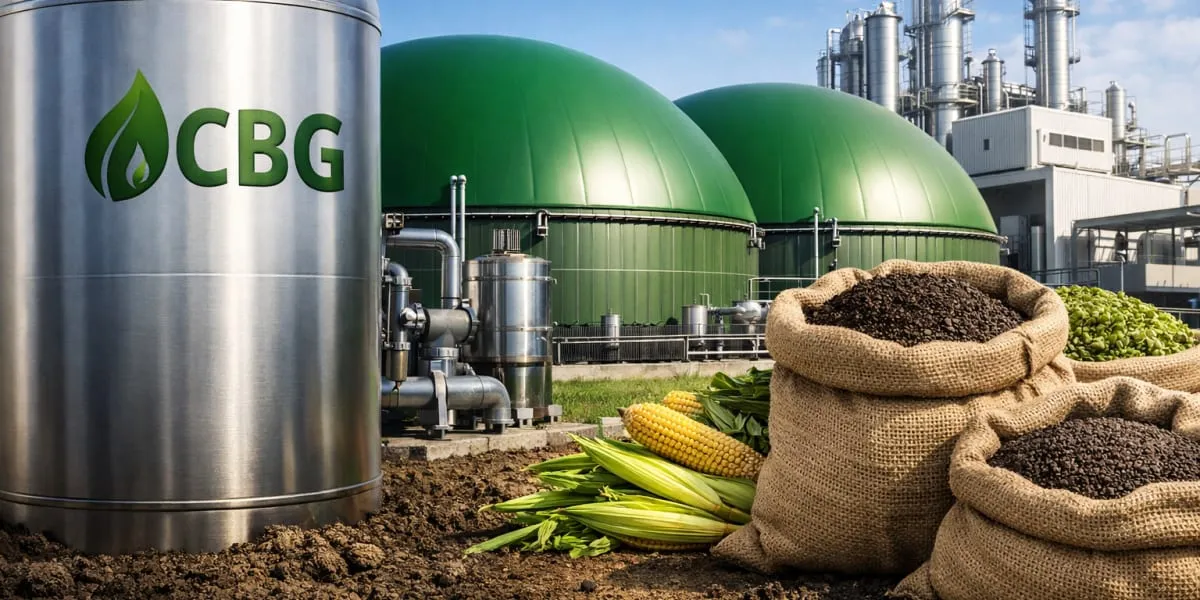
The bioenergy project development and EPC vertical of Organic Recycling Systems Limited (ORSL) has secured a large-scale order from Shreyam Manek Agro Products Pvt. Ltd to construct an integrated compressed bio-gas (CBG) and biofertiliser plant in Damoh, Madhya Pradesh. The facility is designed to produce 10 t per day of CBG using agro feedstock and forms part of a larger integrated modern gaushala. ORSL will undertake equity participation and end-to-end EPC execution, encompassing detailed engineering, technology integration, supply of critical equipment, construction, installation and commissioning.

The order is one element of a wider plan to deploy ten such integrated projects across Madhya Pradesh with a total outlay of Rs 5 to 6 bn over three years. The deployment is expected to strengthen regional resource efficiency, promote sustainable agricultural and waste management practices and contribute to India's broader energy transition through innovative utilisation of organic feedstocks. The company indicated that the contract reflects growing industry confidence in integrated circular economy solutions and reinforces its commitment to engineering excellence.

Organic Recycling Systems Limited was established in 2008 by technocrats and specialises in sustainable waste management and valorisation technologies. The company operates project development and technology licensing, product and consulting verticals and an operations and maintenance vertical that provides troubleshooting and complete operation and maintenance services for CBG and waste processing facilities. Research and innovation are supported through collaborations with IIT Bombay, IIT Kharagpur, IIT BHU, IIT Roorkee and the University of Birmingham, which continue to drive technological advancement and intellectual property development.

The company expects the Damoh project to deliver measurable environmental and economic value and to exemplify long-term operational sustainability in agri-energy infrastructure. Investor relations and further information are available on the company website and through its appointed advisor. Execution will proceed under the agreed scope with focus on timely delivery and adherence to regulatory and technical standards.

The bioenergy project development and EPC vertical of Organic Recycling Systems Limited (ORSL) has secured a large-scale order from Shreyam Manek Agro Products Pvt. Ltd to construct an integrated compressed bio-gas (CBG) and biofertiliser plant in Damoh, Madhya Pradesh. The facility is designed to produce 10 t per day of CBG using agro feedstock and forms part of a larger integrated modern gaushala. ORSL will undertake equity participation and end-to-end EPC execution, encompassing detailed engineering, technology integration, supply of critical equipment, construction, installation and commissioning. The order is one element of a wider plan to deploy ten such integrated projects across Madhya Pradesh with a total outlay of Rs 5 to 6 bn over three years. The deployment is expected to strengthen regional resource efficiency, promote sustainable agricultural and waste management practices and contribute to India's broader energy transition through innovative utilisation of organic feedstocks. The company indicated that the contract reflects growing industry confidence in integrated circular economy solutions and reinforces its commitment to engineering excellence. Organic Recycling Systems Limited was established in 2008 by technocrats and specialises in sustainable waste management and valorisation technologies. The company operates project development and technology licensing, product and consulting verticals and an operations and maintenance vertical that provides troubleshooting and complete operation and maintenance services for CBG and waste processing facilities. Research and innovation are supported through collaborations with IIT Bombay, IIT Kharagpur, IIT BHU, IIT Roorkee and the University of Birmingham, which continue to drive technological advancement and intellectual property development. The company expects the Damoh project to deliver measurable environmental and economic value and to exemplify long-term operational sustainability in agri-energy infrastructure. Investor relations and further information are available on the company website and through its appointed advisor. Execution will proceed under the agreed scope with focus on timely delivery and adherence to regulatory and technical standards.

Next Story
Infrastructure Urban

Implementation Status of Jal Jeevan Mission

Since August 2019 the Government has implemented Jal Jeevan Mission to provide assured potable water through household tap connections in rural India. At the start of the mission only 32.3 million (mn) rural households, representing 16.7 per cent, were reported to have tap water connections. States and union territories have reported that 125.8 mn additional rural households have since been provided with tap connections. As a result, of about 193.6 mn rural households roughly 158.2 mn, or 81.71 per cent, are reported to have tap water supply at home.\n\nThe State, district and village level st..

Next Story
Infrastructure Urban

Jal Jeevan Mission Reaches Eighty One Per Cent Rural Coverage

The Government reported substantial progress under the Jal Jeevan Mission, launched in August 2019 to provide tap water to every rural household. At launch only 32.3 million (mn) rural households had tap connections and states and Union territories reported provision of 125.8 mn additional households by March 2026. Consequently, out of about 193.6 mn rural households around 158.2 mn, or 81.71 per cent, are reported to have tap water at home. The Finance Minister announced extension of the mission until 2028 in the 2025-26 budget speech. The Swachh Bharat Mission Grameen, launched in October 20..

Next Story
Infrastructure Urban

Empowering Local Governance for Sustainable Rural Water Supply

The Ministry of Jal Shakti has aligned the Jal Jeevan Mission (JJM) with the 73rd Amendment to strengthen village level planning and community ownership of water supply. Gram Panchayats, village water and sanitation committees and Pani Samitis are to plan, implement, manage and maintain piped water systems, with gram sabha processes formalising handover and oversight. Implementation support agencies including non government organisations, community based organisations and self help groups have been empanelled to train local committees and promote women participation. Under JJM, the department ..

Advertisement

Subscribe to Our Newsletter

Get daily newsletters around different themes from Construction world.

STAY CONNECTED

Advertisement

Advertisement

Advertisement