
Renewables Overtake Coal as Largest Source of Electricity
OIL & GAS

Renewables Overtake Coal as Largest Source of Electricity

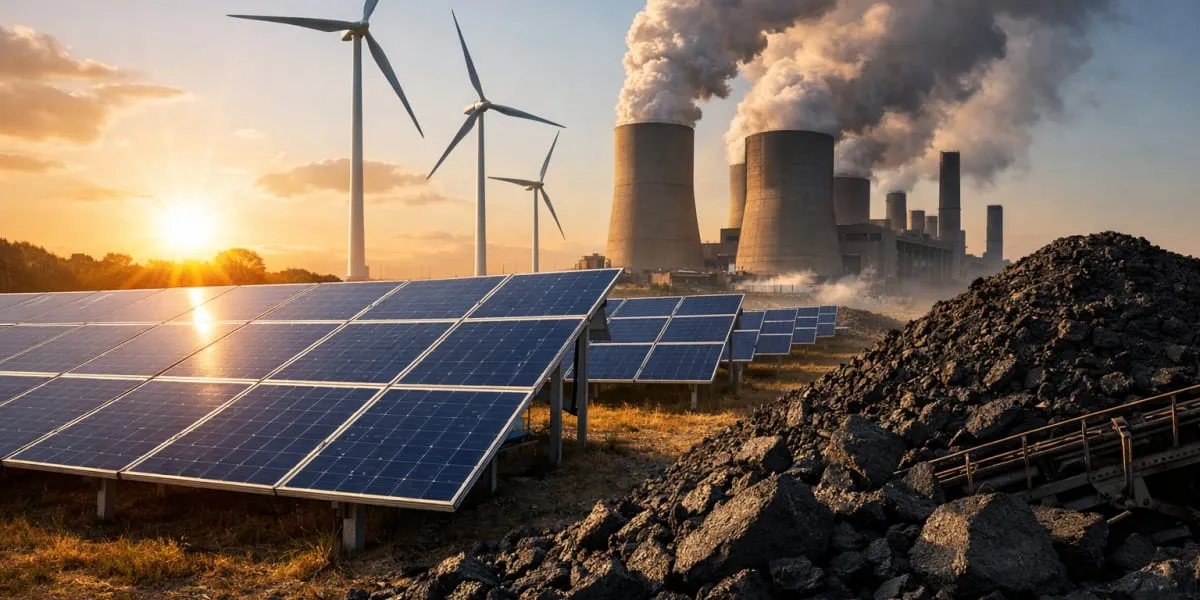
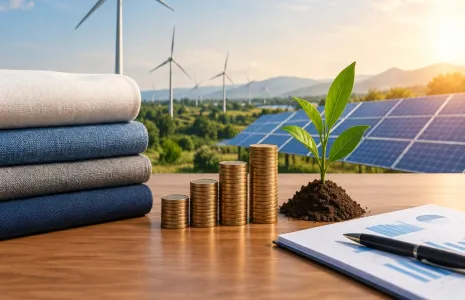
The International Energy Agency (IEA) has reported that renewables will surpass coal as the world's largest source of electricity generation in 2026, driven chiefly by rapid expansion in solar PV and wind output. Global solar and wind generation increased by over 25 per cent in the first half of 2026, the agency has indicated, changing the supply mix in several major markets. The shift reflects a combination of falling technology costs and accelerated commissioning of projects worldwide.\n\nIn India, combined solar PV and wind output rose by over 25 per cent in H1 2026 and reached a 16.5 per cent share of the supply mix, up from 14 per cent in H1 2025, the IEA noted. Gas-fired generation in the country declined by about 15 per cent compared with H1 2025 and remained more than 40 per cent below H1 2024 levels, reflecting a displacement of thermal output. These changes contributed to a marked reshaping of the domestic generation mix in the period under review.\n\nThe IEA's mid-year update forecasts global electricity demand growth of 3.6 per cent in 2026 and of 3.8 per cent in 2027, up from three per cent growth in 2025. Global electricity consumption is projected to reach 30,700 terawatt-hours in 2027, compared with 28,600 terawatt-hours in 2025, the report has stated. Analysts will view the higher demand projections as reinforcing the need for continued investment in flexible capacity and grid infrastructure to integrate variable generation.\n\nThe update underlines how rapidly the energy transition is progressing and indicates shifting investment priorities for utilities and policymakers. India is identified as one of the key drivers of the renewable surge, with implications for domestic manufacturing, transmission planning and market operations. Observers will monitor subsequent data and policy announcements to assess whether the trends become entrenched over the remainder of the year.

The International Energy Agency (IEA) has reported that renewables will surpass coal as the world's largest source of electricity generation in 2026, driven chiefly by rapid expansion in solar PV and wind output. Global solar and wind generation increased by over 25 per cent in the first half of 2026, the agency has indicated, changing the supply mix in several major markets. The shift reflects a combination of falling technology costs and accelerated commissioning of projects worldwide.\n\nIn India, combined solar PV and wind output rose by over 25 per cent in H1 2026 and reached a 16.5 per cent share of the supply mix, up from 14 per cent in H1 2025, the IEA noted. Gas-fired generation in the country declined by about 15 per cent compared with H1 2025 and remained more than 40 per cent below H1 2024 levels, reflecting a displacement of thermal output. These changes contributed to a marked reshaping of the domestic generation mix in the period under review.\n\nThe IEA's mid-year update forecasts global electricity demand growth of 3.6 per cent in 2026 and of 3.8 per cent in 2027, up from three per cent growth in 2025. Global electricity consumption is projected to reach 30,700 terawatt-hours in 2027, compared with 28,600 terawatt-hours in 2025, the report has stated. Analysts will view the higher demand projections as reinforcing the need for continued investment in flexible capacity and grid infrastructure to integrate variable generation.\n\nThe update underlines how rapidly the energy transition is progressing and indicates shifting investment priorities for utilities and policymakers. India is identified as one of the key drivers of the renewable surge, with implications for domestic manufacturing, transmission planning and market operations. Observers will monitor subsequent data and policy announcements to assess whether the trends become entrenched over the remainder of the year.

Next Story
Technology

AI-Enabled Workflows Lift Profitability and Productivity

Organisations modernising frontline workflows with artificial intelligence, automation and real-time data are reporting stronger financial performance, higher productivity and improved employee engagement, according to a global study by Zebra Technologies and Oxford Economics.The research covered 1,000 senior leaders across retail, manufacturing, transportation and logistics in the US, Mexico, the UK, Germany, India, Japan, Australia and New Zealand.In transportation and logistics, 54 per cent of companies that improved picking and packing operations reported faster operational performance, wh..

Next Story
Real Estate

India Leads Global AI Readiness but Implementation Lags

Indian companies lead global averages across all eight artificial intelligence readiness indicators tracked by JLL, but only 19 per cent have started making changes to their workplaces, according to the JLL 2026 Future of Work Survey.The study found that 77 per cent of Indian business leaders expect AI to change their office requirements, creating a 58-percentage-point gap between awareness and implementation. The survey covered more than 2,200 CEOs, CFOs and real estate leaders across 21 countries during the first quarter of 2026.Despite concerns over automation, 58 per cent of Indian leaders..

Next Story
Equipment

Three WOLFF Cranes Build Riyadh Cable-Stayed Bridges

Three WOLFF 180 B luffing jib cranes are supporting the construction of two cable-stayed bridges alongside the existing Wadi Laban Bridge in Riyadh, Saudi Arabia. The project is being developed for the Royal Commission for Riyadh City and executed by the ICRC joint venture comprising IC Ictas and Al Rashid Trading & Contracting Company.The cranes are handling lifting operations including formwork, reinforcement, concrete placement, work platforms, surveying equipment and other construction materials. Each crane is fitted with a 40 m jib, reaches a hook height of 157 m and offers a maximum ..

Advertisement

Subscribe to Our Newsletter

Get daily newsletters around different themes from Construction world.

STAY CONNECTED

Advertisement

Advertisement

Advertisement