
Karnataka to Recover Job Incentives from MSMEs for Early Termination
ECONOMY & POLICY

Karnataka to Recover Job Incentives from MSMEs for Early Termination

Karnataka has introduced penalties for micro, small and medium enterprises (MSMEs) that terminate employees within three months of receiving job-creation incentives under the Udyoga Nidhi scheme, according to a government order. The measure is intended to ensure that enterprises maintain the employment created under the programme.

Eligible MSMEs will receive a monthly incentive of Rs. 2,500 for each qualifying job for two years. The scheme applies to employment created in 11 identified backward districts, with the government estimating total expenditure at around Rs. 3 bn and targeting the creation of 100,000 jobs.

Under the recovery provision, the government can reclaim the incentive paid to an enterprise if it terminates an employee within three months of receiving the payment. The recovered amount will include interest. The provision will also apply if an MSME is found to have falsely reported job creation, with additional action possible under applicable rules.

The districts covered are Yadgir, Bidar, Raichur, Kalaburagi, Koppal, Vijayanagar, Belagavi, Gadag, Haveri, Vijayapura and Bagalkot. They were identified based on recommendations from the Karnataka Regional Imbalances Redressal Committee, headed by economist M Govinda Rao.

A district-level implementation committee, headed by the deputy commissioner, will physically verify at least 10 per cent of eligible MSMEs before incentives are released. Another 10 per cent of beneficiaries will be verified before the third instalment. Recruited workers must be residents of one of the 11 districts and provide a residence certificate, Aadhaar or Electoral Photo Identity Card. They must be aged 18 to 45 years and maintain full monthly attendance. MSMEs cannot claim another incentive for the same employee, including benefits under the National Apprenticeship Promotion Scheme. The government will establish an Udyoga Nidhi portal for registrations and claims, while a state-level committee headed by the Principal Secretary of the Commerce and Industries Department will oversee implementation.

Karnataka has introduced penalties for micro, small and medium enterprises (MSMEs) that terminate employees within three months of receiving job-creation incentives under the Udyoga Nidhi scheme, according to a government order. The measure is intended to ensure that enterprises maintain the employment created under the programme. Eligible MSMEs will receive a monthly incentive of Rs. 2,500 for each qualifying job for two years. The scheme applies to employment created in 11 identified backward districts, with the government estimating total expenditure at around Rs. 3 bn and targeting the creation of 100,000 jobs. Under the recovery provision, the government can reclaim the incentive paid to an enterprise if it terminates an employee within three months of receiving the payment. The recovered amount will include interest. The provision will also apply if an MSME is found to have falsely reported job creation, with additional action possible under applicable rules. The districts covered are Yadgir, Bidar, Raichur, Kalaburagi, Koppal, Vijayanagar, Belagavi, Gadag, Haveri, Vijayapura and Bagalkot. They were identified based on recommendations from the Karnataka Regional Imbalances Redressal Committee, headed by economist M Govinda Rao. A district-level implementation committee, headed by the deputy commissioner, will physically verify at least 10 per cent of eligible MSMEs before incentives are released. Another 10 per cent of beneficiaries will be verified before the third instalment. Recruited workers must be residents of one of the 11 districts and provide a residence certificate, Aadhaar or Electoral Photo Identity Card. They must be aged 18 to 45 years and maintain full monthly attendance. MSMEs cannot claim another incentive for the same employee, including benefits under the National Apprenticeship Promotion Scheme. The government will establish an Udyoga Nidhi portal for registrations and claims, while a state-level committee headed by the Principal Secretary of the Commerce and Industries Department will oversee implementation.

Related Stories

Gold Stories

Next Story
Infrastructure Energy

Vedanta Secures Two Offshore Blocks in KG Basin Under DSF IV

Vedanta Oil and Gas has secured two offshore blocks in the Krishna Godavari (KG) Basin under the Government of India's Discovered Small Field (DSF) IV bidding round, strengthening its exploration and production portfolio along India's east coast.The newly awarded assets include the shallow water block KG/OSDSF/G1/2025 and the deepwater block KG/DWDSF/GD10/2025. The acquisition forms part of Vedanta's strategy to expand its offshore operations and explore India's untapped hydrocarbon resources through advanced technologies and efficient project execution.The blocks were awarded at a contract si..

Next Story
Resources

Hindustan Zinc's Sakhi Enterprise Income Grows 43%

Hindustan Zinc's Sakhi Microenterprise initiative has recorded a 43 per cent year-on-year increase in collective income, rising from Rs 2.3 million in FY26 to Rs 3.28 million, according to the company. The initiative, operated through Sakhi Utpadan Samiti, currently engages 426 women in income-generating activities across multiple production units.The programme aims to promote financial independence by helping rural women develop entrepreneurial skills and establish sustainable livelihoods. One of its beneficiaries, Manju Devi, who previously depended on seasonal agricultural work, now operate..
Next Story
Technology

KP Group Launches Waterless Solar Cleaning Robot at REI Expo

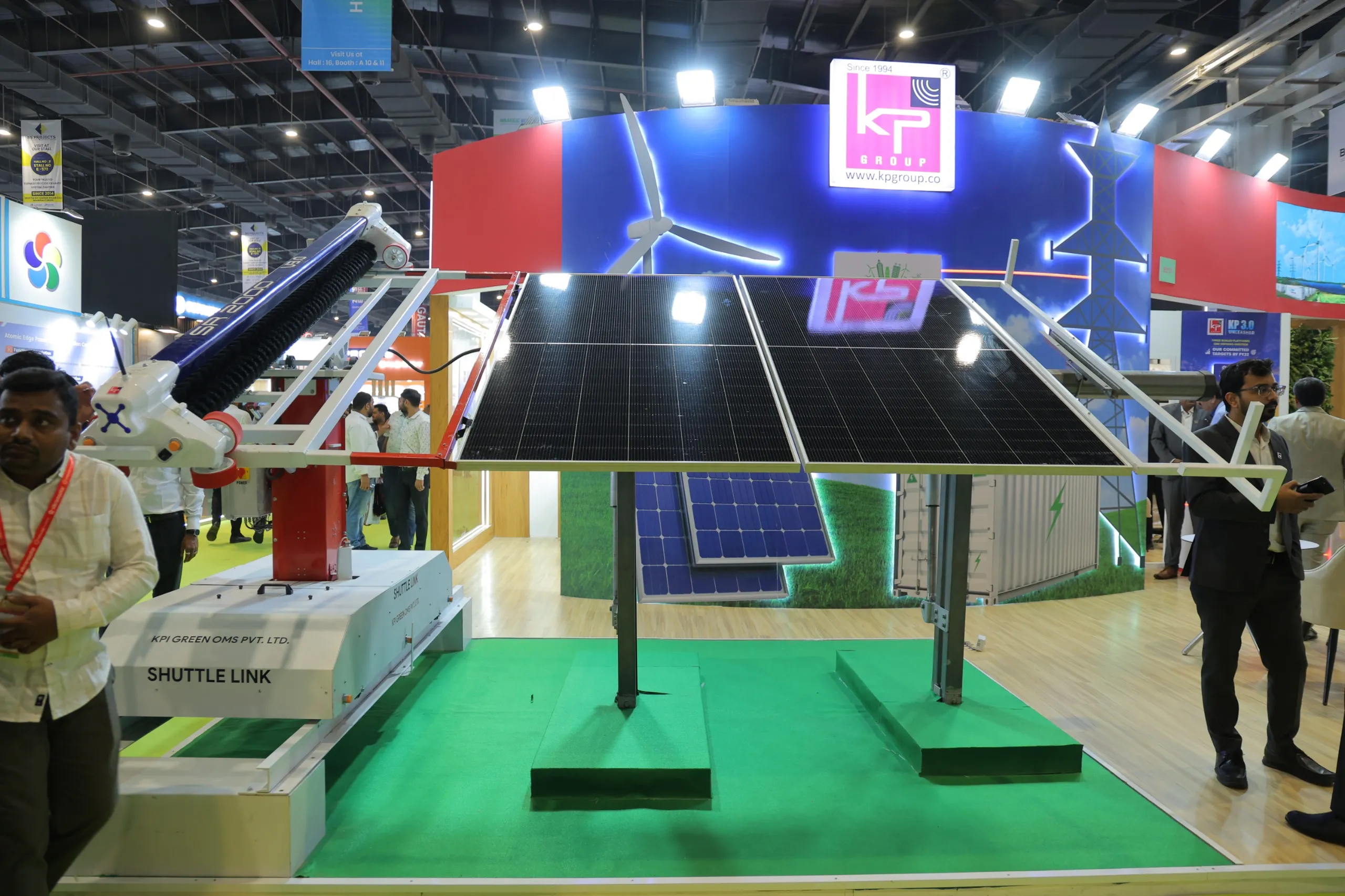
KP Group's KPI Green OMS has launched the SR 2000 V3.0, a waterless robotic solar panel cleaning system designed for single-axis tracker and fixed-tilt solar power plants, at the Renewable Energy India (REI) Expo 2026 in Greater Noida. The robot aims to improve solar plant efficiency while reducing water consumption and maintenance requirements.Designed to address dust accumulation on solar modules, particularly in dry and remote locations, the SR 2000 V3.0 uses a UV-resistant polybutylene terephthalate (PBT) brush operating at 130 rpm. According to the company, the system achieves a cleaning ..

Advertisement

Subscribe to Our Newsletter

Get daily newsletters around different themes from Construction world.

STAY CONNECTED

Advertisement

SPECIAL OFFER
QR Code