




+
CIL to set up 3 GW solar power projects
POWER & RENEWABLE ENERGY

CIL to set up 3 GW solar power projects

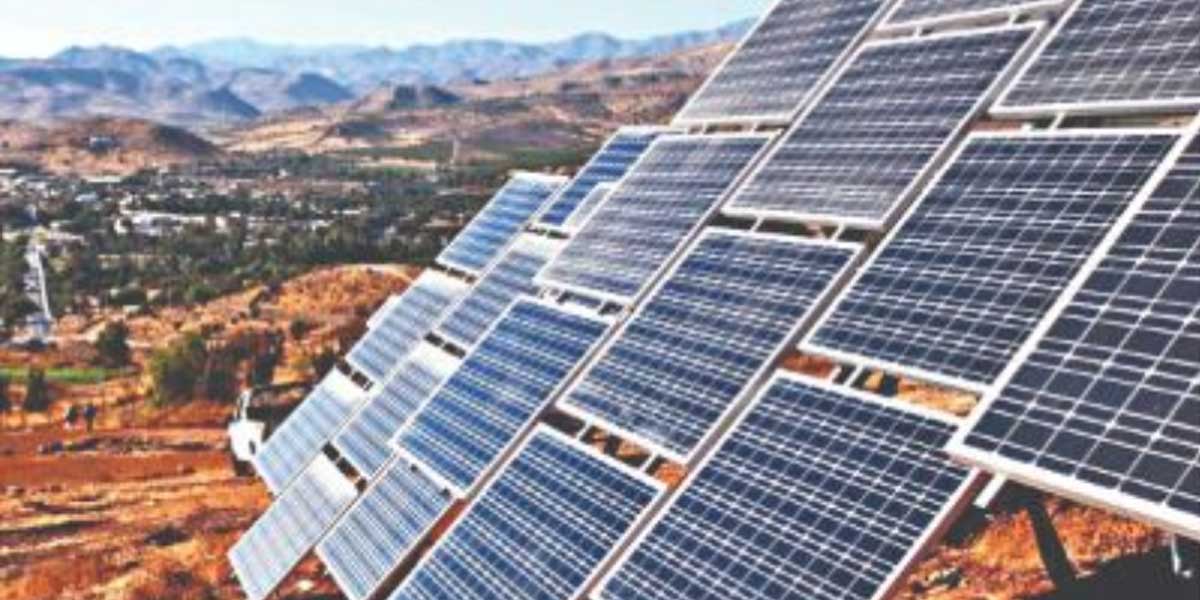
State-owned Coal India plans to set up 14 ground-mounted and rooftop solar power projects of 3,000 MW capacities entailing an investment of Rs 5,650 crore by 2023-24.

Mandated by the coal ministry, Coal India (CIL) must become a net-zero carbon company. The PSU said in a filing to BSE that the solar power initiative is a part of CIL's diversification plans. It said that the investment would likely be around Rs 5,650 crore.

While the company plans to invest Rs 3,650 crore till 2023-24 through CIL’s capex, the rest that the company intends to pursue this initiative would be through joint venture models.

CIL is in discussions with NTPC Ltd for the purchase of 140 MW solar power besides its establishment of solar projects, under the Centre's CPSE scheme. This cumulatively adds up to a little over 3,000 MW by FY2024.

Between them, CIL’s subsidiaries have already identified 1,156 acres of land where they will set up 220 MW solar projects by the end of FY2022. NLC India Ltd and CIL have floated a joint venture entity named Coal Lignite Urja Vikas Private Ltd, synergising their efforts to develop 1,000 MW solar power projects.

CIL has also tied up an MoU with Solar Energy Corporation of India and a JV with NTPC for solar projects of 1,000 MW each.

Accounting for around 4.4 per cent of the revenue expenditure for the year, the solar power initiative has additionally helped CIL reduce a whopping Rs 3,400 crore in annual power consumption expense at the end of FY2020. The PSU said that any savings under the power bill would also bolster the bottom line of the company to that extent.

CIL would gradually peak up to 1,340 MW in 2023-24 after beginning with a modest 10 MW solar capacity during the ongoing fiscal year.

The solar power capacity addition is targeted at 1,293 MW for FY2023, with 220 MW capacity to come up in 2021-22.

CIL is eyeing to set up solar projects pan-India subject for 2022-23 and 2023-24 powering evacuation facility by central transmission utility. Having generated 4.6 million units in 2019-20 and 4.25 million units in 2018-19, solar power generation has already been commissioned by CIL and its subsidiaries. The company estimates that this amounts to a reduction in carbon dioxide emissions of over 3,000 tonne each year. By a little over 700 tonnes, one million units of solar power generation will bring down Co2 emissions.

State-owned Coal India plans to set up 14 ground-mounted and rooftop solar power projects of 3,000 MW capacities entailing an investment of Rs 5,650 crore by 2023-24.Mandated by the coal ministry, Coal India (CIL) must become a net-zero carbon company. The PSU said in a filing to BSE that the solar power initiative is a part of CIL's diversification plans. It said that the investment would likely be around Rs 5,650 crore. While the company plans to invest Rs 3,650 crore till 2023-24 through CIL’s capex, the rest that the company intends to pursue this initiative would be through joint venture models. CIL is in discussions with NTPC Ltd for the purchase of 140 MW solar power besides its establishment of solar projects, under the Centre's CPSE scheme. This cumulatively adds up to a little over 3,000 MW by FY2024. Between them, CIL’s subsidiaries have already identified 1,156 acres of land where they will set up 220 MW solar projects by the end of FY2022. NLC India Ltd and CIL have floated a joint venture entity named Coal Lignite Urja Vikas Private Ltd, synergising their efforts to develop 1,000 MW solar power projects. CIL has also tied up an MoU with Solar Energy Corporation of India and a JV with NTPC for solar projects of 1,000 MW each. Accounting for around 4.4 per cent of the revenue expenditure for the year, the solar power initiative has additionally helped CIL reduce a whopping Rs 3,400 crore in annual power consumption expense at the end of FY2020. The PSU said that any savings under the power bill would also bolster the bottom line of the company to that extent. CIL would gradually peak up to 1,340 MW in 2023-24 after beginning with a modest 10 MW solar capacity during the ongoing fiscal year. The solar power capacity addition is targeted at 1,293 MW for FY2023, with 220 MW capacity to come up in 2021-22. CIL is eyeing to set up solar projects pan-India subject for 2022-23 and 2023-24 powering evacuation facility by central transmission utility. Having generated 4.6 million units in 2019-20 and 4.25 million units in 2018-19, solar power generation has already been commissioned by CIL and its subsidiaries. The company estimates that this amounts to a reduction in carbon dioxide emissions of over 3,000 tonne each year. By a little over 700 tonnes, one million units of solar power generation will bring down Co2 emissions.

Related Stories

Gold Stories

Next Story
Infrastructure Urban

KONE Opens India's First Digital Experience Centre in Pune

KONE, a global elevator and escalator manufacturer, has inaugurated its first Digital Experience Centre (DEC) in India, located in Pune. The facility aims to showcase how artificial intelligence (AI), connectivity and data-driven technologies can enhance customer experiences and improve building operations.The centre was inaugurated by Jussi Herlin, Executive Vice Chair, KONE Corporation; Philippe Delorme, President and CEO, KONE; and Nandan Nilekani, Co-founder and Chairman of the Board, Infosys.Designed as an interactive customer environment, the facility demonstrates digital solutions cover..

Next Story
Infrastructure Urban

CII GreenCo Launches Circularity Guidelines for Indian Industry

The Confederation of Indian Industry (CII) GreenCo Council has launched the CII GreenCo Circularity Guidelines – Pilot Version at the 17th CII GreenCo Waste & Resource Management Summit 2026 in Chennai. The initiative aims to strengthen resource efficiency, waste reduction and circular economy practices across Indian manufacturing and process industries.The guidelines introduce a structured framework with circularity indices covering raw materials, consumables, packaging and other resource inputs. These indicators will help industries assess existing practices, identify opportunities to ..

Next Story
Infrastructure Energy

Global Electronics Association Launches IPC-1783-CO2E Standard

The Global Electronics Association has introduced IPC-1783-CO2E, a new international standard aimed at improving consistency, transparency and comparability in product carbon footprint reporting across the electronics manufacturing industry.The standard, titled International Standard for Data Collection and Reporting of CO2 Equivalent (CO2e) Emissions for the Electronics Manufacturing Supply Chain, provides industry-specific guidance for collecting, estimating and reporting carbon emissions data.With increasing regulatory requirements and customer expectations, electronics manufacturers face c..

Advertisement

Subscribe to Our Newsletter

Get daily newsletters around different themes from Construction world.

STAY CONNECTED

Advertisement

SPECIAL OFFER
QR Code












