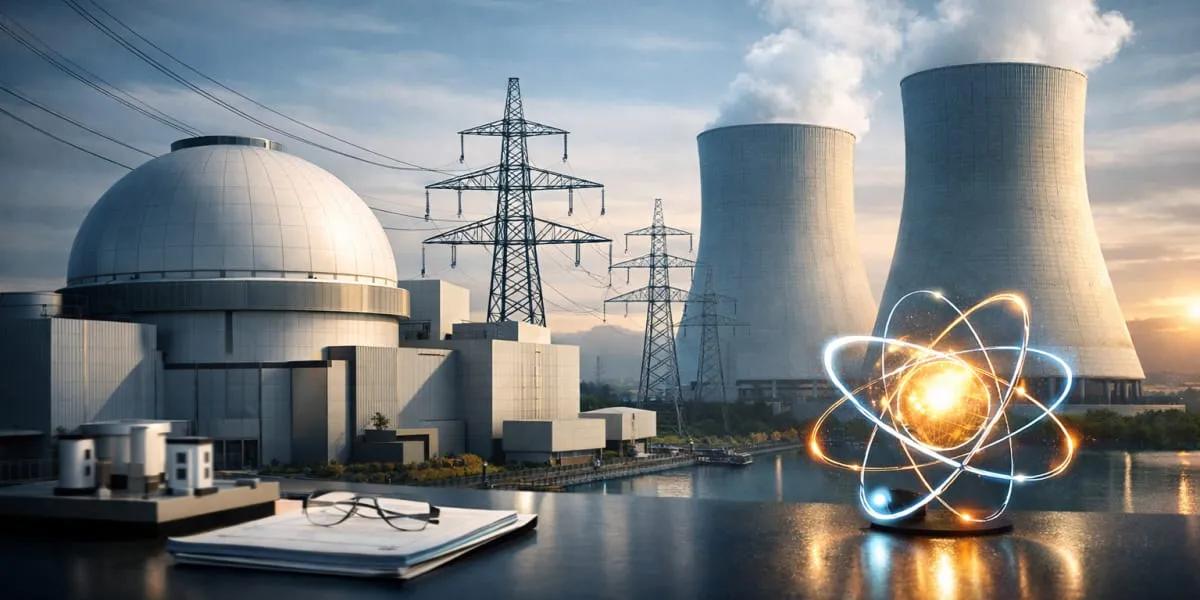
Adani Group Targets 10 GW Nuclear Capacity By 2035
POWER & RENEWABLE ENERGY

Adani Group Targets 10 GW Nuclear Capacity By 2035

The Adani Group plans to develop 10 gigawatts (GW) of nuclear power generation capacity by 2035, the group said, positioning itself early to serve rising national demand for clean round-the-clock power. The Sustainable Harnessing and Advancement of Nuclear Energy for Transforming India Bill (SHANTI Bill), passed by Parliament in December 2025, is expected to unlock private sector participation across nuclear power generation, reactor supply and operation, fuel mining and research and development across the fuel cycle.

At Adani Power, the group is implementing the largest private sector power capital expenditure programme in India at over Rs two trillion (tn), with a target to reach 45 GW of capacity over the next five years. The group said it is establishing a three-layer structure across headquarters and sites to reduce bureaucracy, sharpen accountability and bring decisions closer to execution, moving non-core activities to global capability centres or nominated partners.

The group said it will jointly develop 5,000 megawatts (MW) of hydropower in Bhutan with Druk Green Power Corporation, reflecting a push into regional renewable partnerships. In aviation, partnerships with Leonardo and Embraer are intended to build an integrated helicopter and regional aircraft manufacturing ecosystem covering manufacturing, maintenance, repair and operations, services and pilot training. The company also noted that its drone systems and munitions supported the armed forces during Operation Sindoor.

In fiscal year 25-26 the group made a record capital investment of more than Rs one and a half trillion (tn) in hard infrastructure, representing over 30 per cent of India's new private-sector capital expenditure for the year. The Vizhinjam port in Kerala crossed one million (mn) TEUs in its first year, the fastest pace for any Indian port and a signal of India's role on the global transshipment map. The data centre business is on track for a three GW platform by 2030 and has a binding memorandum of understanding for a gigawatt-scale project with Google.

"Join industry leaders at RAHSTA Expo, India's premier platform for roads, highways and traffic infrastructure. Register now to explore innovations, network with experts and shape the future of mobility."

The Adani Group plans to develop 10 gigawatts (GW) of nuclear power generation capacity by 2035, the group said, positioning itself early to serve rising national demand for clean round-the-clock power. The Sustainable Harnessing and Advancement of Nuclear Energy for Transforming India Bill (SHANTI Bill), passed by Parliament in December 2025, is expected to unlock private sector participation across nuclear power generation, reactor supply and operation, fuel mining and research and development across the fuel cycle. At Adani Power, the group is implementing the largest private sector power capital expenditure programme in India at over Rs two trillion (tn), with a target to reach 45 GW of capacity over the next five years. The group said it is establishing a three-layer structure across headquarters and sites to reduce bureaucracy, sharpen accountability and bring decisions closer to execution, moving non-core activities to global capability centres or nominated partners. The group said it will jointly develop 5,000 megawatts (MW) of hydropower in Bhutan with Druk Green Power Corporation, reflecting a push into regional renewable partnerships. In aviation, partnerships with Leonardo and Embraer are intended to build an integrated helicopter and regional aircraft manufacturing ecosystem covering manufacturing, maintenance, repair and operations, services and pilot training. The company also noted that its drone systems and munitions supported the armed forces during Operation Sindoor. In fiscal year 25-26 the group made a record capital investment of more than Rs one and a half trillion (tn) in hard infrastructure, representing over 30 per cent of India's new private-sector capital expenditure for the year. The Vizhinjam port in Kerala crossed one million (mn) TEUs in its first year, the fastest pace for any Indian port and a signal of India's role on the global transshipment map. The data centre business is on track for a three GW platform by 2030 and has a binding memorandum of understanding for a gigawatt-scale project with Google.

Next Story
Infrastructure Transport

Third Railway Line Between Tatanagar And Adityapur Likely By September

The third railway line between Tatanagar and Adityapur is expected to be commissioned by September as work on the corridor advances, according to railway sources. The project to add a fourth line on the busy route is progressing and has been allocated Rs 50.89 billion (bn) in funding. The allocation underscores the focus on increasing capacity and easing congestion on the corridor. Relevant timetables are being adjusted to integrate the new capacity into regular operations. Construction activity has involved track laying, formation work and signalling upgrades along strategic stretches, with m..

Next Story
Infrastructure Transport

Indian Railways Approves Rs 2.7 bn Kavach Rollout in Odisha

Indian Railways has approved a Rs 2.7 billion (Rs 2.7 bn) plan to install the Kavach train collision avoidance system on 631 route kilometres in the East Coast Railway zone. The Ministry of Railways said the work will form part of a wider Kavach deployment programme that relies on an LTE based communication backbone rather than a standalone installation. The approval marks the latest stage in the steady expansion of the indigenous safety technology across the national network. The decision aims to enhance safety and reliability on corridors serving Odisha and adjoining areas. The project will ..

Next Story
Infrastructure Transport

Indian Railways Accelerates Modernisation Drive

Indian Railways utilised nearly 30 per cent of its capital expenditure budget for FY2026-27 within the first two months of the financial year, spending more than Rs 840 billion (bn) in April and May against a planned outlay of Rs 2.93 trillion (tn) for the year. The Union Budget allocated Rs 2.93 tn in total capex, comprising Rs 2.81 tn through gross budgetary support and Rs 120 bn from extra-budgetary resources. The early absorption indicates robust project execution and an aggressive infrastructure push. A significant share of the spending is being channelled towards track infrastructure, in..

Advertisement

Subscribe to Our Newsletter

Get daily newsletters around different themes from Construction world.

STAY CONNECTED

Advertisement

Advertisement

Advertisement