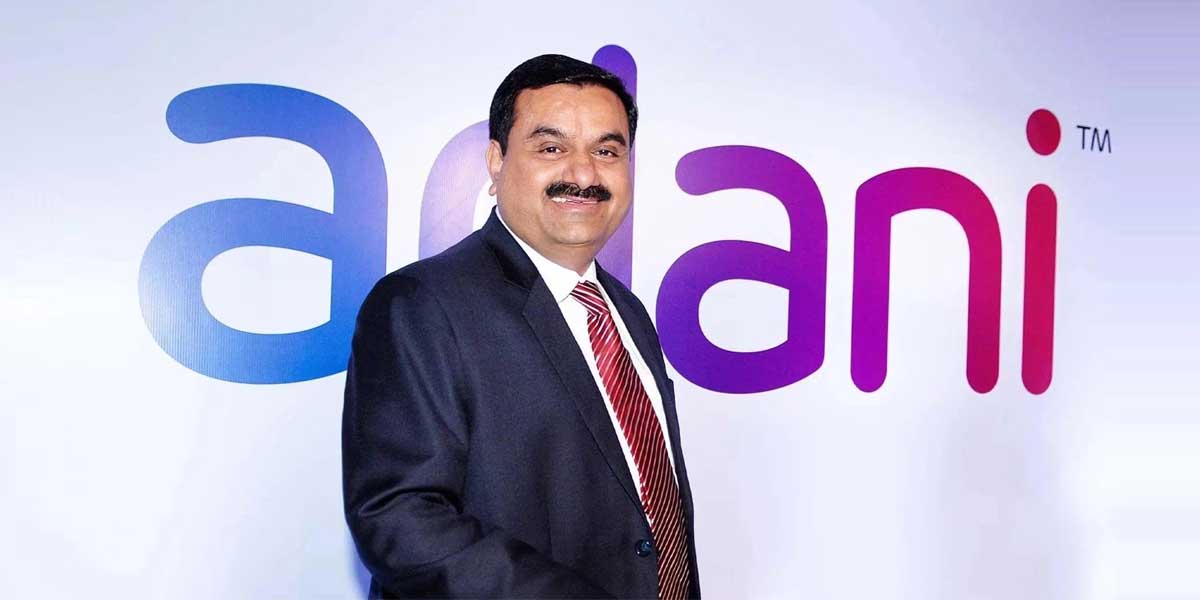
Adani's Renewable Unit secures $394 mn amidst Expansion Reevaluation
POWER & RENEWABLE ENERGY

Adani's Renewable Unit secures $394 mn amidst Expansion Reevaluation

Adani Enterprises, an Indian conglomerate, announced that its new renewable energy-focused unit has secured a working capital loan of $394 million from Barclays and Deutsche Bank AG. The loan will support the establishment of an integrated solar module manufacturing facility by Adani New Industries (ANIL), which is also engaged in developing green hydrogen businesses, including solar modules and wind turbine manufacturing.

This financing facility comes at a crucial time when the Adani group is reevaluating its expansion plans, which had been put on hold following a negative report from US-based Hindenburg Research earlier this year. Hindenburg Research had taken a short position in the conglomerate and released a report in January alleging improper use of tax havens and expressing concerns about the group's debt levels. This report significantly impacted investor confidence and resulted in a market value loss of nearly $147 billion for Adani companies.

Since then, the group's shares have partially recovered, but they still reflect a decline of approximately $100 billion in value compared to before the Hindenburg report. Adani Group vehemently denied the allegations and, in May, a panel appointed by the Supreme Court found no lapses in their operations.

Despite the challenges, there are positive signs indicating improving investor sentiment. Australian-listed investment firm GQG Partners and other investors have increased their stakes in Adani Group companies. Additionally, Adani Chairman Gautam Adani expressed confidence in the group's governance and disclosure standards, instilling further reassurance in the company's outlook.

Adani Enterprises, an Indian conglomerate, announced that its new renewable energy-focused unit has secured a working capital loan of $394 million from Barclays and Deutsche Bank AG. The loan will support the establishment of an integrated solar module manufacturing facility by Adani New Industries (ANIL), which is also engaged in developing green hydrogen businesses, including solar modules and wind turbine manufacturing.This financing facility comes at a crucial time when the Adani group is reevaluating its expansion plans, which had been put on hold following a negative report from US-based Hindenburg Research earlier this year. Hindenburg Research had taken a short position in the conglomerate and released a report in January alleging improper use of tax havens and expressing concerns about the group's debt levels. This report significantly impacted investor confidence and resulted in a market value loss of nearly $147 billion for Adani companies.Since then, the group's shares have partially recovered, but they still reflect a decline of approximately $100 billion in value compared to before the Hindenburg report. Adani Group vehemently denied the allegations and, in May, a panel appointed by the Supreme Court found no lapses in their operations.Despite the challenges, there are positive signs indicating improving investor sentiment. Australian-listed investment firm GQG Partners and other investors have increased their stakes in Adani Group companies. Additionally, Adani Chairman Gautam Adani expressed confidence in the group's governance and disclosure standards, instilling further reassurance in the company's outlook.

Next Story
Infrastructure Urban

Implementation Status of Jal Jeevan Mission

Since August 2019 the Government has implemented Jal Jeevan Mission to provide assured potable water through household tap connections in rural India. At the start of the mission only 32.3 million (mn) rural households, representing 16.7 per cent, were reported to have tap water connections. States and union territories have reported that 125.8 mn additional rural households have since been provided with tap connections. As a result, of about 193.6 mn rural households roughly 158.2 mn, or 81.71 per cent, are reported to have tap water supply at home.\n\nThe State, district and village level st..

Next Story
Infrastructure Urban

Jal Jeevan Mission Reaches Eighty One Per Cent Rural Coverage

The Government reported substantial progress under the Jal Jeevan Mission, launched in August 2019 to provide tap water to every rural household. At launch only 32.3 million (mn) rural households had tap connections and states and Union territories reported provision of 125.8 mn additional households by March 2026. Consequently, out of about 193.6 mn rural households around 158.2 mn, or 81.71 per cent, are reported to have tap water at home. The Finance Minister announced extension of the mission until 2028 in the 2025-26 budget speech. The Swachh Bharat Mission Grameen, launched in October 20..

Next Story
Infrastructure Urban

Empowering Local Governance for Sustainable Rural Water Supply

The Ministry of Jal Shakti has aligned the Jal Jeevan Mission (JJM) with the 73rd Amendment to strengthen village level planning and community ownership of water supply. Gram Panchayats, village water and sanitation committees and Pani Samitis are to plan, implement, manage and maintain piped water systems, with gram sabha processes formalising handover and oversight. Implementation support agencies including non government organisations, community based organisations and self help groups have been empanelled to train local committees and promote women participation. Under JJM, the department ..

Advertisement

Subscribe to Our Newsletter

Get daily newsletters around different themes from Construction world.

STAY CONNECTED

Advertisement

Advertisement

Advertisement