Andhra Pradesh Expands Clean Energy With BESS Rollout
POWER & RENEWABLE ENERGY

Andhra Pradesh Expands Clean Energy With BESS Rollout

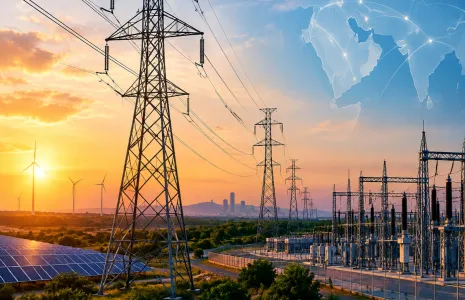
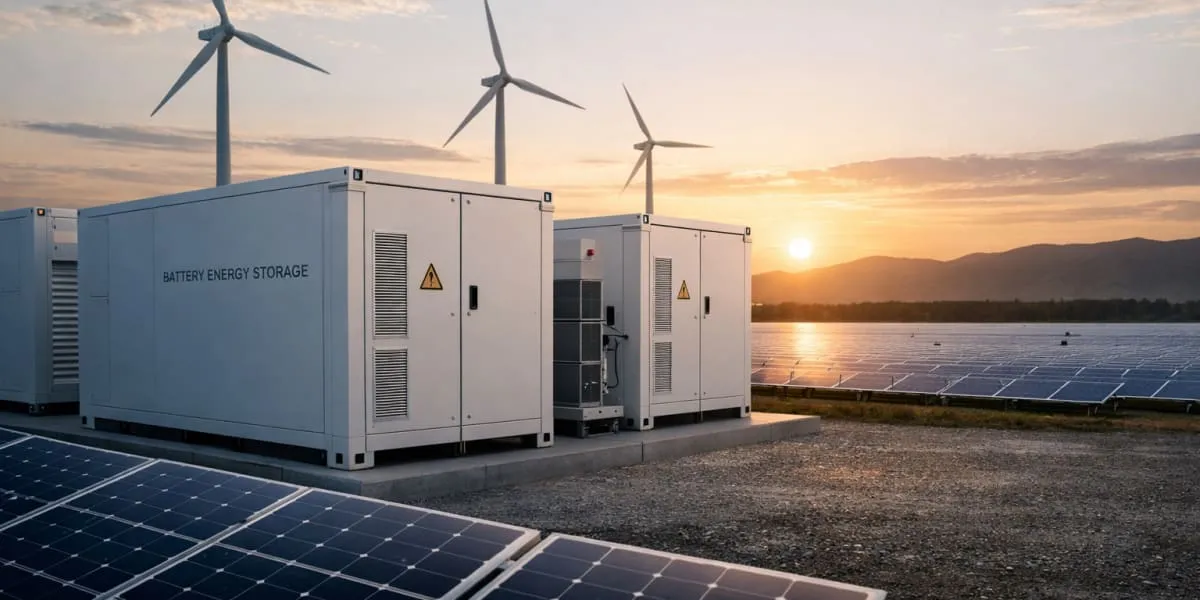
Andhra Pradesh has announced plans to install battery energy storage systems (BESS) with a combined capacity of 3,000 megawatt-hour (MWh) to strengthen grid reliability and support renewable integration. The rollout will be implemented in phases, with about 1,000 MWh targeted for completion by January 2027. The state government intends to invite tenders shortly and private developers are expected to participate. The plan forms part of the state’s broader energy strategy.

The systems will store surplus solar energy produced during the day and discharge it during peak evening demand, helping to balance supply and demand more efficiently. Officials have identified multiple substations and high renewable energy zones for deployment and plan to co-locate storage with solar and wind projects. The measures are intended to reduce reliance on expensive thermal generation and improve power availability across the state. Operators expect co-located projects to streamline land and transmission requirements.

Authorities estimate that peak power procurement costs could fall from around Rs 10 per unit to approximately Rs 4.85 per unit once the BESS projects are operational. This reduction could translate into annual savings of Rs 4–5 bn for the state distribution companies and is likely to improve their financial health. Battery storage is being positioned as critical infrastructure for managing the intermittency of solar and wind capacity. Analysts say improved dispatch flexibility and lower peak purchases will ease pressure on tariffs.

The initiative mirrors a broader trend among states to deploy grid-scale storage as part of the clean energy transition and to limit spot market purchases during peak hours. With declining battery costs and increasing policy support, the state expects BESS deployment to stabilise the grid, reduce outages and lower overall system costs. Over the medium term the plan should support the expansion of renewable capacity and enhance long-term power reliability.

Andhra Pradesh has announced plans to install battery energy storage systems (BESS) with a combined capacity of 3,000 megawatt-hour (MWh) to strengthen grid reliability and support renewable integration. The rollout will be implemented in phases, with about 1,000 MWh targeted for completion by January 2027. The state government intends to invite tenders shortly and private developers are expected to participate. The plan forms part of the state’s broader energy strategy. The systems will store surplus solar energy produced during the day and discharge it during peak evening demand, helping to balance supply and demand more efficiently. Officials have identified multiple substations and high renewable energy zones for deployment and plan to co-locate storage with solar and wind projects. The measures are intended to reduce reliance on expensive thermal generation and improve power availability across the state. Operators expect co-located projects to streamline land and transmission requirements. Authorities estimate that peak power procurement costs could fall from around Rs 10 per unit to approximately Rs 4.85 per unit once the BESS projects are operational. This reduction could translate into annual savings of Rs 4–5 bn for the state distribution companies and is likely to improve their financial health. Battery storage is being positioned as critical infrastructure for managing the intermittency of solar and wind capacity. Analysts say improved dispatch flexibility and lower peak purchases will ease pressure on tariffs. The initiative mirrors a broader trend among states to deploy grid-scale storage as part of the clean energy transition and to limit spot market purchases during peak hours. With declining battery costs and increasing policy support, the state expects BESS deployment to stabilise the grid, reduce outages and lower overall system costs. Over the medium term the plan should support the expansion of renewable capacity and enhance long-term power reliability.

Next Story
Infrastructure Urban

Vedanta Reports Record Profit in FY26

Vedanta reported its best-ever financial performance in FY26, with profit after tax of Rs 250.96 billion and revenue of Rs 1.74 trillion, supported by operational excellence across businesses. The company delivered nearly 50 per cent total shareholder return and declared a dividend of Rs 34 per share.Vedanta said its net debt-to-EBITDA improved to 0.95x, strengthening financial flexibility. Its demerger, effective 1 May 2026, is aimed at unlocking value by creating focused businesses across aluminium, oil and gas, power, iron and steel, zinc, copper, nickel and ferro alloys.Vedanta Aluminium p..

Next Story
Infrastructure Energy

KEC Wins Orders Worth Rs 10.02 Billion

KEC International, an RPG Group company and global infrastructure EPC major, has secured new orders worth Rs 10.02 billion across its key businesses.In Transmission and Distribution, the company has won orders for projects in India and the Americas. These include ±500 kV HVDC transmission lines from a private developer in Western India, 132 kV cabling works from a steel producer in Eastern India, and the supply of towers, hardware and poles in the Americas.The renewables business has secured an order for a 100+ MW wind project in Southern India from a private developer. In transportation, KEC..

Next Story
Infrastructure Urban

Hindustan Zinc Opens Cath Lab in Udaipur

Hindustan Zinc recently inaugurated a state-of-the-art Cardiac Catheterisation Laboratory at Rabindranath Tagore Hospital, Udaipur. The facility was inaugurated by Gulab Chand Kataria, Governor of Punjab and Administrator of Chandigarh, in the presence of local MLAs, RNT Hospital leadership and senior Hindustan Zinc officials.The Cath Lab follows an MoU signed earlier between Hindustan Zinc and RNT Hospital for the redevelopment and upgradation of the hospital into a future-ready, multi-speciality healthcare facility. Equipped with advanced cardiac technology, it will support minimally invasiv..

Advertisement

Subscribe to Our Newsletter

Get daily newsletters around different themes from Construction world.

STAY CONNECTED

Advertisement

Advertisement

Advertisement