Asahi India Glass Expands Hybrid Renewable Power Use
POWER & RENEWABLE ENERGY

Asahi India Glass Expands Hybrid Renewable Power Use

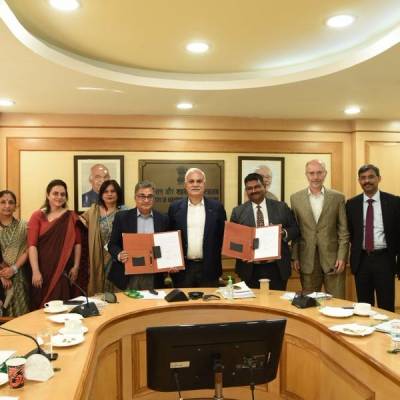
Asahi India Glass Ltd (AIS) has entered into a managed hybrid power supply and energy management agreement with Adani Energy Solutions Ltd (AESL), accelerating its shift towards renewable energy across multiple manufacturing locations in India.

Under the agreement, AESL’s commercial and industrial (C&I) division will manage a hybrid power mandate of around 155 million units per year to meet AIS’s electricity requirements at its facilities in Bawal (Haryana), Roorkee (Uttarakhand) and Patan (Gujarat). Of the total supply, approximately 110 million units will be sourced from renewable energy.

The arrangement will increase the share of renewable energy in AIS’s overall power mix to about 70 per cent, from nearly 30 per cent earlier, positioning the company among India’s leading industrial adopters of clean energy. By integrating renewable and conventional power under a single managed framework, the agreement is expected to lower emissions, improve cost predictability and strengthen long-term energy security.

The transition to green power is expected to reduce carbon dioxide emissions by around 72,300 metric tonnes annually, equivalent to the environmental benefit of planting more than 3.6 million trees. The agreement is also expected to enhance operational efficiency while supporting AIS’s broader sustainability goals.

As part of the mandate, AESL will manage the entire power value chain under defined service level agreement parameters, including supply optimisation, reliability assurance and energy cost management. This model allows industrial customers to focus on core manufacturing operations while ensuring a stable and efficient power supply.

The partnership follows AESL’s earlier announcement of a C&I renewable energy collaboration with RSWM Ltd, part of the LNJ Bhilwara Group, in November 2025, highlighting the company’s expanding presence in managed energy solutions for manufacturing enterprises.

AESL’s C&I vertical delivers customised power solutions to large electricity consumers across sectors such as cement, chemicals, textiles and automotive manufacturing. The platform has built an aggregate demand portfolio exceeding 1,300 megawatts across more than three dozen companies and aims to expand its C&I portfolio to 7,000 megawatts over the next five years.

The broader market environment remains favourable. As of 2025, renewable energy procurement by C&I consumers in India exceeds 30 gigawatts, having grown at a compound annual growth rate of 22 per cent between 2020 and 2024. Industry observers note that sustainability commitments, open access frameworks and improving cost competitiveness are encouraging companies to move away from traditional distribution company arrangements towards specialised energy solution providers.

Asahi India Glass Ltd (AIS) has entered into a managed hybrid power supply and energy management agreement with Adani Energy Solutions Ltd (AESL), accelerating its shift towards renewable energy across multiple manufacturing locations in India. Under the agreement, AESL’s commercial and industrial (C&I) division will manage a hybrid power mandate of around 155 million units per year to meet AIS’s electricity requirements at its facilities in Bawal (Haryana), Roorkee (Uttarakhand) and Patan (Gujarat). Of the total supply, approximately 110 million units will be sourced from renewable energy. The arrangement will increase the share of renewable energy in AIS’s overall power mix to about 70 per cent, from nearly 30 per cent earlier, positioning the company among India’s leading industrial adopters of clean energy. By integrating renewable and conventional power under a single managed framework, the agreement is expected to lower emissions, improve cost predictability and strengthen long-term energy security. The transition to green power is expected to reduce carbon dioxide emissions by around 72,300 metric tonnes annually, equivalent to the environmental benefit of planting more than 3.6 million trees. The agreement is also expected to enhance operational efficiency while supporting AIS’s broader sustainability goals. As part of the mandate, AESL will manage the entire power value chain under defined service level agreement parameters, including supply optimisation, reliability assurance and energy cost management. This model allows industrial customers to focus on core manufacturing operations while ensuring a stable and efficient power supply. The partnership follows AESL’s earlier announcement of a C&I renewable energy collaboration with RSWM Ltd, part of the LNJ Bhilwara Group, in November 2025, highlighting the company’s expanding presence in managed energy solutions for manufacturing enterprises. AESL’s C&I vertical delivers customised power solutions to large electricity consumers across sectors such as cement, chemicals, textiles and automotive manufacturing. The platform has built an aggregate demand portfolio exceeding 1,300 megawatts across more than three dozen companies and aims to expand its C&I portfolio to 7,000 megawatts over the next five years. The broader market environment remains favourable. As of 2025, renewable energy procurement by C&I consumers in India exceeds 30 gigawatts, having grown at a compound annual growth rate of 22 per cent between 2020 and 2024. Industry observers note that sustainability commitments, open access frameworks and improving cost competitiveness are encouraging companies to move away from traditional distribution company arrangements towards specialised energy solution providers.

Next Story
Real Estate

Union Budge: Infra-Led Urban Shift

The Union Budget FY27 reinforces infrastructure-led urbanisation as the backbone of India’s real estate and housing growth. Higher public capital expenditure, City Economic Regions, risk-mitigation mechanisms and REIT-led asset monetisation are being widely viewed as long-term enablers, even as the industry continues to seek sharper supply-side reforms and affordability-focused measures. Here are a few industry insights:Dr Niranjan Hiranandani, Chairman, NAREDCO & Hiranandani Group“The Union Budget 2026-27 is growth-oriented and stability-focused, supporting consumption and aiming to s..

Next Story
Infrastructure Urban

Budget 2026 Charts Path for Infrastructure-Led, Tech-Driven Growth

The Union Budget 2026–27 signals strong continuity in India’s macroeconomic strategy, anchored in elevated public capital expenditure, fiscal discipline, and a sharper focus on manufacturing, infrastructure, and regional development. With capital outlay pegged at ₹12.2 lakh crore and a fiscal deficit target of around 4.3 per cent, the Budget balances growth ambition with stability, offering long-term visibility to investors and project developers.A dominant theme is the centrality of infrastructure as a multiplier for economic expansion. Public capex now accounts for over 3.3 per cent of..

Next Story
Infrastructure Energy

Tata Power Arm Crosses 10 GW EPC Milestone

Tata Power Renewable Energy Ltd (TPREL) has achieved a major milestone by executing 10 gigawatts of engineering, procurement and construction (EPC) renewable energy projects to date, reinforcing its position in India’s clean energy infrastructure sector. According to the company, the executed portfolio comprises 4.2 gigawatts of in-house projects and 5.8 gigawatts of third-party projects. Of the total 10 gigawatts commissioned so far, 9.7 gigawatts are solar projects and 290 megawatts are wind projects. In the first nine months of FY26, TPREL commissioned 1.88 gigawatts of EPC renewable en..

Advertisement

Subscribe to Our Newsletter

Get daily newsletters around different themes from Construction world.

STAY CONNECTED

Advertisement

Advertisement

Advertisement

Advertisement

Open In App