+
Cabinet May Approve Critical Minerals Pacts With Germany And Canada
POWER & RENEWABLE ENERGY

Cabinet May Approve Critical Minerals Pacts With Germany And Canada

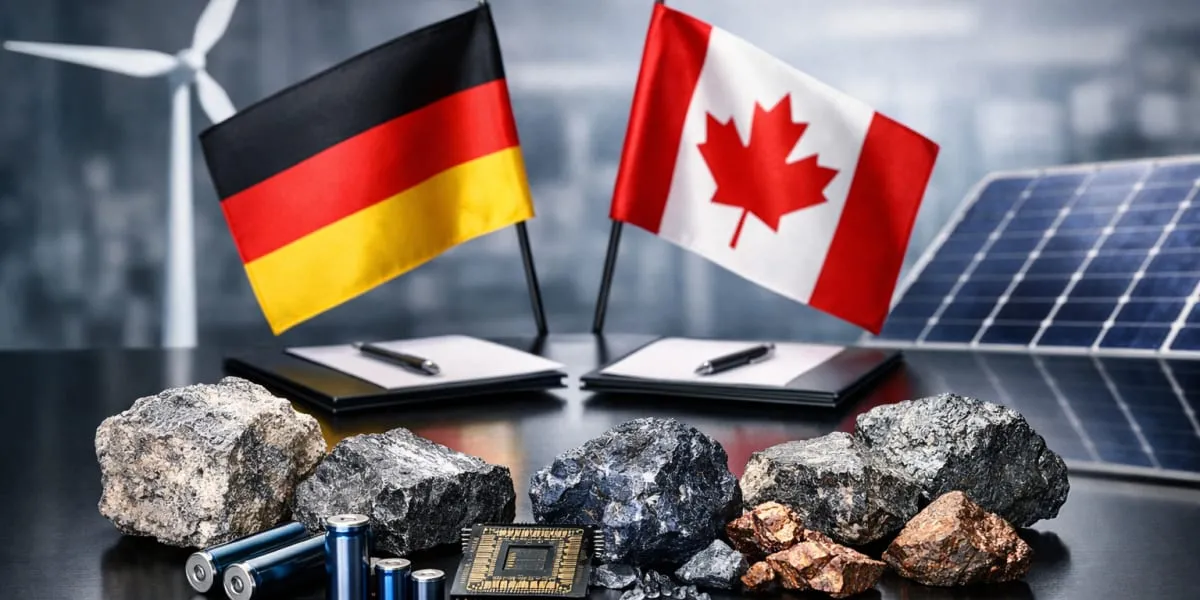
The Union Cabinet is expected to approve agreements with Germany and Canada aimed at securing supplies of critical minerals that are essential for clean energy and advanced manufacturing. The proposed pacts are intended to diversify supply chains and reduce strategic vulnerability in raw materials for batteries, semiconductors and renewable energy infrastructure. Governments view the agreements as a diplomatic and economic instrument to ensure long term access to minerals required for the energy transition. The arrangements are being framed to balance resource security with environmental safeguards and community engagement measures.\n\nOfficials said the arrangements will be focused on cooperation in exploration, responsible mining practices, and downstream processing to add value domestically. The cooperation is likely to include technical assistance, regulatory alignment and facilitation of investment in processing and recycling capacities. Industry sources expect the measures to lower supply risks for manufacturers of electric vehicles, battery systems and solar components. Market analysts expect gradual improvements in lead times as processing capacities scale.\n\nNegotiations are reported to have covered mechanisms to ensure predictable supply chains and to encourage joint ventures and public private partnerships for refining and processing. The pacts may feature commitments on sustainable sourcing standards and capacity building to meet environmental and social governance benchmarks. Analysts note that securing upstream supplies could attract further capital into domestic value chains and shorten lead times for critical components. Ministerial teams have reportedly outlined phased timelines and risk mitigation measures to manage supply interruptions effectively.\n\nThe cabinet decision, if approved, will be followed by implementation plans and inter ministerial coordination to operationalise the agreements. Stakeholders are likely to engage in consultations on licences, incentives and infrastructure support to enable rapid scale up of processing capacities. Officials expect the moves to strengthen domestic manufacturing and support the country's ambitions in clean energy and technology industries.

The Union Cabinet is expected to approve agreements with Germany and Canada aimed at securing supplies of critical minerals that are essential for clean energy and advanced manufacturing. The proposed pacts are intended to diversify supply chains and reduce strategic vulnerability in raw materials for batteries, semiconductors and renewable energy infrastructure. Governments view the agreements as a diplomatic and economic instrument to ensure long term access to minerals required for the energy transition. The arrangements are being framed to balance resource security with environmental safeguards and community engagement measures.\n\nOfficials said the arrangements will be focused on cooperation in exploration, responsible mining practices, and downstream processing to add value domestically. The cooperation is likely to include technical assistance, regulatory alignment and facilitation of investment in processing and recycling capacities. Industry sources expect the measures to lower supply risks for manufacturers of electric vehicles, battery systems and solar components. Market analysts expect gradual improvements in lead times as processing capacities scale.\n\nNegotiations are reported to have covered mechanisms to ensure predictable supply chains and to encourage joint ventures and public private partnerships for refining and processing. The pacts may feature commitments on sustainable sourcing standards and capacity building to meet environmental and social governance benchmarks. Analysts note that securing upstream supplies could attract further capital into domestic value chains and shorten lead times for critical components. Ministerial teams have reportedly outlined phased timelines and risk mitigation measures to manage supply interruptions effectively.\n\nThe cabinet decision, if approved, will be followed by implementation plans and inter ministerial coordination to operationalise the agreements. Stakeholders are likely to engage in consultations on licences, incentives and infrastructure support to enable rapid scale up of processing capacities. Officials expect the moves to strengthen domestic manufacturing and support the country's ambitions in clean energy and technology industries.

Next Story
Infrastructure Urban

We’ve cut 50,000 tonnes of carbon emmissions since 2019

MatchLog is challenging a decades-old logistics norm and empty container miles by directly matching import flows with export demand. Indeed, the platform is unlocking measurable cost savings, cutting emissions and driving structural change in landside operations. Dhruv Taneja, Founder and Global CEO, outlines the quantified impact, adoption  journey and the evolving future of container reuse in an exclusive interview with Construction World. MatchLog has partnered with carriers such as Maersk, ONE and HMM in India. Could you share quantified outcomes from one specific corri..

Next Story
Infrastructure Transport

Airports: Capacity is Key

A lotus-inspired terminal design in Navi Mumbai International Airport. A terminal in a garden in Bengaluru’s Kempegowda International Airport. A peacock-inspired canopy in Chhatrapati Shivaji Maharaj International Airport. A nature-inspired terminal in Guwahati’s Lokpriya Gopinath Bordoloi International Airport.Truly, “India’s airports are no longer constrained by architectural ambition,” avers Ravikanth Mididhodi, Chief Technical Officer, J&F, a German-based engineering firm with over 25 years of global legacy in delivering advanced engineering and BIM services for air..

Next Story
Real Estate

In 2025, Amaravati attracted ₹ 28,075 crore in investments

In an exclusive interview with Construction World, Kanna Babu, IAS, Commissioner, Andhra Pradesh Capital Region Development Authority (APCRDA), reveals how Amaravati is entering a decisive new phase of capital city development. With 36 MoUs worth ₹ 45,589 crore, a ₹ 58,000 crore tender pipeline, and rising institutional investments, he explains the strategic execution, infrastructure rollout, and governance framework driving Amaravati’s emergence as a structured, investment-ready, and future-focused capital.APCRDA has recently secured major financial tie-ups, including loans from NA..

Advertisement

Subscribe to Our Newsletter

Get daily newsletters around different themes from Construction world.

STAY CONNECTED

Advertisement

Advertisement

Advertisement

Open In App