+
CERC Rejects SJVN Plea on Unallocated Renewable Capacity
POWER & RENEWABLE ENERGY

CERC Rejects SJVN Plea on Unallocated Renewable Capacity

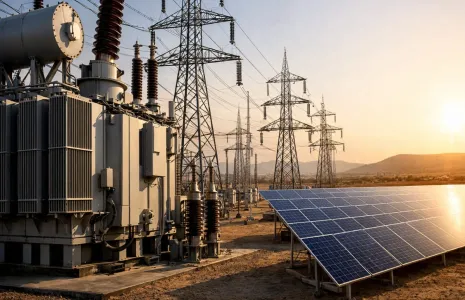
The Central Electricity Regulatory Commission (CERC) has rejected a petition filed by SJVN Limited seeking approval to allocate 316 MW of unawarded renewable energy capacity arising from a competitive bidding process. The decision was issued through an order dated 26 December 2025.

The petition related to a tender floated by SJVN for the selection of developers to set up 1,500 MW of renewable energy capacity, along with an additional greenshoe option of 1,500 MW. Of the total capacity on offer, 2,368 MW was awarded to seven bidders at tariffs of Rs 4.38 per kWh and Rs 4.39 per kWh. However, 316 MW of capacity under the additional tranche remained unallocated.

SJVN, acting as an intermediary procurer, approached the Commission seeking permission to award the remaining capacity to existing successful bidders who were willing to accept additional allocation at the lowest discovered tariff. The company argued that conducting a fresh bidding process for a relatively small capacity would be time-consuming and inefficient. It also submitted that distribution companies had shown demand for the power and that allocating it to existing bidders would serve public interest while ensuring competitive pricing.

During the proceedings, ACME Cleantech Solutions, one of the successful bidders, supported SJVN’s request. The company stated that it had already expressed willingness to take on additional capacity and that the bidding documents did not expressly prohibit such allocation. ACME also argued that CERC had the jurisdiction to approve the proposal to improve overall efficiency.

However, CERC focused its assessment on the scope of its regulatory powers. Referring to past legal precedents, the Commission noted that while it is empowered to adopt tariffs discovered through transparent competitive bidding, it must operate strictly within the guidelines issued by the Central Government. It observed that the bidding documents clearly defined the eligible capacity for award based on bids received.

In its ruling, the Commission held that the petition did not involve tariff determination or adoption, as the tariffs had already been approved through a separate order. It further stated that the request to allocate additional capacity could not be entertained under its general regulatory powers under the Electricity Act, 2003. As a result, the Commission dismissed the petition and declined to permit allocation of the remaining 316 MW.

The decision highlights CERC’s strict adherence to established regulatory frameworks in matters related to capacity allocation. While the unallocated renewable capacity cannot be directly awarded to existing bidders, the order underscores the need for clear provisions in bidding documents regarding additional or leftover capacities, particularly under mechanisms such as the greenshoe option.

The ruling is expected to influence the structuring of future renewable energy auctions, reinforcing the principle that efficiency and market demand must be balanced with regulatory compliance and clearly defined legal authority.

The Central Electricity Regulatory Commission (CERC) has rejected a petition filed by SJVN Limited seeking approval to allocate 316 MW of unawarded renewable energy capacity arising from a competitive bidding process. The decision was issued through an order dated 26 December 2025. The petition related to a tender floated by SJVN for the selection of developers to set up 1,500 MW of renewable energy capacity, along with an additional greenshoe option of 1,500 MW. Of the total capacity on offer, 2,368 MW was awarded to seven bidders at tariffs of Rs 4.38 per kWh and Rs 4.39 per kWh. However, 316 MW of capacity under the additional tranche remained unallocated. SJVN, acting as an intermediary procurer, approached the Commission seeking permission to award the remaining capacity to existing successful bidders who were willing to accept additional allocation at the lowest discovered tariff. The company argued that conducting a fresh bidding process for a relatively small capacity would be time-consuming and inefficient. It also submitted that distribution companies had shown demand for the power and that allocating it to existing bidders would serve public interest while ensuring competitive pricing. During the proceedings, ACME Cleantech Solutions, one of the successful bidders, supported SJVN’s request. The company stated that it had already expressed willingness to take on additional capacity and that the bidding documents did not expressly prohibit such allocation. ACME also argued that CERC had the jurisdiction to approve the proposal to improve overall efficiency. However, CERC focused its assessment on the scope of its regulatory powers. Referring to past legal precedents, the Commission noted that while it is empowered to adopt tariffs discovered through transparent competitive bidding, it must operate strictly within the guidelines issued by the Central Government. It observed that the bidding documents clearly defined the eligible capacity for award based on bids received. In its ruling, the Commission held that the petition did not involve tariff determination or adoption, as the tariffs had already been approved through a separate order. It further stated that the request to allocate additional capacity could not be entertained under its general regulatory powers under the Electricity Act, 2003. As a result, the Commission dismissed the petition and declined to permit allocation of the remaining 316 MW. The decision highlights CERC’s strict adherence to established regulatory frameworks in matters related to capacity allocation. While the unallocated renewable capacity cannot be directly awarded to existing bidders, the order underscores the need for clear provisions in bidding documents regarding additional or leftover capacities, particularly under mechanisms such as the greenshoe option. The ruling is expected to influence the structuring of future renewable energy auctions, reinforcing the principle that efficiency and market demand must be balanced with regulatory compliance and clearly defined legal authority.

Next Story
Infrastructure Transport

Second Mountain Tunnel Breakthrough in Palghar Advances High Speed Rail

The Mumbai-Ahmedabad high speed rail (MAHSR) project reached a milestone with the breakthrough of a mountain tunnel in Palghar, Maharashtra. Mountain tunnel MT-six measures 454 metres long and 14.4 metres wide and will accommodate up and down tracks. The breakthrough follows MT-five near Saphale on second January 2026 and the MT-six excavation was completed from both ends using the New Austrian Tunnelling Method. The ministry reported that the tunnelling was completed within 12 months. The New Austrian Tunnelling Method is favoured for its flexibility in complex geology and irregular tunnel s..

Next Story
Infrastructure Transport

Modi Government Pushes Atmanirbhar Container Drive With BCSL MoU

The Union Government advanced a plan to create an integrated, domestically anchored container ecosystem with the signing of a Memorandum of Understanding to establish the Bharat Container Shipping Line (BCSL). The MoU was signed by key agencies including the Shipping Corporation of India and Container Corporation of India alongside major port authorities and Sagarmala Finance Corporation Limited under the Ministry of Ports, Shipping and Waterways, in the presence of senior ministers. The initiative aligns with the Container Manufacturing Assistance Scheme announced in the Union Budget 2026–2..

Next Story
Infrastructure Urban

Ministry Reports Gains In Mobility For Marginalised Communities

The Ministry of Social Justice and Empowerment is implementing skill development, education and rehabilitation schemes to promote socio-economic mobility and sustainable livelihoods for marginalised and disadvantaged communities across the country. Programmes target Scheduled Castes, Other Backward Classes, Economically Weaker Sections, De-notified Tribes and Safai Karamcharis through specialised implementing corporations and empanelled training institutes. Pradhan Mantri Dakshata Aur Kushalta Sampann Hitgrahi Yojana, or PM-DAKSH, provided skill training and placement support through the Nati..

Advertisement

Subscribe to Our Newsletter

Get daily newsletters around different themes from Construction world.

STAY CONNECTED

Advertisement

Advertisement

Advertisement

Open In App