Dr Jitendra Singh Visits Science And Energy Exhibition
POWER & RENEWABLE ENERGY

Dr Jitendra Singh Visits Science And Energy Exhibition

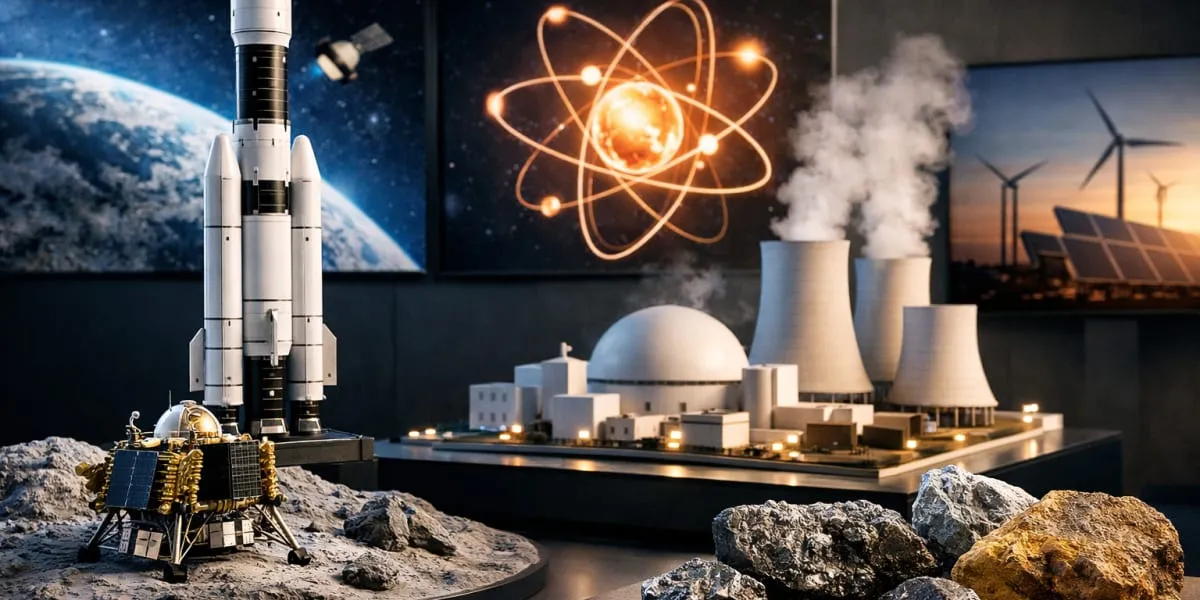
Union Minister of State (Independent Charge) for Science and Technology and for Earth Sciences, Dr Jitendra Singh, visited an exhibition at Dr Ambedkar International Centre in New Delhi showcasing India’s space, nuclear and strategic mineral capabilities. He said presenting these achievements helps ignite students’ aptitude and discover talent and advised organisers to arrange conducted visits by school and college students. He suggested preparing short social media versions of the exhibits to widen engagement.

The exhibition outlined India’s capabilities in launch vehicles, satellite systems and human spaceflight initiatives. It described the Polar Satellite Launch Vehicle (PSLV), the Geosynchronous Satellite Launch Vehicle (GSLV) and the LVM3 heavy-lift rocket supporting the human spaceflight programme. The display noted that India has conducted more than 100 launch missions, deploying hundreds of satellites that support communication, navigation and earth observation.

Materials set out a long-term vision for space exploration, including development of human spaceflight systems, crew and service modules and the concept of an Indian space station referred to as the Bharatiya Antariksh Station. Future missions for lunar exploration, deep-space studies and expansion of satellite services were described as part of the roadmap to enable sustained human presence in low-Earth orbit and microgravity research.

Alongside space activities, the exhibition mapped nuclear energy architecture and the strategy for utilising mineral resources to support energy security. It highlighted uranium-bearing geological formations across states such as Jharkhand, Rajasthan, Andhra Pradesh, Telangana and Karnataka and regions of the Himalayan belt, and explained the three-stage nuclear power programme based on pressurised heavy water reactors, fast breeder reactors and advanced thorium-based systems. Displays also noted the presence of economically significant heavy minerals along the country’s nearly 11,000-kilometre coastline and the role of the Atomic Minerals Directorate for Exploration and Research in assessing these deposits. The event was presented as demonstrating how space and nuclear programmes form core pillars of scientific and technological development while strengthening low-carbon energy capacity and technological self-reliance.

Union Minister of State (Independent Charge) for Science and Technology and for Earth Sciences, Dr Jitendra Singh, visited an exhibition at Dr Ambedkar International Centre in New Delhi showcasing India’s space, nuclear and strategic mineral capabilities. He said presenting these achievements helps ignite students’ aptitude and discover talent and advised organisers to arrange conducted visits by school and college students. He suggested preparing short social media versions of the exhibits to widen engagement. The exhibition outlined India’s capabilities in launch vehicles, satellite systems and human spaceflight initiatives. It described the Polar Satellite Launch Vehicle (PSLV), the Geosynchronous Satellite Launch Vehicle (GSLV) and the LVM3 heavy-lift rocket supporting the human spaceflight programme. The display noted that India has conducted more than 100 launch missions, deploying hundreds of satellites that support communication, navigation and earth observation. Materials set out a long-term vision for space exploration, including development of human spaceflight systems, crew and service modules and the concept of an Indian space station referred to as the Bharatiya Antariksh Station. Future missions for lunar exploration, deep-space studies and expansion of satellite services were described as part of the roadmap to enable sustained human presence in low-Earth orbit and microgravity research. Alongside space activities, the exhibition mapped nuclear energy architecture and the strategy for utilising mineral resources to support energy security. It highlighted uranium-bearing geological formations across states such as Jharkhand, Rajasthan, Andhra Pradesh, Telangana and Karnataka and regions of the Himalayan belt, and explained the three-stage nuclear power programme based on pressurised heavy water reactors, fast breeder reactors and advanced thorium-based systems. Displays also noted the presence of economically significant heavy minerals along the country’s nearly 11,000-kilometre coastline and the role of the Atomic Minerals Directorate for Exploration and Research in assessing these deposits. The event was presented as demonstrating how space and nuclear programmes form core pillars of scientific and technological development while strengthening low-carbon energy capacity and technological self-reliance.

Next Story
Technology

CTS Roundtable Charts Tech-Led Roadmap for Construction

Ahead of the Construction Technology Show (Con Tech Show) 2026, industry leaders, technology innovators and academia came together in Mumbai to deliberate on how digitalisation, automation and industrialised construction can reshape the sector. The discussion made one thing clear: construction can no longer afford to treat technology as optional.Held on 12 March 2026 at Courtyard by Marriott, Mumbai, alongside the Infrastructure Today Airport Conclave, the CTS Roundtable served as a precursor to the Construction Technology Show 2026, scheduled for 19–20 August 2026 at NESCO, Mumbai.A platfor..

Next Story
Infrastructure Transport

RAHSTA Roundtable Sets Agenda for Smarter, Safer Highways

Held on 12 March 2026 at Courtyard by Marriott, Mumbai, alongside the Infrastructure Today Airport Conclave, the RAHSTA Roundtable brought together stakeholders from across the highways and infrastructure ecosystem to shape the agenda for the 16th RAHSTA 2026, scheduled for 8–9 July 2026 at the Jio Convention Centre, Mumbai. The session focused on key industry themes including road construction, technology, safety and long-term sustainability.Opening the discussion, Pratap Padode, Founder, FIRST Construction Council, said the roundtable marked the beginning of a broader consultative process ..

Next Story
Infrastructure Urban

Hindustan Zinc Launches All-Women Smelting Operations Team

Hindustan Zinc has launched ‘Tejaswini’, an all-women team to lead operations at the Leaching & Purification section of its Chanderiya Smelting Complex, one of the world’s largest and most advanced zinc smelting facilities. The move marks a major step in expanding women’s leadership in core operational roles within India’s metals and mining sector.A team of 30 women professionals will oversee process operations, maintenance and safety across Leaching & Purification–I, U-II and CLZS units, a critical part of the company’s hydrometallurgy operations that directly impacts zi..

Advertisement

Subscribe to Our Newsletter

Get daily newsletters around different themes from Construction world.

STAY CONNECTED

Advertisement

Advertisement

Advertisement