Draft Policy Sees Rs 200 Trillion Power Investment by 2047
POWER & RENEWABLE ENERGY

Draft Policy Sees Rs 200 Trillion Power Investment by 2047

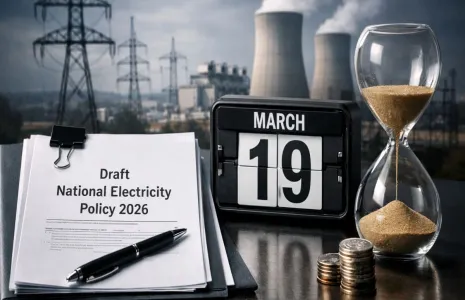
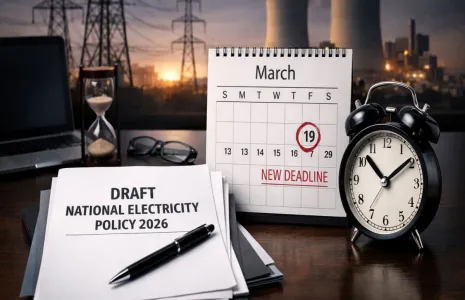
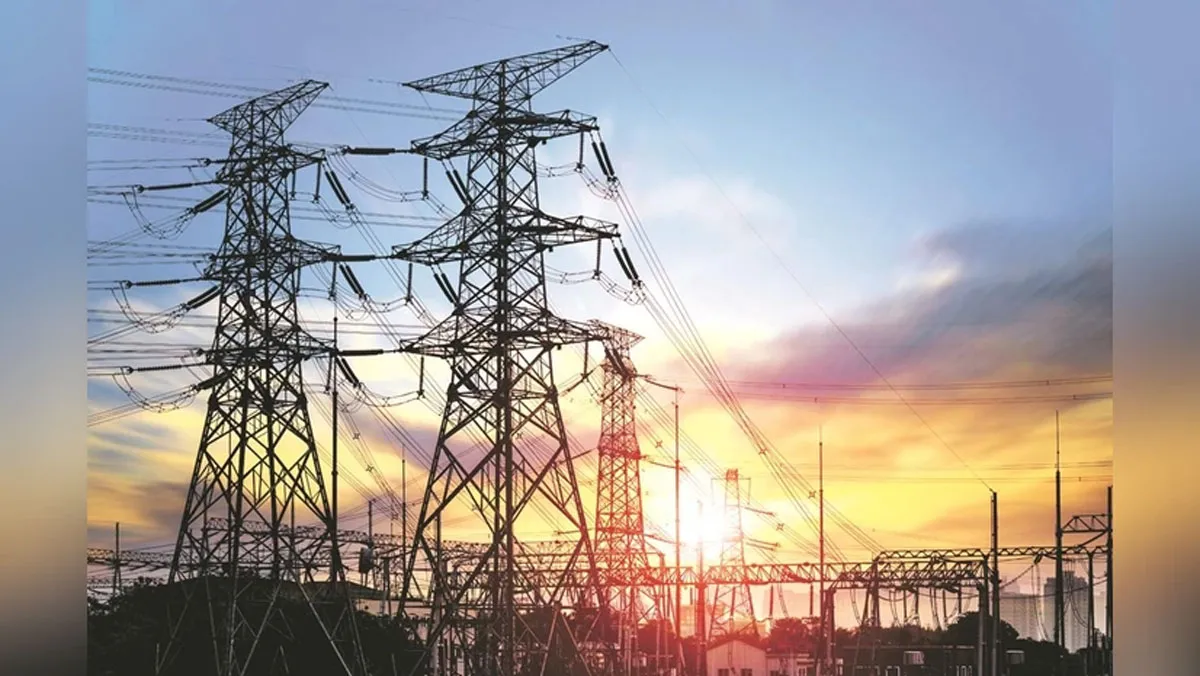
The Central Government has released the draft National Electricity Policy, projecting that India’s power sector will require investments of Rs 50 trillion by 2032 and Rs 200 trillion by 2047. The policy outlines ambitious reforms across generation, transmission and distribution, aimed at strengthening financial viability, improving efficiency and accelerating the transition to cleaner energy.

The draft policy seeks to increase per capita electricity consumption to 4,000 kilowatt-hours by 2047, promote competition in power supply and expand the share of non-fossil fuel capacity. It also aims to address structural challenges that have constrained the sector’s growth and financial health.

According to the policy, distribution companies have accumulated losses of around Rs 6.9 trillion, while outstanding debt has reached Rs 7.18 trillion. Tariffs remain insufficiently aligned with costs, and cross-subsidisation has led to high industrial tariffs, undermining the global competitiveness of Indian industry.

To address these issues, the Ministry of Power has proposed phasing out monopoly structures in electricity distribution by allowing multiple players to operate within the same supply area. The policy also advocates public–private partnerships and the listing of distribution utilities to improve governance, efficiency and capital access.

The draft policy emphasises regulatory discipline, proposing that tariff orders be issued before the start of each financial year and true-up orders completed within the same year. It calls for the separation of distribution and supply tariffs and mandates that regulatory proceedings be concluded within 120 days. From the financial year 2026–27, state commissions are expected to ensure that tariffs fully reflect costs without creating regulatory assets.

The policy further proposes linking tariffs to suitable indices for automatic annual revisions in the absence of timely tariff orders. Fixed costs should increasingly be recovered through demand charges, while power purchase cost increases should be passed through to consumers on a monthly basis. Stabilisation funds are also recommended to manage fluctuations in power procurement costs.

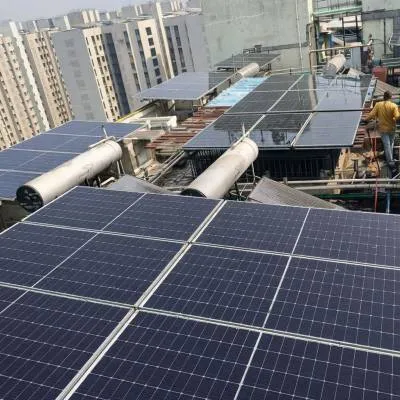
To mobilise capital for non-fossil energy infrastructure, the policy recommends establishing dedicated energy sector funds under the National Bank for Financing Infrastructure and Development and the National Investment and Infrastructure Fund.

The government has also stressed the need to enhance project bankability through risk-mitigation instruments such as first-loss guarantees, reserve funds and multilateral guarantees from development banks. These measures are intended to attract long-term private and institutional capital and accelerate infrastructure development across the power sector.

Overall, the draft National Electricity Policy signals a decisive push towards financial sustainability, competitive markets and clean energy expansion, positioning India’s power sector to support long-term economic growth and the transition to a low-carbon future.

The Central Government has released the draft National Electricity Policy, projecting that India’s power sector will require investments of Rs 50 trillion by 2032 and Rs 200 trillion by 2047. The policy outlines ambitious reforms across generation, transmission and distribution, aimed at strengthening financial viability, improving efficiency and accelerating the transition to cleaner energy. The draft policy seeks to increase per capita electricity consumption to 4,000 kilowatt-hours by 2047, promote competition in power supply and expand the share of non-fossil fuel capacity. It also aims to address structural challenges that have constrained the sector’s growth and financial health. According to the policy, distribution companies have accumulated losses of around Rs 6.9 trillion, while outstanding debt has reached Rs 7.18 trillion. Tariffs remain insufficiently aligned with costs, and cross-subsidisation has led to high industrial tariffs, undermining the global competitiveness of Indian industry. To address these issues, the Ministry of Power has proposed phasing out monopoly structures in electricity distribution by allowing multiple players to operate within the same supply area. The policy also advocates public–private partnerships and the listing of distribution utilities to improve governance, efficiency and capital access. The draft policy emphasises regulatory discipline, proposing that tariff orders be issued before the start of each financial year and true-up orders completed within the same year. It calls for the separation of distribution and supply tariffs and mandates that regulatory proceedings be concluded within 120 days. From the financial year 2026–27, state commissions are expected to ensure that tariffs fully reflect costs without creating regulatory assets. The policy further proposes linking tariffs to suitable indices for automatic annual revisions in the absence of timely tariff orders. Fixed costs should increasingly be recovered through demand charges, while power purchase cost increases should be passed through to consumers on a monthly basis. Stabilisation funds are also recommended to manage fluctuations in power procurement costs. To mobilise capital for non-fossil energy infrastructure, the policy recommends establishing dedicated energy sector funds under the National Bank for Financing Infrastructure and Development and the National Investment and Infrastructure Fund. The government has also stressed the need to enhance project bankability through risk-mitigation instruments such as first-loss guarantees, reserve funds and multilateral guarantees from development banks. These measures are intended to attract long-term private and institutional capital and accelerate infrastructure development across the power sector. Overall, the draft National Electricity Policy signals a decisive push towards financial sustainability, competitive markets and clean energy expansion, positioning India’s power sector to support long-term economic growth and the transition to a low-carbon future.

Next Story
Real Estate

A Paradigm Shift

The Indian real-estate and construction sector, which employs a significant number of organised and unorganised workers in the country, has embarked on a paradigm shift in its regulatory framework from an employment law perspective. With the four Labour Codes – the Code on Wages, 2019 (Wage Code); the Industrial Relations Code, 2020 (IR Code); the Code on Social Security, 2020 (SS Code) and the Occupational Safety, Health and Working Conditions Code, 2020 (OSH Code) – coming into effect in India from November 21, 2025, the industry is shifting away from a fragmented, contractor- driven com..

Next Story
Technology

We offer end-to-end traceability at scale

mjunction has evolved from an e-auction pioneer into a multi-vertical digital commerce platform with deep expertise in complex steel and coal supply chains. Its end-to-end, AI-led architecture focuses on price discovery, traceability, compliance and scalability, enabling transparent procurement, efficient logistics and data-driven decision-making across geographies. Vinaya Varma, MD, shares more about the company in conversation with CW.From a technology standpoint, what are the core USPs of mjunction today that differentiate it in steel and coal supply chains?mjunction has evolved b..

Next Story
Infrastructure Urban

Henkel, Rotary Recycle PoP Ganesha Idols Under Project HARMONY

Henkel India, in partnership with the Rotary Club of Navi Mumbai – Joy of Giving and with support from the Navi Mumbai Municipal Corporation (NMMC), has advanced circular sustainability through Project HARMONY by recycling Plaster of Paris (PoP) Ganesha idols into community learning assets. The initiative highlights an integrated approach to environmental restoration and social impact.As part of the project, materials collected after Ganesh Visarjan 2025 at Nerul were responsibly diverted from land and water bodies and processed at an authorised recycling facility, with on-ground execution s..

Advertisement

Subscribe to Our Newsletter

Get daily newsletters around different themes from Construction world.

STAY CONNECTED

Advertisement

Advertisement

Advertisement

Advertisement

Open In App