Exicom Opens Integrated Manufacturing Facility In Hyderabad
POWER & RENEWABLE ENERGY

Exicom Opens Integrated Manufacturing Facility In Hyderabad

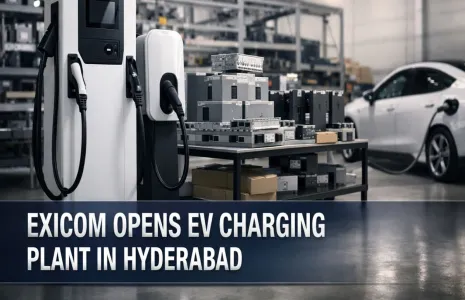
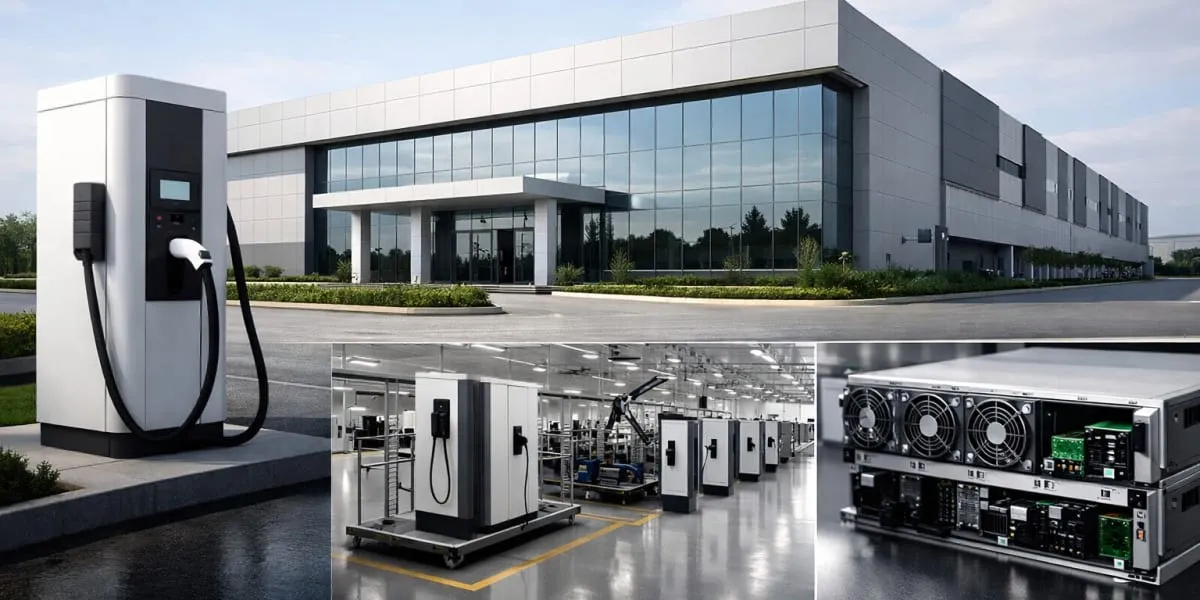
Exicom Tele-Systems Limited inaugurated a new integrated manufacturing facility in Hyderabad, marking a strategic expansion of its EV charging and critical power business. The opening on March 16, 2026, was attended by industry leaders from the telecom and electric vehicle sectors and was presented as a step to strengthen manufacturing capabilities for power electronics. The facility was built with an investment of Rs 2.16 billion (bn) and is spread across 18.4 acres with a total built-up area of 280,000 square feet. The plant is expected to increase overall production capacity by 2.5 times in phase one and to create over 750 jobs in the region.

It has been established to meet rising demand for electric vehicle charging infrastructure, lithium-ion battery systems and critical power solutions for domestic and export markets, supporting mobility, telecom networks and data centres that require uninterrupted energy. Designed on Industry four point zero manufacturing principles, the plant integrates advanced automation, robotics and digital traceability to enable precision manufacturing at scale. The site includes an ISO 8 cleanroom and specialised testing infrastructure to validate performance under demanding real world conditions.

The Hyderabad facility will manufacture Tritium’s TRI-FLEX liquid-cooled power modules and will host plans for an interoperability testing centre to ensure compatibility of chargers across vehicles. Certifications to IATF 16949, ISO 9001:2015, ISO 14001:2015 and ISO 45001:2018 were cited to demonstrate compliance with international quality and safety standards. Company leadership described the plant as combining precision manufacturing, automation and traceability to accelerate innovation and scale production with confidence.

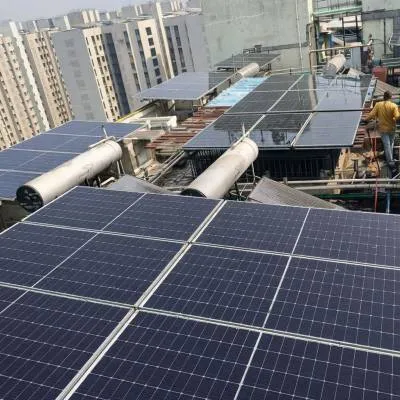
Sustainability measures include forty per cent green cover, a one megawatt (MW) rooftop solar plant, rainwater harvesting and a sewage treatment plant, the campus having been designed to meet IGBC Green Building standards. The facility will bolster India’s power electronics manufacturing base and support the company’s presence across India, Southeast Asia, the Middle East, the United States and Europe. Exicom reported an installed base of over 133,000 chargers and said the Hyderabad plant will play a central role in shaping the company’s contribution to EV infrastructure.

Exicom Tele-Systems Limited inaugurated a new integrated manufacturing facility in Hyderabad, marking a strategic expansion of its EV charging and critical power business. The opening on March 16, 2026, was attended by industry leaders from the telecom and electric vehicle sectors and was presented as a step to strengthen manufacturing capabilities for power electronics. The facility was built with an investment of Rs 2.16 billion (bn) and is spread across 18.4 acres with a total built-up area of 280,000 square feet. The plant is expected to increase overall production capacity by 2.5 times in phase one and to create over 750 jobs in the region. It has been established to meet rising demand for electric vehicle charging infrastructure, lithium-ion battery systems and critical power solutions for domestic and export markets, supporting mobility, telecom networks and data centres that require uninterrupted energy. Designed on Industry four point zero manufacturing principles, the plant integrates advanced automation, robotics and digital traceability to enable precision manufacturing at scale. The site includes an ISO 8 cleanroom and specialised testing infrastructure to validate performance under demanding real world conditions. The Hyderabad facility will manufacture Tritium’s TRI-FLEX liquid-cooled power modules and will host plans for an interoperability testing centre to ensure compatibility of chargers across vehicles. Certifications to IATF 16949, ISO 9001:2015, ISO 14001:2015 and ISO 45001:2018 were cited to demonstrate compliance with international quality and safety standards. Company leadership described the plant as combining precision manufacturing, automation and traceability to accelerate innovation and scale production with confidence. Sustainability measures include forty per cent green cover, a one megawatt (MW) rooftop solar plant, rainwater harvesting and a sewage treatment plant, the campus having been designed to meet IGBC Green Building standards. The facility will bolster India’s power electronics manufacturing base and support the company’s presence across India, Southeast Asia, the Middle East, the United States and Europe. Exicom reported an installed base of over 133,000 chargers and said the Hyderabad plant will play a central role in shaping the company’s contribution to EV infrastructure.

Next Story
Infrastructure Energy

Indian Urea Producers Shut Plants As Iran War Cuts Qatari LNG Supplies

Indian urea producers have shut several plants after the war involving Iran led to cuts in Qatari supplies of liquefied natural gas (LNG), industry participants said. The reduction in LNG shipments has constrained feedstock availability and raised operational pressures at ammonia and urea units across the country, complicating production scheduling and maintenance plans. Producers have scaled back output in response to fuel shortages and logistical challenges affecting domestic fertiliser production and have implemented staggered shutdowns to manage inventories. The disruptions have heightened..

Next Story
Infrastructure Urban

Adani Plans Rs 600 bn Investment In Schools And Hospitals

Adani Group plans a Rs 600 billion (Rs 600 bn) social investment to construct 300 schools and 30 hospitals across India, aimed at expanding educational and healthcare infrastructure nationwide. The initiative is presented as a long term commitment to strengthen community services and address gaps in access to quality education and primary healthcare. The group highlighted investment in both physical infrastructure and associated services to ensure schools and hospitals are functional from opening. The programme will focus on building resilient facilities that meet prevailing regulatory standar..

Next Story
Infrastructure Transport

PM Launches Development Projects Worth Rs 235.5 Billion (bn) From Silchar

The Prime Minister launched development projects worth Rs 235.5 billion (bn) from Silchar in Assam and performed the bhumi pujan for three projects in the Barak Valley. The schemes comprise the Silchar High-Speed Corridor at an estimated cost of Rs 228.6 bn, the Silchar Town Flyover at about Rs 5.65 bn and the Patharkandi College of Agriculture at about Rs 1.22 bn. The announcement was made at a public ceremony in Cachar district. He said that southern Assam's Barak Valley is emerging as a strategic link to Southeast Asia and that the North East is taking a lead in the government's Act East po..

Advertisement

Subscribe to Our Newsletter

Get daily newsletters around different themes from Construction world.

STAY CONNECTED

Advertisement

Advertisement

Advertisement