+
Fresh Tenders For Rooftop Solar On Government Offices In Tamil Nadu
POWER & RENEWABLE ENERGY

Fresh Tenders For Rooftop Solar On Government Offices In Tamil Nadu

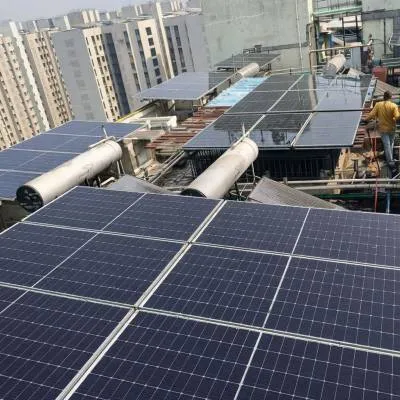
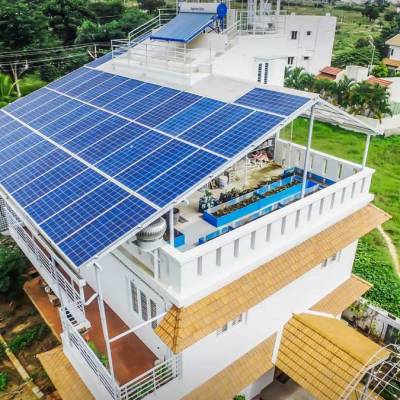
The Tamil Nadu Green Energy Corporation Limited has invited bids to set up 20 megawatt (MW) of grid-connected rooftop solar projects on government office buildings in Chennai, Tiruvallur, Kancheepuram and Chengalpattu under the renewable energy service company (RESCO) model. The deadline for submitting the bids is April seven. The move is aimed at expanding renewable energy capacity on public assets and lowering electricity expenditure for state departments.

This is not the first tender, as the corporation had floated bids in November last year for a combined capacity of 15 MW but received no offers. The selected developers will be responsible for site survey, design, supply, installation, testing, commissioning and operation and maintenance of the rooftop systems and will be required to maintain a minimum annual Capacity Utilisation Factor (CUF) of 17 per cent. Teams have inspected hundreds of government office buildings in the four districts and prepared feasibility reports for panel installation.

Officials noted that several government departments have pending electricity dues and that the power distribution utility must collect tens of million (mn) Rs from them, which is seen as an additional rationale for on site generation. Authorities expect that rooftop generation will reduce long term electricity expenses for public offices and promote wider uptake of renewable energy across administrative buildings. Practical challenges were cited as a reason for limited bidder interest in earlier exercises.

Sources explained that the projects will involve installations in hundreds of smaller units with capacities ranging from 10 kilowatt (kW) to 100 kilowatt (kW), and that managing a dispersed portfolio of systems for up to 25 years could be complex for developers. The dispersed nature of the assets and the operational demands of long term maintenance have reduced commercial attractiveness for some firms. The corporation has set technical and commercial conditions in the tender to try to address these concerns and attract viable bids.

The Tamil Nadu Green Energy Corporation Limited has invited bids to set up 20 megawatt (MW) of grid-connected rooftop solar projects on government office buildings in Chennai, Tiruvallur, Kancheepuram and Chengalpattu under the renewable energy service company (RESCO) model. The deadline for submitting the bids is April seven. The move is aimed at expanding renewable energy capacity on public assets and lowering electricity expenditure for state departments. This is not the first tender, as the corporation had floated bids in November last year for a combined capacity of 15 MW but received no offers. The selected developers will be responsible for site survey, design, supply, installation, testing, commissioning and operation and maintenance of the rooftop systems and will be required to maintain a minimum annual Capacity Utilisation Factor (CUF) of 17 per cent. Teams have inspected hundreds of government office buildings in the four districts and prepared feasibility reports for panel installation. Officials noted that several government departments have pending electricity dues and that the power distribution utility must collect tens of million (mn) Rs from them, which is seen as an additional rationale for on site generation. Authorities expect that rooftop generation will reduce long term electricity expenses for public offices and promote wider uptake of renewable energy across administrative buildings. Practical challenges were cited as a reason for limited bidder interest in earlier exercises. Sources explained that the projects will involve installations in hundreds of smaller units with capacities ranging from 10 kilowatt (kW) to 100 kilowatt (kW), and that managing a dispersed portfolio of systems for up to 25 years could be complex for developers. The dispersed nature of the assets and the operational demands of long term maintenance have reduced commercial attractiveness for some firms. The corporation has set technical and commercial conditions in the tender to try to address these concerns and attract viable bids.

Next Story
Infrastructure Urban

Implementation Status of Jal Jeevan Mission

Since August 2019 the Government has implemented Jal Jeevan Mission to provide assured potable water through household tap connections in rural India. At the start of the mission only 32.3 million (mn) rural households, representing 16.7 per cent, were reported to have tap water connections. States and union territories have reported that 125.8 mn additional rural households have since been provided with tap connections. As a result, of about 193.6 mn rural households roughly 158.2 mn, or 81.71 per cent, are reported to have tap water supply at home.\n\nThe State, district and village level st..

Next Story
Infrastructure Urban

Jal Jeevan Mission Reaches Eighty One Per Cent Rural Coverage

The Government reported substantial progress under the Jal Jeevan Mission, launched in August 2019 to provide tap water to every rural household. At launch only 32.3 million (mn) rural households had tap connections and states and Union territories reported provision of 125.8 mn additional households by March 2026. Consequently, out of about 193.6 mn rural households around 158.2 mn, or 81.71 per cent, are reported to have tap water at home. The Finance Minister announced extension of the mission until 2028 in the 2025-26 budget speech. The Swachh Bharat Mission Grameen, launched in October 20..

Next Story
Infrastructure Urban

Empowering Local Governance for Sustainable Rural Water Supply

The Ministry of Jal Shakti has aligned the Jal Jeevan Mission (JJM) with the 73rd Amendment to strengthen village level planning and community ownership of water supply. Gram Panchayats, village water and sanitation committees and Pani Samitis are to plan, implement, manage and maintain piped water systems, with gram sabha processes formalising handover and oversight. Implementation support agencies including non government organisations, community based organisations and self help groups have been empanelled to train local committees and promote women participation. Under JJM, the department ..

Advertisement

Subscribe to Our Newsletter

Get daily newsletters around different themes from Construction world.

STAY CONNECTED

Advertisement

Advertisement

Advertisement