Government Expands GEI Targets to 208 Carbon-Intensive Industries
POWER & RENEWABLE ENERGY

Government Expands GEI Targets to 208 Carbon-Intensive Industries

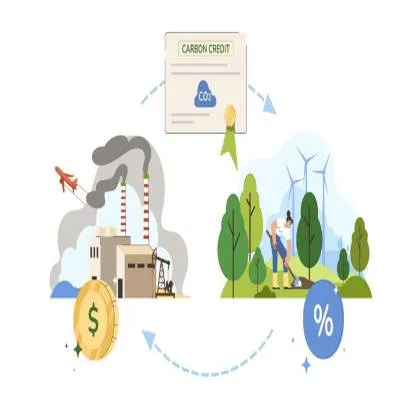
The Government of India has expanded the scope of its climate compliance framework by notifying Greenhouse Gas Emission Intensity (GEI) targets for 208 additional carbon-intensive industrial entities under the Carbon Credit Trading Scheme (CCTS). The notification, issued on January 13, 2026, brings Petroleum Refineries, Petrochemicals, Textiles and Secondary Aluminium sectors under the compliance mechanism of the Indian Carbon Market (ICM).

With this latest inclusion, the total number of obligated entities covered under the ICM’s compliance mechanism has increased to 490, significantly broadening its reach across India’s most emission-intensive industries. Earlier, in October 2025, the government had notified GEI targets for 282 obligated entities from the Aluminium, Cement, Chlor-Alkali, and Pulp & Paper sectors.

The CCTS, notified by the Government of India in 2023, provides the overarching framework for the operationalisation of the Indian Carbon Market. Its primary objective is to reduce or avoid greenhouse gas emissions across key sectors of the Indian economy by assigning a price to emissions through a carbon credit certificate trading system.

The scheme functions through two mechanisms — the Compliance Mechanism and the Offset Mechanism. Under the Compliance Mechanism, designated emission-intensive industries, referred to as Obligated Entities, are required to meet prescribed GEI reduction targets. Entities that achieve reductions beyond their assigned targets are eligible to earn Carbon Credit Certificates, which can be traded with other obligated entities that fall short of compliance.

The latest expansion reflects sustained engagement with industry stakeholders, detailed technical evaluations, and coordinated institutional efforts. As sectoral coverage widens and the compliance framework continues to mature, the Indian Carbon Market is expected to play a pivotal role in balancing industrial growth with India’s long-term climate commitments and its journey toward a net-zero emissions pathway.

The Government of India has expanded the scope of its climate compliance framework by notifying Greenhouse Gas Emission Intensity (GEI) targets for 208 additional carbon-intensive industrial entities under the Carbon Credit Trading Scheme (CCTS). The notification, issued on January 13, 2026, brings Petroleum Refineries, Petrochemicals, Textiles and Secondary Aluminium sectors under the compliance mechanism of the Indian Carbon Market (ICM).With this latest inclusion, the total number of obligated entities covered under the ICM’s compliance mechanism has increased to 490, significantly broadening its reach across India’s most emission-intensive industries. Earlier, in October 2025, the government had notified GEI targets for 282 obligated entities from the Aluminium, Cement, Chlor-Alkali, and Pulp & Paper sectors.The CCTS, notified by the Government of India in 2023, provides the overarching framework for the operationalisation of the Indian Carbon Market. Its primary objective is to reduce or avoid greenhouse gas emissions across key sectors of the Indian economy by assigning a price to emissions through a carbon credit certificate trading system.The scheme functions through two mechanisms — the Compliance Mechanism and the Offset Mechanism. Under the Compliance Mechanism, designated emission-intensive industries, referred to as Obligated Entities, are required to meet prescribed GEI reduction targets. Entities that achieve reductions beyond their assigned targets are eligible to earn Carbon Credit Certificates, which can be traded with other obligated entities that fall short of compliance.The latest expansion reflects sustained engagement with industry stakeholders, detailed technical evaluations, and coordinated institutional efforts. As sectoral coverage widens and the compliance framework continues to mature, the Indian Carbon Market is expected to play a pivotal role in balancing industrial growth with India’s long-term climate commitments and its journey toward a net-zero emissions pathway.

Next Story
Infrastructure Urban

Henkel, Rotary Recycle PoP Ganesha Idols Under Project HARMONY

Henkel India, in partnership with the Rotary Club of Navi Mumbai – Joy of Giving and with support from the Navi Mumbai Municipal Corporation (NMMC), has advanced circular sustainability through Project HARMONY by recycling Plaster of Paris (PoP) Ganesha idols into community learning assets. The initiative highlights an integrated approach to environmental restoration and social impact.As part of the project, materials collected after Ganesh Visarjan 2025 at Nerul were responsibly diverted from land and water bodies and processed at an authorised recycling facility, with on-ground execution s..

Next Story
Real Estate

Houssed.com Expands to 33 Cities, Crosses Rs 1 Bn in Deals

Proptech platform Houssed.com has expanded its presence to 33 cities across India, strengthening its national footprint as it crosses 50,000 verified property listings and facilitates real estate transactions worth over Rs 1 billion. The milestone marks a significant phase in the company’s growth as demand rises for transparent and technology-driven property discovery in India’s estimated $500-billion real estate market.The company said the expansion reflects increasing preference among homebuyers and developers for platforms that prioritise verification, accountability and customer trust...

Next Story
Infrastructure Urban

Hindustan Zinc to Set Up India’s First Zinc Tailings Recycling Unit

Hindustan Zinc, a Vedanta Group company and the world’s largest integrated zinc producer, has awarded contracts to CIMIC Group companies Sedgman and Leighton Asia for the development of India’s first zinc tailings recycling facility at its Rampura Agucha Mines in Rajasthan. The project marks a significant step towards adopting circular economy practices in the country’s mining sector.Tailings are finely ground residues left after mineral extraction and are traditionally treated as waste. However, they often contain residual quantities of valuable metals that were not recoverable using ea..

Advertisement

Subscribe to Our Newsletter

Get daily newsletters around different themes from Construction world.

STAY CONNECTED

Advertisement

Advertisement

Advertisement

Advertisement

Open In App