+
Government Optimises Energy Mix To Cut Green Hydrogen Costs
POWER & RENEWABLE ENERGY

Government Optimises Energy Mix To Cut Green Hydrogen Costs

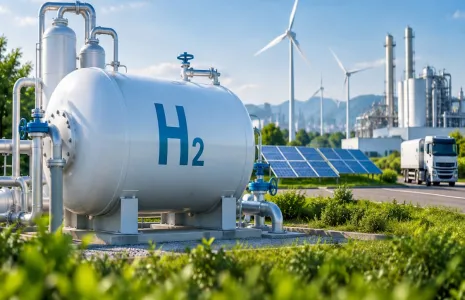
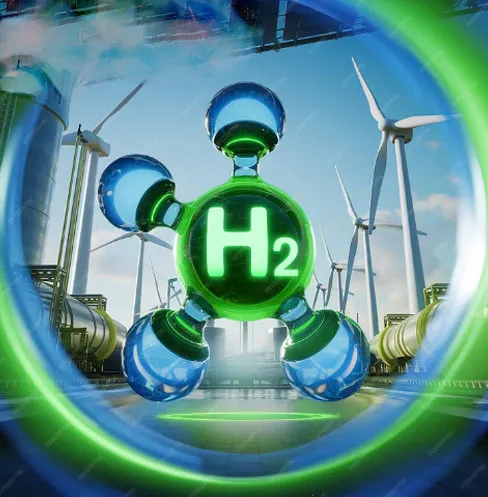
The Government of India is implementing the National Green Hydrogen Mission to make India a global hub of production, usage and export of green hydrogen and its derivatives. India’s green hydrogen production capacity is likely to reach five million metric tonnes (mn t) per annum by 2030 to support domestic industrial decarbonisation.

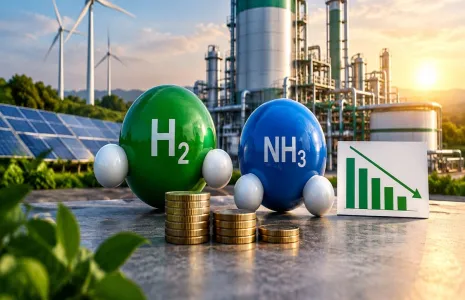
Significant incentives under the mission include allocation of electrolyser manufacturing capacity to 15 companies totalling 3,000 megawatts (MW) per annum and a total incentive of Rs 44.4 billion (bn). Under the production incentive scheme 18 companies were awarded a cumulative production capacity of 0.862 mn t per annum and two entities were awarded 20,000 tonnes per annum. The Solar Energy Corporation of India discovered prices for supply of 0.724 mn t per annum of green ammonia to 13 fertilizer units.

Projects commissioned on or before 31 December 2030 that use renewable energy for green hydrogen or green ammonia production have been granted exemption from payment of inter?state transmission system charges for a period of 25 years from the date of commissioning. Duty benefits under Section 26 of the Special Economic Zones Act, 2005 have been permitted for installation and operation and maintenance of renewable equipment for captive consumption. The ministry indicated that these incentives are intended to secure predictable demand through long?term offtake agreements and to aid industrial decarbonisation.

India is optimising its energy mix by expanding low?cost renewable capacity through competitive tariff?based bidding and large?scale deployment of solar and wind technologies. Standard bidding guidelines for procurement from grid?connected solar, wind, wind?solar hybrid and firm and dispatchable renewable energy projects have been issued. Exemptions from approved lists for modules and turbine models were granted for plants inside a Special Economic Zone or an export oriented unit that supply power exclusively to green hydrogen production.

FDI has been permitted up to 100 per cent under the automatic route and schemes for solar parks and ultra mega solar power projects are being implemented. The ministry submitted the information in a written reply to the Rajya Sabha.

The Government of India is implementing the National Green Hydrogen Mission to make India a global hub of production, usage and export of green hydrogen and its derivatives. India’s green hydrogen production capacity is likely to reach five million metric tonnes (mn t) per annum by 2030 to support domestic industrial decarbonisation. Significant incentives under the mission include allocation of electrolyser manufacturing capacity to 15 companies totalling 3,000 megawatts (MW) per annum and a total incentive of Rs 44.4 billion (bn). Under the production incentive scheme 18 companies were awarded a cumulative production capacity of 0.862 mn t per annum and two entities were awarded 20,000 tonnes per annum. The Solar Energy Corporation of India discovered prices for supply of 0.724 mn t per annum of green ammonia to 13 fertilizer units. Projects commissioned on or before 31 December 2030 that use renewable energy for green hydrogen or green ammonia production have been granted exemption from payment of inter?state transmission system charges for a period of 25 years from the date of commissioning. Duty benefits under Section 26 of the Special Economic Zones Act, 2005 have been permitted for installation and operation and maintenance of renewable equipment for captive consumption. The ministry indicated that these incentives are intended to secure predictable demand through long?term offtake agreements and to aid industrial decarbonisation. India is optimising its energy mix by expanding low?cost renewable capacity through competitive tariff?based bidding and large?scale deployment of solar and wind technologies. Standard bidding guidelines for procurement from grid?connected solar, wind, wind?solar hybrid and firm and dispatchable renewable energy projects have been issued. Exemptions from approved lists for modules and turbine models were granted for plants inside a Special Economic Zone or an export oriented unit that supply power exclusively to green hydrogen production. FDI has been permitted up to 100 per cent under the automatic route and schemes for solar parks and ultra mega solar power projects are being implemented. The ministry submitted the information in a written reply to the Rajya Sabha.

Next Story
Infrastructure Transport

Second Mountain Tunnel Breakthrough in Palghar Advances High Speed Rail

The Mumbai-Ahmedabad high speed rail (MAHSR) project reached a milestone with the breakthrough of a mountain tunnel in Palghar, Maharashtra. Mountain tunnel MT-six measures 454 metres long and 14.4 metres wide and will accommodate up and down tracks. The breakthrough follows MT-five near Saphale on second January 2026 and the MT-six excavation was completed from both ends using the New Austrian Tunnelling Method. The ministry reported that the tunnelling was completed within 12 months. The New Austrian Tunnelling Method is favoured for its flexibility in complex geology and irregular tunnel s..

Next Story
Infrastructure Transport

Modi Government Pushes Atmanirbhar Container Drive With BCSL MoU

The Union Government advanced a plan to create an integrated, domestically anchored container ecosystem with the signing of a Memorandum of Understanding to establish the Bharat Container Shipping Line (BCSL). The MoU was signed by key agencies including the Shipping Corporation of India and Container Corporation of India alongside major port authorities and Sagarmala Finance Corporation Limited under the Ministry of Ports, Shipping and Waterways, in the presence of senior ministers. The initiative aligns with the Container Manufacturing Assistance Scheme announced in the Union Budget 2026–2..

Next Story
Infrastructure Urban

Ministry Reports Gains In Mobility For Marginalised Communities

The Ministry of Social Justice and Empowerment is implementing skill development, education and rehabilitation schemes to promote socio-economic mobility and sustainable livelihoods for marginalised and disadvantaged communities across the country. Programmes target Scheduled Castes, Other Backward Classes, Economically Weaker Sections, De-notified Tribes and Safai Karamcharis through specialised implementing corporations and empanelled training institutes. Pradhan Mantri Dakshata Aur Kushalta Sampann Hitgrahi Yojana, or PM-DAKSH, provided skill training and placement support through the Nati..

Advertisement

Subscribe to Our Newsletter

Get daily newsletters around different themes from Construction world.

STAY CONNECTED

Advertisement

Advertisement

Advertisement

Open In App