+
Government Optimises Energy Mix To Reduce Green Hydrogen Costs
POWER & RENEWABLE ENERGY

Government Optimises Energy Mix To Reduce Green Hydrogen Costs

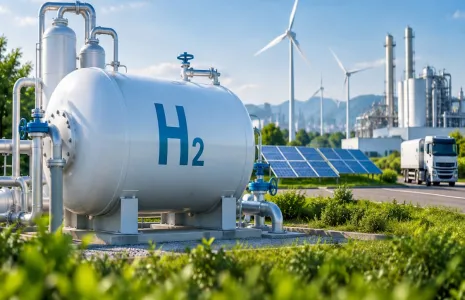
The Government of India is implementing the National Green Hydrogen Mission to make the country a global hub for production, use and export of green hydrogen and its derivatives. The programme targets a production capacity of five mn metric tonnes (t) per annum by 2030 and seeks to lower production costs through coordinated incentives and infrastructure support. Implementation emphasises rapid expansion of low cost renewable energy and integration of long term offtake arrangements to provide stable demand and industrial decarbonisation.

Under an incentive scheme for electrolyser manufacturing, 15 companies were awarded a combined manufacturing capacity of 3,000 megawatt (MW) per annum and incentives totalling Rs 44.4 bn. Under the production incentive scheme, 18 companies secured cumulative capacity of 0.862 mn tonnes (t) per annum, while two companies were selected under a procurement scheme for refineries with total capacity of 20,000 tonnes per annum. Prices were discovered by the Solar Energy Corporation of India for supply of 0.724 mn tonnes (t) per annum of green ammonia to 13 fertiliser units.

Projects that commission green hydrogen or green ammonia plants on or before 31 December 2030 and that use renewable energy have been granted exemption from Inter State Transmission System charges for a period of 25 years from commissioning. Duty benefits under section 26 of the Special Economic Zone Act, 2005 have been allowed for installation and operation and maintenance of renewable energy equipment for captive consumption. These measures aim to reduce input costs and create predictable investment signals.

Complementary measures include standard bidding guidelines for tariff based procurement, exemptions from approved lists for modules and turbine models inside special economic zones and export oriented units, and permission for foreign direct investment up to 100 per cent. Solar parks and ultra mega solar projects, funding under the Green Energy Corridor and a transmission plan to 2030 are expected to support energy mix optimisation. The information was submitted in a written reply to the Rajya Sabha by the Union Minister of State for New and Renewable Energy.

The Government of India is implementing the National Green Hydrogen Mission to make the country a global hub for production, use and export of green hydrogen and its derivatives. The programme targets a production capacity of five mn metric tonnes (t) per annum by 2030 and seeks to lower production costs through coordinated incentives and infrastructure support. Implementation emphasises rapid expansion of low cost renewable energy and integration of long term offtake arrangements to provide stable demand and industrial decarbonisation. Under an incentive scheme for electrolyser manufacturing, 15 companies were awarded a combined manufacturing capacity of 3,000 megawatt (MW) per annum and incentives totalling Rs 44.4 bn. Under the production incentive scheme, 18 companies secured cumulative capacity of 0.862 mn tonnes (t) per annum, while two companies were selected under a procurement scheme for refineries with total capacity of 20,000 tonnes per annum. Prices were discovered by the Solar Energy Corporation of India for supply of 0.724 mn tonnes (t) per annum of green ammonia to 13 fertiliser units. Projects that commission green hydrogen or green ammonia plants on or before 31 December 2030 and that use renewable energy have been granted exemption from Inter State Transmission System charges for a period of 25 years from commissioning. Duty benefits under section 26 of the Special Economic Zone Act, 2005 have been allowed for installation and operation and maintenance of renewable energy equipment for captive consumption. These measures aim to reduce input costs and create predictable investment signals. Complementary measures include standard bidding guidelines for tariff based procurement, exemptions from approved lists for modules and turbine models inside special economic zones and export oriented units, and permission for foreign direct investment up to 100 per cent. Solar parks and ultra mega solar projects, funding under the Green Energy Corridor and a transmission plan to 2030 are expected to support energy mix optimisation. The information was submitted in a written reply to the Rajya Sabha by the Union Minister of State for New and Renewable Energy.

Next Story
Infrastructure Transport

Tamil Nadu Gets Rs 76,110 mn for Railways, Three Projects Revived

Union Minister for Railways Ashwini Vaishnaw announced that Tamil Nadu has been allocated Rs 76,110 mn in the Union Budget 2026–27, marking a 14.9 per cent increase over the Rs 66,260 mn allotted in 2025–26. The allocation is intended for ongoing new line projects, track doubling, station redevelopment and safety-related works, with project-wise details to be disclosed when the Pink Book is released. Officials indicated that the funds will be deployed across construction and modernisation priorities identified for the state. The minister urged the Tamil Nadu government to extend support f..

Next Story
Infrastructure Transport

Nagpur Station Redevelopment Deadline Extended To March 2027

Nagpur Railway Station redevelopment has been rescheduled to March 2027 as officials opted for a cautious approach to minimise disruption at the busy terminus. The project had earlier been due for completion in December 2026 but work at a live station while preserving the heritage character of the building has slowed progress. The Divisional Railway Manager (DRM) said construction sequencing is being adjusted to maintain passenger services. The DRM provided an update on Ajni Railway Station, stating its redevelopment timeline has been revised to October 2026 instead of the earlier target of c..

Next Story
Infrastructure Transport

Railway Push Boosts Connectivity in Jammu and Kashmir

An accelerated push to expand railway infrastructure is reshaping connectivity in Jammu and Kashmir, with Indian Railways leading an extensive programme of new lines, stations and engineering works. Officials described the effort as aimed at linking remote areas to major trade and transport corridors and at reducing travel time for passengers and freight. The programme incorporates complex tunnelling and bridge construction to negotiate challenging terrain and to provide year round access. Administrative sources indicated that coordination with central and local agencies has been intensified t..

Advertisement

Subscribe to Our Newsletter

Get daily newsletters around different themes from Construction world.

STAY CONNECTED

Advertisement

Advertisement

Advertisement

Open In App