Gujarat Allows Rooftop Wind Under New Renewables Policy
POWER & RENEWABLE ENERGY

Gujarat Allows Rooftop Wind Under New Renewables Policy

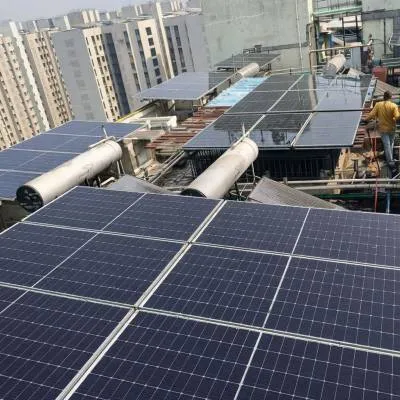
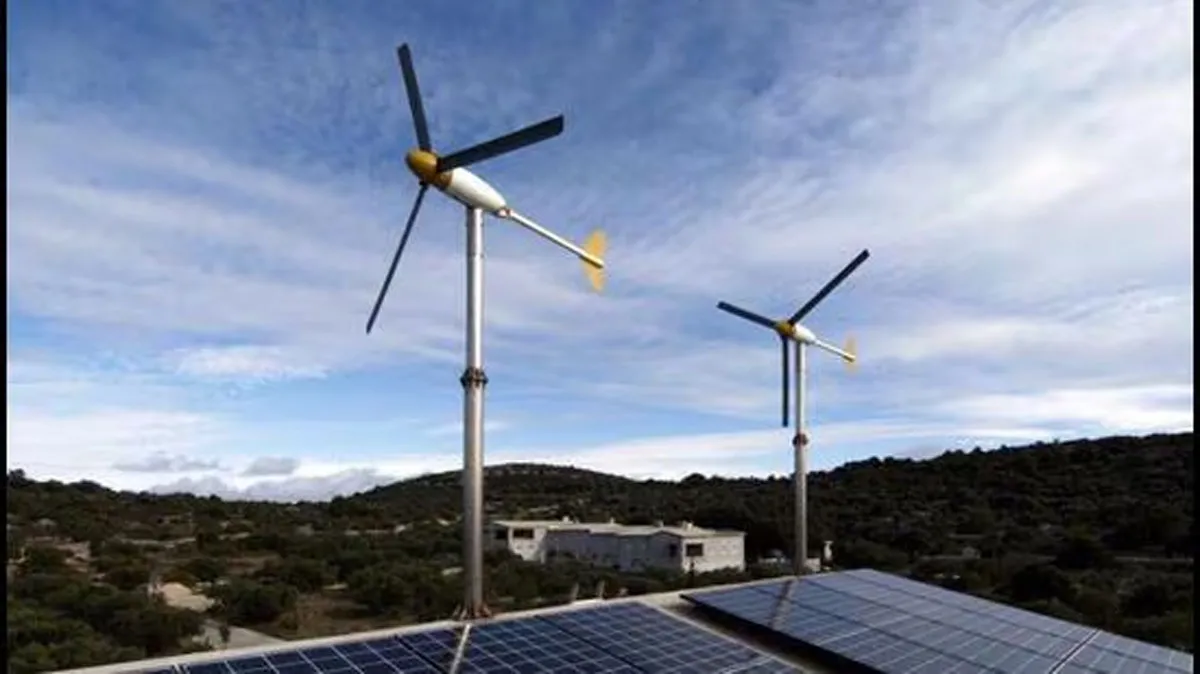
Gujarat’s new renewable energy policy has enabled individuals to install mini and micro wind turbines on rooftops of private premises for captive consumption and limited export to the grid, opening a new segment in decentralised clean energy generation. The Integrated Renewable Energy Policy, notified on December 25, provides a long-term framework for renewable energy development up to 2030 and positions the state as a competitive clean energy hub, with a target of over 100 GW of renewable capacity.

A senior official at Gujarat Urja Vikas Nigam Limited said the rooftop wind segment is still at a nascent stage, with only a handful of manufacturers, largely start-ups, currently active. Pilot projects have already been carried out and some rooftop installations are operational, though overall numbers remain limited. The policy is designed for the next five years, focusing on enabling systems and market readiness rather than immediate large-scale deployment.

Rooftop wind systems currently cost about Rs 0.1 million per kilowatt of installed capacity, making them more expensive than rooftop solar. However, officials said wind turbines offer higher utilisation levels. Wind systems can achieve generation levels of around 35 per cent, compared with about 18 to 20 per cent for solar panels. A hybrid rooftop setup combining wind and solar could therefore help optimise both costs and energy output.

The official added that the policy is not subsidy-driven at this stage. Instead, the emphasis is on registration, system enablement and preparing the ecosystem for long-term growth, with the state prioritising future potential over rapid near-term scale-up.

Pune-based Revayu Energy, which is working on rooftop and small-scale wind systems in Gujarat, said it has executed pilot rooftop projects in cities such as Surat and Porbandar. According to Shravan Kumar Verma, Project Execution Head at Revayu Energy, one of the installations is a wind-solar hybrid and both projects are grid-connected. He said the cost of installation, commissioning and testing for pilot projects was about Rs 0.2 million per kilowatt, but under the new policy, costs could fall to around Rs 80,000–90,000 per kilowatt.

Gujarat’s new renewable energy policy has enabled individuals to install mini and micro wind turbines on rooftops of private premises for captive consumption and limited export to the grid, opening a new segment in decentralised clean energy generation. The Integrated Renewable Energy Policy, notified on December 25, provides a long-term framework for renewable energy development up to 2030 and positions the state as a competitive clean energy hub, with a target of over 100 GW of renewable capacity. A senior official at Gujarat Urja Vikas Nigam Limited said the rooftop wind segment is still at a nascent stage, with only a handful of manufacturers, largely start-ups, currently active. Pilot projects have already been carried out and some rooftop installations are operational, though overall numbers remain limited. The policy is designed for the next five years, focusing on enabling systems and market readiness rather than immediate large-scale deployment. Rooftop wind systems currently cost about Rs 0.1 million per kilowatt of installed capacity, making them more expensive than rooftop solar. However, officials said wind turbines offer higher utilisation levels. Wind systems can achieve generation levels of around 35 per cent, compared with about 18 to 20 per cent for solar panels. A hybrid rooftop setup combining wind and solar could therefore help optimise both costs and energy output. The official added that the policy is not subsidy-driven at this stage. Instead, the emphasis is on registration, system enablement and preparing the ecosystem for long-term growth, with the state prioritising future potential over rapid near-term scale-up. Pune-based Revayu Energy, which is working on rooftop and small-scale wind systems in Gujarat, said it has executed pilot rooftop projects in cities such as Surat and Porbandar. According to Shravan Kumar Verma, Project Execution Head at Revayu Energy, one of the installations is a wind-solar hybrid and both projects are grid-connected. He said the cost of installation, commissioning and testing for pilot projects was about Rs 0.2 million per kilowatt, but under the new policy, costs could fall to around Rs 80,000–90,000 per kilowatt.

Next Story
Infrastructure Transport

CMRL to Open 15.8 km Chennai Metro Phase II in February

Chennai Metro Rail (CMRL) has revised its rollout strategy for Phase II of the Chennai Metro, deciding to commission the entire 15.8-km stretch between Poonamallee Bypass and Vadapalani directly in February. The move marks a shift from the earlier plan of launching services on a shorter section first and extending them in stages.Initially, CMRL had proposed to start operations on the Poonamallee Bypass–Porur Junction stretch by the end of January, with services extended to Vadapalani in February. However, officials said the revised approach would allow commuters to benefit from better connec..

Next Story
Infrastructure Transport

Power Mech Emerges L1 for Mumbai Monorail O&M Contract

Power Mech Projects has emerged as the lowest bidder (L1) for the operations and maintenance (O&M) contract of the Mumbai Monorail project, officials said. The contract was floated by the Mumbai Metropolitan Region Development Authority (MMRDA) with a tenure of 1,825 days, or five years.MMRDA had invited bids for the O&M work of the Mumbai Monorail corridor from Sant Gadge Maharaj Chowk to Chembur. Technical bids were opened on November 12, 2025, with four firms submitting bids for the contract. Following the technical evaluation conducted on January 1, 2026, two bidders were disqualif..

Next Story
Infrastructure Transport

E to E Transportation Clarifies SECR Contract Value at Rs 270.35 Mn

NSE Emerge-listed E to E Transportation Infrastructure has issued a clarification on the value of a railway signalling and telecommunication contract awarded by the South East Central Railway (SECR), Raipur Division, after identifying a typographical error in its earlier regulatory disclosure.In a filing dated January 4, 2026, the company said the correct value of the Letter of Acceptance (LoA) is Rs 270.34 million, and not Rs 2.73 billion as previously stated in an announcement uploaded on the NSE Emerge portal earlier the same day. The company noted that the incorrect figure was the result o..

Advertisement

Subscribe to Our Newsletter

Get daily newsletters around different themes from Construction world.

STAY CONNECTED

Advertisement

Advertisement

Advertisement

Advertisement

Open In App