Gujarat Calls for Bids on 500 MW Wind-Solar Hybrid Projects
POWER & RENEWABLE ENERGY

Gujarat Calls for Bids on 500 MW Wind-Solar Hybrid Projects

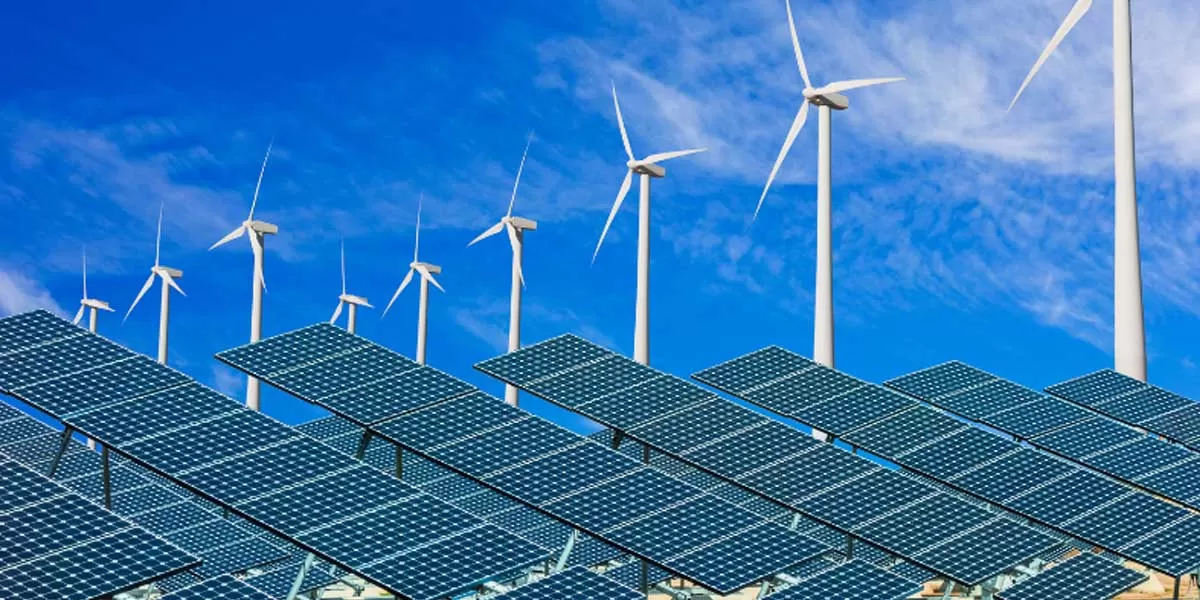
The Gujarat Urja Vikas Nigam Limited (GUVNL) has launched Phase II of its ambitious renewable energy initiative, inviting bids for the procurement of power from 500 MW grid-connected wind-solar hybrid projects. This phase also includes the provision for expanding the capacity by an additional 500 MW through the greenshoe option, a move aimed at further bolstering Gujarat's renewable energy portfolio.

Following the recent awarding of contracts for Phase I projects to KPI Green Energy and Juniper Green Energy, GUVNL is moving swiftly to advance its renewable energy agenda. Interested parties have until March 13, 2024, to submit their bids, with bid openings scheduled for the following day.

Prospective bidders must adhere to stringent financial requirements, including a bid processing fee of ₹1.5 million ($18,083.07) and an earnest money deposit of ₹928,000 ($11,146)/MW of quoted capacity. Additionally, successful bidders will be required to furnish a performance bank guarantee equivalent to ₹2.32 million (~$27,866)/MW of allocated capacity before signing the power purchase agreement (PPA).

Eligibility criteria encompass various project statuses, including those under construction, not yet operational, or lacking a long-term PPA. However, projects must not have existing obligations under other state or central programs and should mitigate technology risks by employing established and operational technologies.

Bidders from countries sharing a border with India are eligible to participate, provided they are registered with the competent authority. Furthermore, financial stability is a prerequisite, with the bidder's net worth required to meet or exceed specified thresholds based on the project's solar PV and wind power components.

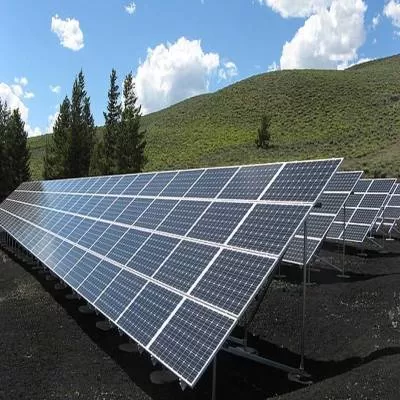
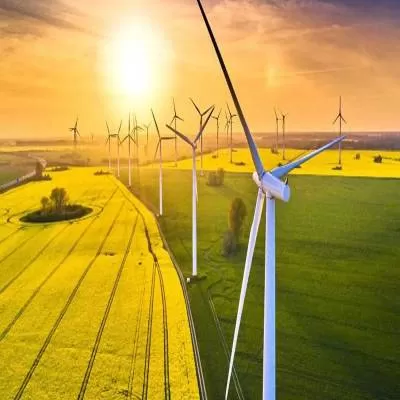
To ensure adherence to quality standards, only certified wind turbine models listed by the Ministry of New and Renewable Energy (MNRE) and solar modules approved by the MNRE will be permitted for use in the projects.

Successful bidders must finalize a PPA with GUVNL within 30 days of receiving the letter of intent or within 10 days of tariff adoption by the Gujarat Electricity Regulatory Commission, whichever is later.

With its latest tender, Gujarat reaffirms its commitment to renewable energy expansion, positioning itself as a frontrunner in India's transition towards sustainable power generation.

GUVNL's emphasis on technology reliability and financial stability underscores its dedication to facilitating the growth of renewable energy infrastructure, contributing to both environmental sustainability and energy security in the region.

The Gujarat Urja Vikas Nigam Limited (GUVNL) has launched Phase II of its ambitious renewable energy initiative, inviting bids for the procurement of power from 500 MW grid-connected wind-solar hybrid projects. This phase also includes the provision for expanding the capacity by an additional 500 MW through the greenshoe option, a move aimed at further bolstering Gujarat's renewable energy portfolio.Following the recent awarding of contracts for Phase I projects to KPI Green Energy and Juniper Green Energy, GUVNL is moving swiftly to advance its renewable energy agenda. Interested parties have until March 13, 2024, to submit their bids, with bid openings scheduled for the following day.Prospective bidders must adhere to stringent financial requirements, including a bid processing fee of ₹1.5 million ($18,083.07) and an earnest money deposit of ₹928,000 ($11,146)/MW of quoted capacity. Additionally, successful bidders will be required to furnish a performance bank guarantee equivalent to ₹2.32 million (~$27,866)/MW of allocated capacity before signing the power purchase agreement (PPA).Eligibility criteria encompass various project statuses, including those under construction, not yet operational, or lacking a long-term PPA. However, projects must not have existing obligations under other state or central programs and should mitigate technology risks by employing established and operational technologies.Bidders from countries sharing a border with India are eligible to participate, provided they are registered with the competent authority. Furthermore, financial stability is a prerequisite, with the bidder's net worth required to meet or exceed specified thresholds based on the project's solar PV and wind power components.To ensure adherence to quality standards, only certified wind turbine models listed by the Ministry of New and Renewable Energy (MNRE) and solar modules approved by the MNRE will be permitted for use in the projects.Successful bidders must finalize a PPA with GUVNL within 30 days of receiving the letter of intent or within 10 days of tariff adoption by the Gujarat Electricity Regulatory Commission, whichever is later.With its latest tender, Gujarat reaffirms its commitment to renewable energy expansion, positioning itself as a frontrunner in India's transition towards sustainable power generation.GUVNL's emphasis on technology reliability and financial stability underscores its dedication to facilitating the growth of renewable energy infrastructure, contributing to both environmental sustainability and energy security in the region.

Next Story
Real Estate

AI: The New Recruit

From getting ideas to evaluating designs, presenting concepts to clients and tracking projects, artificial intelligence (AI) is helping architects work better and faster.“AI allows architects to spend more time doing what only they can do: think critically, synthesise complexity and design with intent,” says Dikshu C Kukreja, Managing Principal, CP Kukreja Architects. “Every minute reclaimed from repetitive processes can be invested in creativity, contextual understanding, interdisciplinary collaboration and innovation – the qualities that define meaningful architecture.”To read the ..

Next Story
Real Estate

Redevelopment 2.0

In 2017, Mumbai identified 160,000 ageing buildings due for structural audit. Close to half of these were in the Western Suburbs. Redeveloping the oldest and structurally weakest of these would help unlock new housing, much needed given the city’s growing population density and constant developed area of 437.7 sq km. At 30,600 people per sq km in 2024, Mumbai’s density was almost thrice that of Gurugram, and 60 per cent higher than Bengaluru’s.Essentially, Mumbai’s realty market has demand. It has capital. It has realty development potential.Fast forward to 2026. Mumbai has 1,094 regis..

Next Story
Technology

Cost intelligence will become a strategic contributor to project success

As India's construction industry accelerates its digital transformation, integrated platforms, AI and connected data are becoming essential to improving cost certainty, project efficiency and sustainability. Ravi Kumar, Sales Director – India, RIB Software India, shares how digital workflows are reshaping project planning, commercial management and decision-making across the construction value chain.India's construction sector is embracing digital technologies at an unprecedented pace. From your perspective, what are the biggest shifts driving this transformation and how is RIB Software enab..

Advertisement

Subscribe to Our Newsletter

Get daily newsletters around different themes from Construction world.

STAY CONNECTED

Advertisement

Advertisement

Advertisement