IEA Sees Global Power Demand Rising In 2026 And 2027
POWER & RENEWABLE ENERGY

IEA Sees Global Power Demand Rising In 2026 And 2027

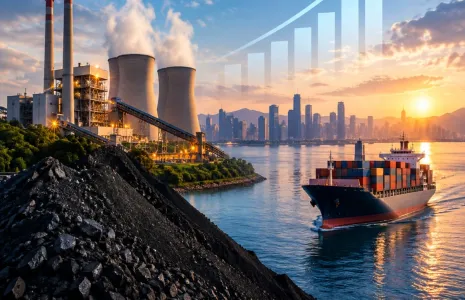
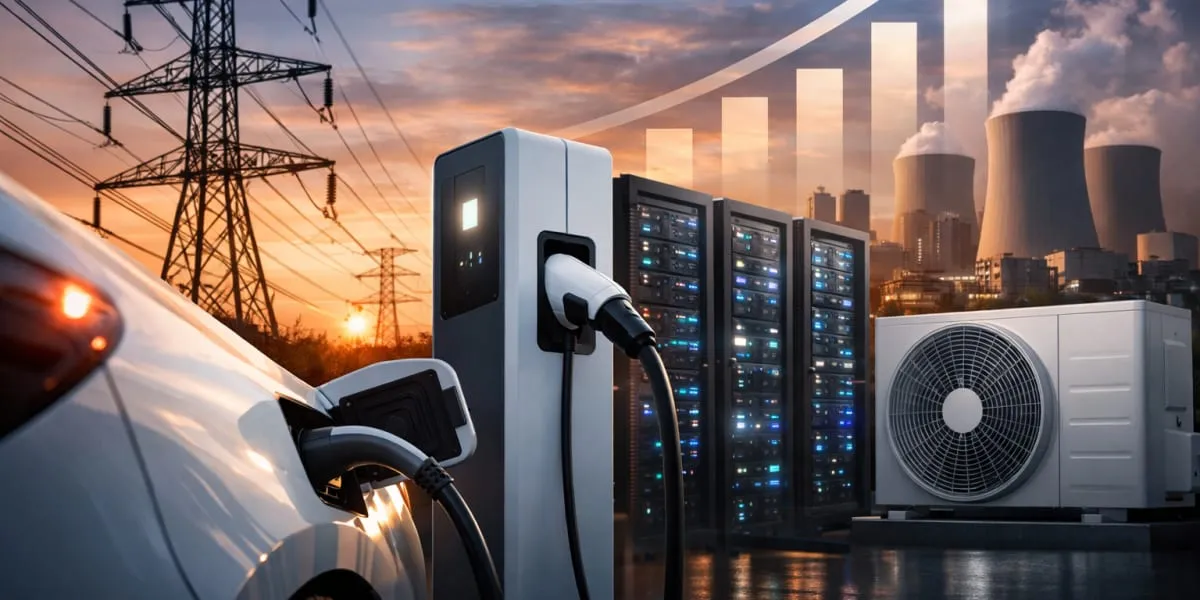
The International Energy Agency mid-year review said global power demand will accelerate in 2026 and 2027 versus 2025, with growth projected at three point six per cent in 2026 and three point eight per cent in 2027, up from three per cent in 2025. It attributed the acceleration to rising electricity use in data centres and to faster uptake of electric vehicles, air conditioning and heat pumps. These trends are altering peak loads and seasonal consumption patterns.

Global electricity consumption was projected at 30,700 TWh in 2027, up from 28,600 TWh in 2025. The review identified the West Asia conflict as a downside risk that could elevate energy prices and weigh on the global economy, noting a temporary loss of nearly 20 per cent of global LNG supply that has driven price volatility. Elevated gas prices have prompted fuel switching from natural gas to coal in parts of Asia and Europe, testing system flexibility and raising short-term supply concerns.

The IEA said a rising share of renewable energy has diversified supplies and supported energy security, helping to limit the impact of recent shocks. Renewables are forecast to outpace coal in power generation in 2026 after reaching parity last year, with generation from renewables set to grow by more than eight per cent in 2026. The share of renewables in the generation mix is projected to rise from 33 per cent in 2025 to 37 per cent by 2027.

China's demand was projected to grow by five point five per cent in 2026, up from five point two per cent in 2025, driven by electric vehicle adoption and stronger manufacturing. India was forecast to rebound to seven per cent after a weak one point six per cent in 2025 when an early monsoon cooled demand. The review warned that a stronger El Nino would raise cooling demand and typically reduce hydropower and wind output in Latin America and Southeast Asia, potentially increasing reliance on coal and gas and requiring policymakers to balance reliability with decarbonisation.

The International Energy Agency mid-year review said global power demand will accelerate in 2026 and 2027 versus 2025, with growth projected at three point six per cent in 2026 and three point eight per cent in 2027, up from three per cent in 2025. It attributed the acceleration to rising electricity use in data centres and to faster uptake of electric vehicles, air conditioning and heat pumps. These trends are altering peak loads and seasonal consumption patterns. Global electricity consumption was projected at 30,700 TWh in 2027, up from 28,600 TWh in 2025. The review identified the West Asia conflict as a downside risk that could elevate energy prices and weigh on the global economy, noting a temporary loss of nearly 20 per cent of global LNG supply that has driven price volatility. Elevated gas prices have prompted fuel switching from natural gas to coal in parts of Asia and Europe, testing system flexibility and raising short-term supply concerns. The IEA said a rising share of renewable energy has diversified supplies and supported energy security, helping to limit the impact of recent shocks. Renewables are forecast to outpace coal in power generation in 2026 after reaching parity last year, with generation from renewables set to grow by more than eight per cent in 2026. The share of renewables in the generation mix is projected to rise from 33 per cent in 2025 to 37 per cent by 2027. China's demand was projected to grow by five point five per cent in 2026, up from five point two per cent in 2025, driven by electric vehicle adoption and stronger manufacturing. India was forecast to rebound to seven per cent after a weak one point six per cent in 2025 when an early monsoon cooled demand. The review warned that a stronger El Nino would raise cooling demand and typically reduce hydropower and wind output in Latin America and Southeast Asia, potentially increasing reliance on coal and gas and requiring policymakers to balance reliability with decarbonisation.

Next Story
Technology

AI-Enabled Workflows Lift Profitability and Productivity

Organisations modernising frontline workflows with artificial intelligence, automation and real-time data are reporting stronger financial performance, higher productivity and improved employee engagement, according to a global study by Zebra Technologies and Oxford Economics.The research covered 1,000 senior leaders across retail, manufacturing, transportation and logistics in the US, Mexico, the UK, Germany, India, Japan, Australia and New Zealand.In transportation and logistics, 54 per cent of companies that improved picking and packing operations reported faster operational performance, wh..

Next Story
Real Estate

India Leads Global AI Readiness but Implementation Lags

Indian companies lead global averages across all eight artificial intelligence readiness indicators tracked by JLL, but only 19 per cent have started making changes to their workplaces, according to the JLL 2026 Future of Work Survey.The study found that 77 per cent of Indian business leaders expect AI to change their office requirements, creating a 58-percentage-point gap between awareness and implementation. The survey covered more than 2,200 CEOs, CFOs and real estate leaders across 21 countries during the first quarter of 2026.Despite concerns over automation, 58 per cent of Indian leaders..

Next Story
Equipment

Three WOLFF Cranes Build Riyadh Cable-Stayed Bridges

Three WOLFF 180 B luffing jib cranes are supporting the construction of two cable-stayed bridges alongside the existing Wadi Laban Bridge in Riyadh, Saudi Arabia. The project is being developed for the Royal Commission for Riyadh City and executed by the ICRC joint venture comprising IC Ictas and Al Rashid Trading & Contracting Company.The cranes are handling lifting operations including formwork, reinforcement, concrete placement, work platforms, surveying equipment and other construction materials. Each crane is fitted with a 40 m jib, reaches a hook height of 157 m and offers a maximum ..

Advertisement

Subscribe to Our Newsletter

Get daily newsletters around different themes from Construction world.

STAY CONNECTED

Advertisement

Advertisement

Advertisement