India And Australia Deepen Ties On Nuclear Maritime And Minerals
POWER & RENEWABLE ENERGY

India And Australia Deepen Ties On Nuclear Maritime And Minerals

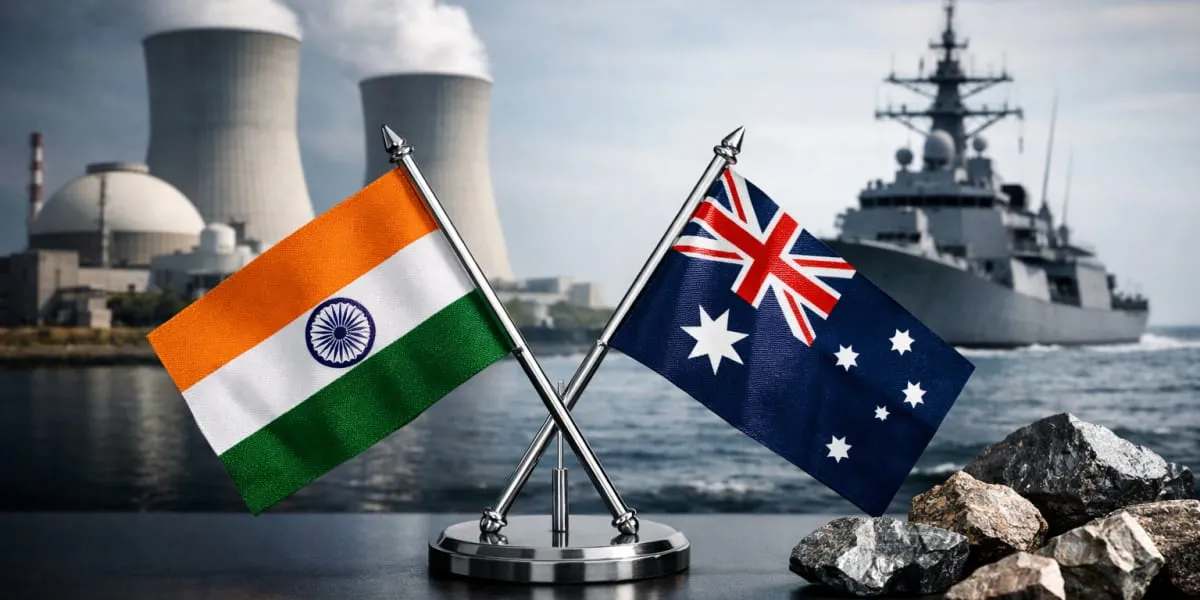
India and Australia sealed landmark pacts spanning civil nuclear energy, maritime security and critical minerals as Prime Minister Narendra Modi and his Australian counterpart Anthony Albanese reinforced the role of the bilateral partnership in ensuring a peaceful Indo-Pacific. Modi landed in Australia from Indonesia in the second leg of his three-nation tour aimed at boosting trade and defence ties amid a fractured geopolitical environment.

After meeting, the leaders unveiled a joint declaration on defence and security, a joint statement on energy ties and a roadmap for collaboration in cyber, critical technologies and supply chains. The pact on civil nuclear energy will facilitate the commercial supply of uranium from Australia to India to help New Delhi's nuclear power projects. The two sides agreed to work expeditiously on the proposed Comprehensive Economic Cooperation Agreement and a bilateral investment protection pact.

Modi indicated the agreement would open the way for uranium supplies and give new impetus to clean energy objectives and described cooperation in critical minerals as vital to strategic security and the clean energy transition. He said the launch of the Australia-India Partnership on Cyber, Critical Technologies and Supply Chains was intended to support this aim and that both sides will develop a critical minerals corridor. He added the India-Australia Defence Innovation Corridor will seek to connect defence startups and industry while the Maritime Security Collaboration Roadmap will advance shipbuilding, repair and maintenance cooperation.

Modi said terrorism is a shared challenge and both countries would strengthen cooperation to combat it, promote dialogue and diplomacy to resolve tensions and preserve freedom of navigation and a rules-based Indo-Pacific order. The defence initiatives were framed against concerns about China's growing military activity in the region. Albanese described the relationship as more consequential than ever and said the nuclear arrangement would facilitate Australian uranium exports for peaceful purposes, increasing non-fossil fuel power capacity and supporting the Australian resources sector.

He emphasised the partnership was diversifying across defence, security, education, science, technology, energy security and critical minerals and that the joint declaration would deepen practical cooperation, strategic coordination, more complex exercises and interoperability between forces. Both leaders signalled intent to expand bilateral ties and to grow the partnership from strength to strength.

"Join industry leaders at RAHSTA Expo, India's premier platform for roads, highways and traffic infrastructure. Register now to explore innovations, network with experts and shape the future of mobility."

India and Australia sealed landmark pacts spanning civil nuclear energy, maritime security and critical minerals as Prime Minister Narendra Modi and his Australian counterpart Anthony Albanese reinforced the role of the bilateral partnership in ensuring a peaceful Indo-Pacific. Modi landed in Australia from Indonesia in the second leg of his three-nation tour aimed at boosting trade and defence ties amid a fractured geopolitical environment. After meeting, the leaders unveiled a joint declaration on defence and security, a joint statement on energy ties and a roadmap for collaboration in cyber, critical technologies and supply chains. The pact on civil nuclear energy will facilitate the commercial supply of uranium from Australia to India to help New Delhi's nuclear power projects. The two sides agreed to work expeditiously on the proposed Comprehensive Economic Cooperation Agreement and a bilateral investment protection pact. Modi indicated the agreement would open the way for uranium supplies and give new impetus to clean energy objectives and described cooperation in critical minerals as vital to strategic security and the clean energy transition. He said the launch of the Australia-India Partnership on Cyber, Critical Technologies and Supply Chains was intended to support this aim and that both sides will develop a critical minerals corridor. He added the India-Australia Defence Innovation Corridor will seek to connect defence startups and industry while the Maritime Security Collaboration Roadmap will advance shipbuilding, repair and maintenance cooperation. Modi said terrorism is a shared challenge and both countries would strengthen cooperation to combat it, promote dialogue and diplomacy to resolve tensions and preserve freedom of navigation and a rules-based Indo-Pacific order. The defence initiatives were framed against concerns about China's growing military activity in the region. Albanese described the relationship as more consequential than ever and said the nuclear arrangement would facilitate Australian uranium exports for peaceful purposes, increasing non-fossil fuel power capacity and supporting the Australian resources sector. He emphasised the partnership was diversifying across defence, security, education, science, technology, energy security and critical minerals and that the joint declaration would deepen practical cooperation, strategic coordination, more complex exercises and interoperability between forces. Both leaders signalled intent to expand bilateral ties and to grow the partnership from strength to strength.

Next Story
Infrastructure Transport

Bhogapuram Airport Set For Take Off After Licence Issued

Union Civil Aviation Minister Kinjarapu Ram Mohan Naidu announced that Alluri Sitharama Raju Bhogapuram International Airport has achieved 100 per cent completion following issuance of its aerodrome licence by the Ministry of Civil Aviation after an inspection with public representatives, district officials and GMR Group representatives. The licence was granted after extensive verification over the past month to ensure that safety and operational standards were met. The Chief Minister's Office has already contacted the Prime Minister's Office to finalise an inauguration date and commercial fli..

Next Story
Infrastructure Urban

Auto Sector To Grow 22-24 Per Cent In Q1 FY27

Credit Rating Information Services of India (Crisil) estimated that India's automobile sector is expected to report revenue growth of 22-24 per cent year-on-year in the first quarter of FY27 and to be among the largest contributors to corporate revenue growth in the quarter. The agency estimated overall corporate revenue to have grown 11-11.5 per cent year-on-year in the quarter ended 30 June 2026, the fastest pace in two years despite supply chain disruptions and higher input costs from the West Asia conflict. This compared with growth of 9.6 per cent in the preceding quarter. Crisil said the..

Next Story
Infrastructure Urban

Nomura Sees Q1 Pressure On Cement Margins; Backs Major Players

Nomura said cement margins will be under pressure in the June quarter as fuel and packaging costs rose, although volume growth is expected to remain healthy. The brokerage forecast six to seven per cent year-on-year organic volume growth for the Indian cement industry in the period, with Shree Cement identified as likely to post the highest growth at 15 per cent year-on-year. It noted that the West and North regions outperformed on pricing, aiding companies with greater exposure in those markets. Average trade prices improved three per cent sequentially to around Rs 326 per bag after price inc..

Advertisement

Subscribe to Our Newsletter

Get daily newsletters around different themes from Construction world.

STAY CONNECTED

Advertisement

Advertisement

Advertisement