India And Germany Deepen Cooperation On Storage And Renewables
POWER & RENEWABLE ENERGY

India And Germany Deepen Cooperation On Storage And Renewables

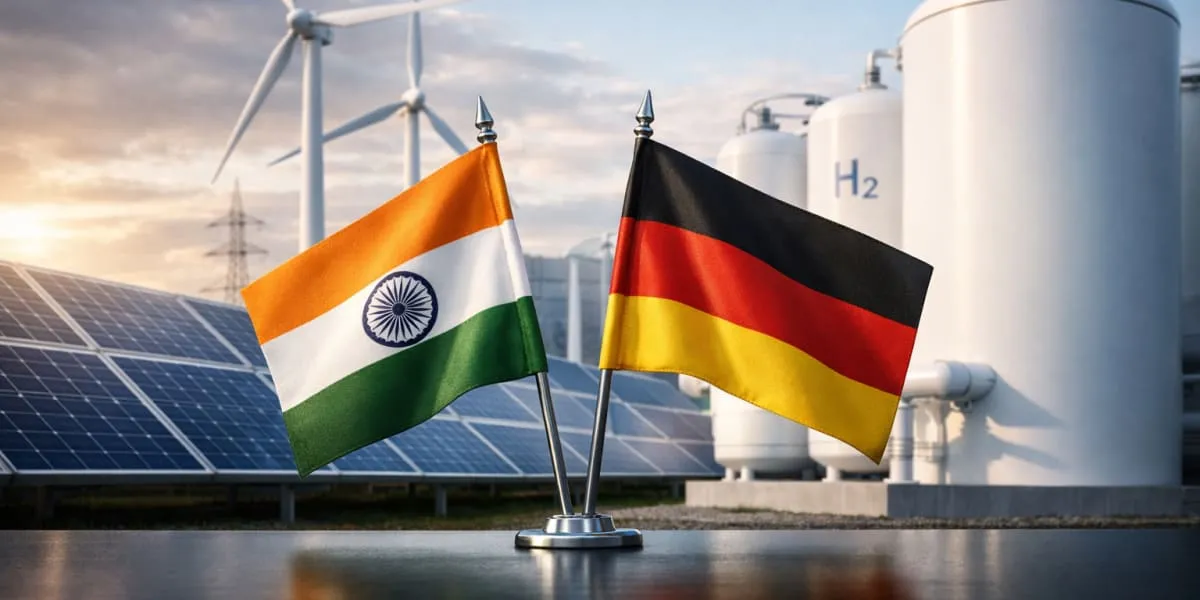
India and Germany reaffirmed their commitment to deepen cooperation in renewable energy, storage and green hydrogen to strengthen energy security and cut reliance on imported fossil fuels. The renewed focus emerged at the 10th edition of the Indo-German Partnership for Green and Sustainable Development (GSDP) Conversation Series, jointly hosted by GSDP and the Ministry of New and Renewable Energy (MNRE) under the theme Energy Security through Renewable Energies. The event brought together policymakers, industry executives, think tanks and renewable energy experts to discuss the role of clean energy in shielding economies from fossil fuel price volatility and supporting long-term economic growth.

German ambassador Philipp Ackermann said that renewable energy had evolved beyond a climate imperative to become an economic and strategic necessity and that both countries face the challenge of reducing dependence on imported fossil fuels while enhancing energy independence. He noted that renewables form a trinity of climate action, economic opportunity and energy security. Delegates observed that bilateral collaboration has expanded across deployment, manufacturing, battery storage, grid integration, energy efficiency, green mobility and hard-to-abate industrial sectors.

MNRE secretary Santosh Kumar Sarangi highlighted the growing importance of energy security amid geopolitical uncertainties and said recent developments in West Asia had underscored vulnerabilities associated with fossil fuel dependence. He noted that non-fossil fuel sources now account for around 54 per cent of India's installed power generation capacity and reiterated the country's commitment to achieving 500 gigawatt (GW) of non-fossil fuel capacity by 2030. The government's energy transition strategy is increasingly centred on scaling renewable generation, storage and transmission infrastructure to meet rising electricity demand while reducing import dependence. Officials reiterated a national target of reaching net-zero emissions by 2070.

Panellists emphasised accelerated deployment of renewables, greater investment in battery storage and grid modernisation, and stronger public-private collaboration to ensure reliable, affordable supplies. Experts said the next phase would require coordinated investments across generation, transmission, distribution, storage, financing and domestic manufacturing. Germany was cited as a key partner, offering technical cooperation, climate finance and skills development.

"Join industry leaders at RAHSTA Expo, India's premier platform for roads, highways and traffic infrastructure. Register now to explore innovations, network with experts and shape the future of mobility."

India and Germany reaffirmed their commitment to deepen cooperation in renewable energy, storage and green hydrogen to strengthen energy security and cut reliance on imported fossil fuels. The renewed focus emerged at the 10th edition of the Indo-German Partnership for Green and Sustainable Development (GSDP) Conversation Series, jointly hosted by GSDP and the Ministry of New and Renewable Energy (MNRE) under the theme Energy Security through Renewable Energies. The event brought together policymakers, industry executives, think tanks and renewable energy experts to discuss the role of clean energy in shielding economies from fossil fuel price volatility and supporting long-term economic growth. German ambassador Philipp Ackermann said that renewable energy had evolved beyond a climate imperative to become an economic and strategic necessity and that both countries face the challenge of reducing dependence on imported fossil fuels while enhancing energy independence. He noted that renewables form a trinity of climate action, economic opportunity and energy security. Delegates observed that bilateral collaboration has expanded across deployment, manufacturing, battery storage, grid integration, energy efficiency, green mobility and hard-to-abate industrial sectors. MNRE secretary Santosh Kumar Sarangi highlighted the growing importance of energy security amid geopolitical uncertainties and said recent developments in West Asia had underscored vulnerabilities associated with fossil fuel dependence. He noted that non-fossil fuel sources now account for around 54 per cent of India's installed power generation capacity and reiterated the country's commitment to achieving 500 gigawatt (GW) of non-fossil fuel capacity by 2030. The government's energy transition strategy is increasingly centred on scaling renewable generation, storage and transmission infrastructure to meet rising electricity demand while reducing import dependence. Officials reiterated a national target of reaching net-zero emissions by 2070. Panellists emphasised accelerated deployment of renewables, greater investment in battery storage and grid modernisation, and stronger public-private collaboration to ensure reliable, affordable supplies. Experts said the next phase would require coordinated investments across generation, transmission, distribution, storage, financing and domestic manufacturing. Germany was cited as a key partner, offering technical cooperation, climate finance and skills development.

Next Story
Real Estate

VeARC leases 27,000 sq ft office space in Bengaluru

VeARC India has leased approximately 27,000 sq ft of office space at The Executive Centre's (TEC) Helios Business Park on Outer Ring Road (ORR), Bengaluru, to support the expansion of its Global Capability Centre (GCC) operations.The new workspace accommodates more than 450 workstations and is intended to support the company's growing workforce in India. VeARC India serves as the Global Capability Centre for Long Arc Capital.Located on Bengaluru's Outer Ring Road, the office provides access to one of the city's key technology and business corridors. The expansion comes amid continued growth in..

Next Story
Real Estate

Bharat Shah Family Buys Four Luxury Apartments In Worli For Rs1.8 bn

The family of veteran investor Bharat Shah has acquired four ultra-luxury apartments on the higher floors of Kalpataru One in Worli, South Mumbai, for Rs1.8 billion (bn). The purchases were registered on 6 July 2026 and were executed through Preeti Bharat Shah and Kinnari Bharat Shah, who bought the flats from Kalpataru Properties Limited. Property registration documents reviewed by Zapkey show the total consideration at Rs1.7941 billion. The transactions recorded a per square foot RERA carpet price of Rs0.101 million (mn), with each apartment valued at about Rs448.5 million. The four residenc..

Next Story
Infrastructure Urban

NITI Aayog Consultation On Critical Mineral Supply Chains

NITI Aayog convened a stakeholder consultation in New Delhi on Wednesday to assess requirements for critical minerals across strategic sectors, bringing together experts from government, research institutions, academia and industry. The meeting aimed to estimate current and future demand, identify supply chain vulnerabilities and discuss measures to strengthen domestic capabilities in exploration, processing and recycling. The exercise formed part of broader efforts to secure mineral value chains essential for economic growth, technological advancement and national security.\n\nDiscussions con..

Advertisement

Subscribe to Our Newsletter

Get daily newsletters around different themes from Construction world.

STAY CONNECTED

Advertisement

Advertisement

Advertisement