India and Nepal Deepen Energy Cooperation, Review Key Power Projects
POWER & RENEWABLE ENERGY

India and Nepal Deepen Energy Cooperation, Review Key Power Projects

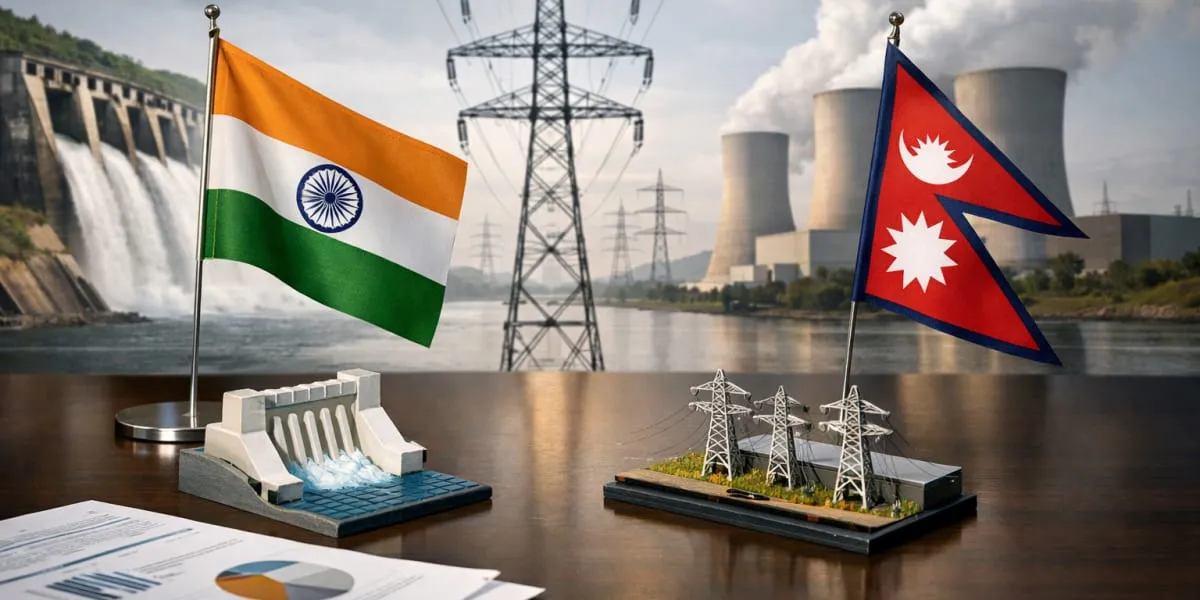
The Joint Steering Committee (JSC) on Power Sector Cooperation met in New Delhi on 15 and 16 July to review progress on bilateral energy initiatives. The 15th meeting was co-chaired by India's Power Secretary Pankaj Agarwal and Nepal's Energy, Water Resources and Irrigation Secretary Pramod Kumar Mishra. Officials from both countries examined ongoing hydropower projects, cross-border transmission links and arrangements for electricity trade. The review formed part of efforts to deepen energy ties between the two neighbouring countries.

Delegates discussed major cross-border transmission projects aimed at strengthening connectivity and increasing the capacity for power exchange. The committee reviewed implementation of agreements on long-term electricity trade and considered operational issues affecting transmission infrastructure. India has been importing additional electricity from Nepal during the monsoon period when hydropower generation increases. The meeting noted the strategic importance of greater grid integration for regional energy security.

Participants assessed the development pipeline for hydropower, and explored measures to accelerate implementation and resolve bottlenecks affecting project delivery. The JSC highlighted opportunities for Nepal to utilise its hydropower potential to generate export revenue while supporting India's renewable transition. Both sides reviewed technical and contractual arrangements to facilitate cross-border power flows and to ensure system stability. The committee also considered steps to streamline regulatory and commercial frameworks for sustained cooperation.

Officials agreed to continue consultations on the projects and the execution of the agreements reviewed during the meeting. The JSC recommended follow up work to address outstanding issues and to monitor progress on transmission and generation milestones. The review reaffirmed energy cooperation as a central component of bilateral relations and underscored a mutual interest in enhancing regional connectivity. Further meetings and technical exchanges were proposed to maintain momentum on the joint agenda.

The Joint Steering Committee (JSC) on Power Sector Cooperation met in New Delhi on 15 and 16 July to review progress on bilateral energy initiatives. The 15th meeting was co-chaired by India's Power Secretary Pankaj Agarwal and Nepal's Energy, Water Resources and Irrigation Secretary Pramod Kumar Mishra. Officials from both countries examined ongoing hydropower projects, cross-border transmission links and arrangements for electricity trade. The review formed part of efforts to deepen energy ties between the two neighbouring countries. Delegates discussed major cross-border transmission projects aimed at strengthening connectivity and increasing the capacity for power exchange. The committee reviewed implementation of agreements on long-term electricity trade and considered operational issues affecting transmission infrastructure. India has been importing additional electricity from Nepal during the monsoon period when hydropower generation increases. The meeting noted the strategic importance of greater grid integration for regional energy security. Participants assessed the development pipeline for hydropower, and explored measures to accelerate implementation and resolve bottlenecks affecting project delivery. The JSC highlighted opportunities for Nepal to utilise its hydropower potential to generate export revenue while supporting India's renewable transition. Both sides reviewed technical and contractual arrangements to facilitate cross-border power flows and to ensure system stability. The committee also considered steps to streamline regulatory and commercial frameworks for sustained cooperation. Officials agreed to continue consultations on the projects and the execution of the agreements reviewed during the meeting. The JSC recommended follow up work to address outstanding issues and to monitor progress on transmission and generation milestones. The review reaffirmed energy cooperation as a central component of bilateral relations and underscored a mutual interest in enhancing regional connectivity. Further meetings and technical exchanges were proposed to maintain momentum on the joint agenda.

Related Stories

Gold Stories

Next Story
Infrastructure Urban

KONE Opens India's First Digital Experience Centre in Pune

KONE, a global elevator and escalator manufacturer, has inaugurated its first Digital Experience Centre (DEC) in India, located in Pune. The facility aims to showcase how artificial intelligence (AI), connectivity and data-driven technologies can enhance customer experiences and improve building operations.The centre was inaugurated by Jussi Herlin, Executive Vice Chair, KONE Corporation; Philippe Delorme, President and CEO, KONE; and Nandan Nilekani, Co-founder and Chairman of the Board, Infosys.Designed as an interactive customer environment, the facility demonstrates digital solutions cover..

Next Story
Infrastructure Urban

CII GreenCo Launches Circularity Guidelines for Indian Industry

The Confederation of Indian Industry (CII) GreenCo Council has launched the CII GreenCo Circularity Guidelines – Pilot Version at the 17th CII GreenCo Waste & Resource Management Summit 2026 in Chennai. The initiative aims to strengthen resource efficiency, waste reduction and circular economy practices across Indian manufacturing and process industries.The guidelines introduce a structured framework with circularity indices covering raw materials, consumables, packaging and other resource inputs. These indicators will help industries assess existing practices, identify opportunities to ..

Next Story
Infrastructure Energy

Global Electronics Association Launches IPC-1783-CO2E Standard

The Global Electronics Association has introduced IPC-1783-CO2E, a new international standard aimed at improving consistency, transparency and comparability in product carbon footprint reporting across the electronics manufacturing industry.The standard, titled International Standard for Data Collection and Reporting of CO2 Equivalent (CO2e) Emissions for the Electronics Manufacturing Supply Chain, provides industry-specific guidance for collecting, estimating and reporting carbon emissions data.With increasing regulatory requirements and customer expectations, electronics manufacturers face c..

Advertisement

Subscribe to Our Newsletter

Get daily newsletters around different themes from Construction world.

STAY CONNECTED

Advertisement

SPECIAL OFFER
QR Code