+
India And New Zealand Prioritise Science And Climate Collaboration
POWER & RENEWABLE ENERGY

India And New Zealand Prioritise Science And Climate Collaboration

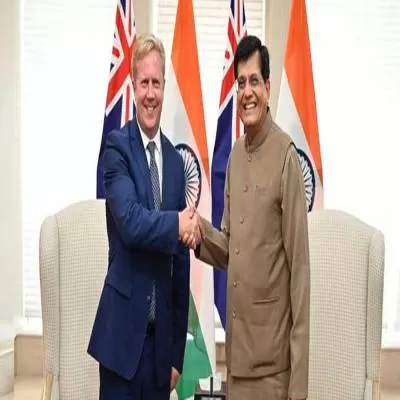
Union Minister Dr Jitendra Singh met H E Dr Shane Reti, New Zealand Minister of Science, Innovation, Technology and Education, in New Delhi during the Artificial Intelligence Summit (AI Summit) to align technological discussions with bilateral scientific collaboration. The Ministers said political leadership on both sides has created a conducive environment to elevate cooperation. Science diplomacy was described as a strategic means to strengthen ties and deliver shared value.

Both Ministers agreed that a focused, outcome oriented approach would be preferable and resolved to identify one or two priority areas with defined milestones and measurable outcomes. Officials will work out modalities and bring concrete proposals for consideration. Successful initiatives would be scaled into a long term framework of cooperation.

Discussions highlighted India’s Biotechnology for Economy, Environment and Employment (Bio E3) Mission and a network of bio incubators supporting nearly 10,000 startups, presenting opportunities for collaboration. The two sides explored cooperation in climate resilient crops, livestock and dairy genomics, soil microbiome research, functional foods, alternative proteins and nutraceuticals. They also considered carbon capture and the biological utilisation of captured carbon into value added products to support sustainable growth and net zero transitions.

Climate action and clean energy formed a key part of the agenda, with emphasis on a mission driven path to net zero through green hydrogen, electric mobility and diversified clean energy. India’s work in ocean sciences and desalination for island territories such as Lakshadweep was noted, and New Zealand’s expertise in geothermal energy was welcomed. Both Ministers saw value in combining strengths for climate resilient infrastructure.

The Ministers addressed frontier technologies including quantum computing, quantum sensing and secure communications, and noted India’s 25 Technology Innovation Hubs for interdisciplinary cyber physical systems. Health cooperation covered digital and robotic medical innovations and a tele robotic ultrasound demonstration over 12,000 kilometres as an example of extending access to care. Both sides committed to reinvigorating structured science dialogues, joint research calls and researcher mobility to restore momentum in bilateral engagement.

Union Minister Dr Jitendra Singh met H E Dr Shane Reti, New Zealand Minister of Science, Innovation, Technology and Education, in New Delhi during the Artificial Intelligence Summit (AI Summit) to align technological discussions with bilateral scientific collaboration. The Ministers said political leadership on both sides has created a conducive environment to elevate cooperation. Science diplomacy was described as a strategic means to strengthen ties and deliver shared value. Both Ministers agreed that a focused, outcome oriented approach would be preferable and resolved to identify one or two priority areas with defined milestones and measurable outcomes. Officials will work out modalities and bring concrete proposals for consideration. Successful initiatives would be scaled into a long term framework of cooperation. Discussions highlighted India’s Biotechnology for Economy, Environment and Employment (Bio E3) Mission and a network of bio incubators supporting nearly 10,000 startups, presenting opportunities for collaboration. The two sides explored cooperation in climate resilient crops, livestock and dairy genomics, soil microbiome research, functional foods, alternative proteins and nutraceuticals. They also considered carbon capture and the biological utilisation of captured carbon into value added products to support sustainable growth and net zero transitions. Climate action and clean energy formed a key part of the agenda, with emphasis on a mission driven path to net zero through green hydrogen, electric mobility and diversified clean energy. India’s work in ocean sciences and desalination for island territories such as Lakshadweep was noted, and New Zealand’s expertise in geothermal energy was welcomed. Both Ministers saw value in combining strengths for climate resilient infrastructure. The Ministers addressed frontier technologies including quantum computing, quantum sensing and secure communications, and noted India’s 25 Technology Innovation Hubs for interdisciplinary cyber physical systems. Health cooperation covered digital and robotic medical innovations and a tele robotic ultrasound demonstration over 12,000 kilometres as an example of extending access to care. Both sides committed to reinvigorating structured science dialogues, joint research calls and researcher mobility to restore momentum in bilateral engagement.

Next Story
Building Material

NITI Aayog Unveils Cement Decarbonisation Roadmap

NITI Aayog has released a sector-specific decarbonisation roadmap for cement as part of three green transition reports covering cement, aluminium and MSMEs. The report projects cement production rising to around 2,100 million tonnes by 2070 from 391 million tonnes in 2023, while targeting a reduction in carbon intensity to 0.09–0.13 tCO₂e per tonne. It recommends clinker substitution, refuse-derived fuels, CCUS adoption and carbon trading mechanisms to enable deep decarbonisation. ..

Next Story
Technology

Genesys Launches Advanced GeoRadar System

Genesys International Corporation has launched an advanced Ground Penetrating Radar (GPR) solution from IDS GeoRadar for underground utility mapping in India. The system uses patented Equalised Scrambling Technology (EST) and Wide/Multi-Array Antenna Technology to deliver high-resolution three-dimensional imaging of subsurface infrastructure. The technology enables the detection and mapping of buried assets such as water pipelines, sewer networks, telecom cables and power lines. By providing detailed subsurface insights, the system aims to help urban authorities and infrastructure developers ..

Next Story
Infrastructure Urban

Hindustan Zinc Partners Virginia Tech to Boost Silver Recovery

Hindustan Zinc Limited recently signed a Memorandum of Understanding (MoU) with Virginia Tech to advance research aimed at improving silver recovery across its lead–zinc (Pb–Zn) concentrators. The collaboration will focus on refining flotation techniques and optimising reagent usage to improve concentrate quality and operational efficiency at processing plants.Virginia Tech, based in Blacksburg, Virginia, is globally recognised for its expertise in mining engineering, mineral processing and applied metallurgical research. Through this partnership, Hindustan Zinc will leverage global resear..

Advertisement

Subscribe to Our Newsletter

Get daily newsletters around different themes from Construction world.

STAY CONNECTED

Advertisement

Advertisement

Advertisement

Open In App