India Charts Nuclear Expansion With Thorium And Australia Uranium Support
POWER & RENEWABLE ENERGY

India Charts Nuclear Expansion With Thorium And Australia Uranium Support

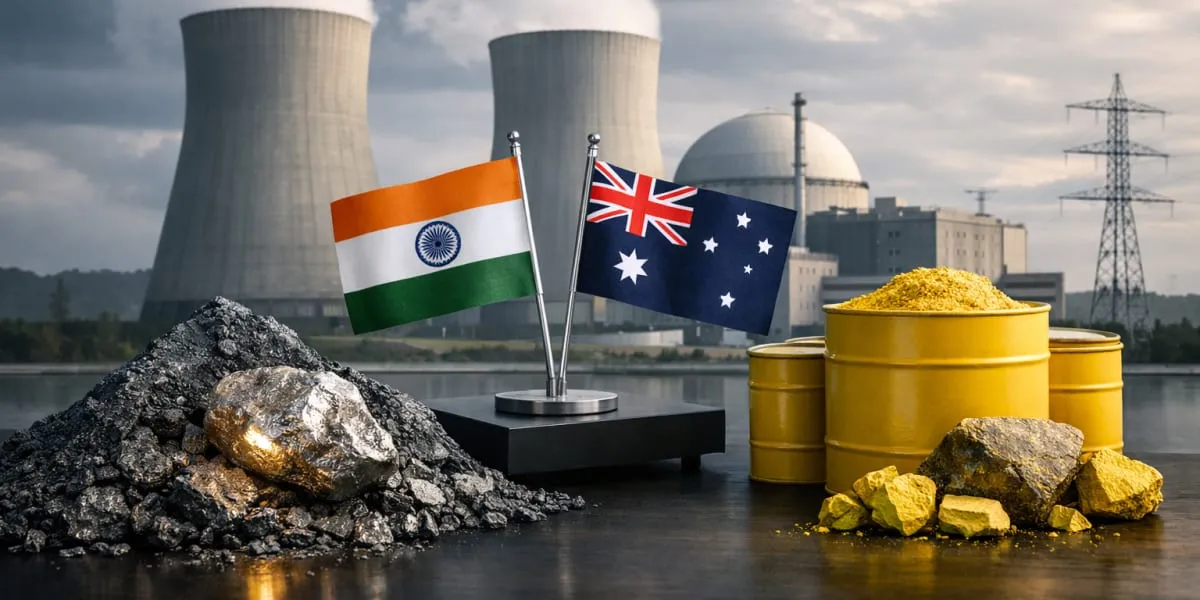
India has outlined a roadmap to expand its nuclear energy capacity as part of a drive towards self-reliance and to meet its 2070 net zero goal. The plan centres on developing a thorium fuel cycle and deepening cooperation with partner countries for uranium supplies, with Australia cited as a key supplier. Officials described the approach as a long term strategy to balance energy security, low carbon objectives and technological autonomy. The roadmap sets out phases for research, deployment and international collaboration.

The strategy foregrounds thorium, a locally abundant material, as a pillar of longer term energy planning. Authorities intend to advance reactor designs and fuel processing that can utilise thorium in successive stages of the nuclear fuel cycle. Research institutions and public sector units are to receive directed funding and timelines to scale pilot projects into commercial operations. The document stresses that thorium constitutes a sovereign resource that can reduce dependence on imported fuel over time.

At the same time, the roadmap acknowledges the near term need for uranium to support existing reactors and build additional capacity. Engagements with Australia are expected to secure supply chains under international safeguards and to enable phased imports while domestic alternatives mature. The plan envisions supply agreements, technical cooperation and joint research to strengthen resilience of fuel provisions. Officials signalled adherence to non proliferation norms and regulatory standards in all partnerships.

Policymakers framed the nuclear expansion as complementary to renewable deployment in achieving deep decarbonisation by 2070. Investment in human capital, regulatory reform and infrastructure is to accompany reactor construction and fuel cycle development. The roadmap aims to deliver energy diversity, industrial growth and stable baseload power for a growing economy. Implementation will depend on financing, technological progress and sustained international cooperation.

"Join industry leaders at RAHSTA Expo, India's premier platform for roads, highways and traffic infrastructure. Register now to explore innovations, network with experts and shape the future of mobility."

India has outlined a roadmap to expand its nuclear energy capacity as part of a drive towards self-reliance and to meet its 2070 net zero goal. The plan centres on developing a thorium fuel cycle and deepening cooperation with partner countries for uranium supplies, with Australia cited as a key supplier. Officials described the approach as a long term strategy to balance energy security, low carbon objectives and technological autonomy. The roadmap sets out phases for research, deployment and international collaboration. The strategy foregrounds thorium, a locally abundant material, as a pillar of longer term energy planning. Authorities intend to advance reactor designs and fuel processing that can utilise thorium in successive stages of the nuclear fuel cycle. Research institutions and public sector units are to receive directed funding and timelines to scale pilot projects into commercial operations. The document stresses that thorium constitutes a sovereign resource that can reduce dependence on imported fuel over time. At the same time, the roadmap acknowledges the near term need for uranium to support existing reactors and build additional capacity. Engagements with Australia are expected to secure supply chains under international safeguards and to enable phased imports while domestic alternatives mature. The plan envisions supply agreements, technical cooperation and joint research to strengthen resilience of fuel provisions. Officials signalled adherence to non proliferation norms and regulatory standards in all partnerships. Policymakers framed the nuclear expansion as complementary to renewable deployment in achieving deep decarbonisation by 2070. Investment in human capital, regulatory reform and infrastructure is to accompany reactor construction and fuel cycle development. The roadmap aims to deliver energy diversity, industrial growth and stable baseload power for a growing economy. Implementation will depend on financing, technological progress and sustained international cooperation.

Next Story
Infrastructure Transport

Uttar Pradesh Accelerates National Highway Projects

Uttar Pradesh Chief Minister Yogi Adityanath met Union Road Transport and Highways Minister Nitin Gadkari to review National Highway and road infrastructure projects. Officials from the National Highways Authority of India presented progress updates and proposals. Ministers directed acceleration of land acquisition, forest clearances, utility shifting and other formalities to expedite delivery. Officials said that since 2014 about 10,204 kilometres of National Highway projects have been awarded and nearly 9,329 kilometres completed, with 606 kilometres approved and 1,010 kilometres completed b..

Next Story
Infrastructure Transport

NHAI Completes Repairs at 33 of 40 Spots Along Gurugram NH-48

The National Highways Authority of India has rectified 33 of 40 deficient locations along an 11km stretch of the Delhi–Gurugram NH-48 corridor, following a joint inspection by the authority, the Municipal Corporation of Gurugram and the Gurugram Metropolitan Development Authority. The audit identified damaged footpaths, crash barriers, inadequate lane markings and poor sanitation at multiple points between Rajiv Chowk and Signature Towers. Repairs and maintenance works have been carried out over May and June as part of the exercise. The report noted broken crash barriers and roadside litteri..

Next Story
Infrastructure Urban

Mankhurd Maharashtra Nagar Flyover To Open By August 2027

The Brihanmumbai Municipal Corporation has said the Mankhurd-Maharashtra Nagar flyover will be operational by August 2027, as part of measures to ease congestion in the eastern suburbs. The structure will provide a direct link from the T Junction on the Sion-Panvel highway to the existing Ghatkopar-Mankhurd Link Road. The T Junction is one of the major traffic choke points in the eastern suburbs and records heavy flows of vehicles travelling to and from Navi Mumbai and Pune. Motorists currently spend more than 15 minutes at the signal during peak periods, according to civic data, prompting the..

Advertisement

Subscribe to Our Newsletter

Get daily newsletters around different themes from Construction world.

STAY CONNECTED

Advertisement

Advertisement

Advertisement