India Clean Energy Push Could Create Four Point Four Million Jobs By 2030
POWER & RENEWABLE ENERGY

India Clean Energy Push Could Create Four Point Four Million Jobs By 2030

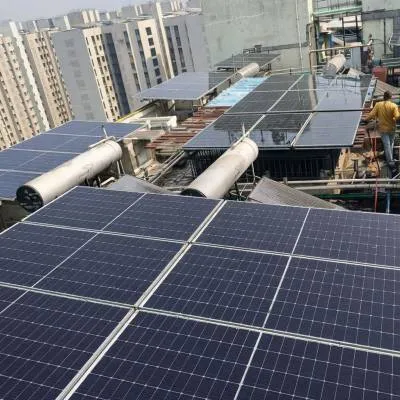
A study by the Council on Energy, Environment and Water (CEEW) and the Natural Resources Defense Council finds that India's clean energy targets, including a goal of achieving 500 GW of non-fossil fuel capacity and the national green hydrogen mission, could create about four point four million (mn) full-time equivalent (FTE) jobs by 2030. The study links most gains to distributed generation. It highlights rooftop solar as a primary source of job creation and outlines policy and skills implications for the workforce.

Between FY23 and FY26 select clean energy sectors added more than zero point six five mn workers, with rooftop solar accounting for the largest share at 62 per cent of additions. The PM-KUSUM scheme contributed 16.3 per cent of workforce additions, biomass power 12.6 per cent and ground-mounted solar six per cent. The study attributes higher employment intensity in rooftop installations to dispersed site work that requires customer outreach, site surveys, design, installation, grid connectivity and maintenance.

The report estimates about one point three mn FTE jobs may be created in operations, maintenance and manufacturing over the lifetime of projects and facilities. It notes that around 60 per cent of jobs in project deployment require highly skilled or semi-skilled workers, while 80–90 per cent of manufacturing roles demand technical skills. The study also documents gender gaps, finding women represent 11 per cent of the solar and wind workforce and account for higher shares in rooftop solar at 15 per cent, solar module manufacturing 13 per cent, floating solar 12 per cent and ground-mounted solar 11 per cent.

Government officials highlighted that people’s involvement is intrinsic to a successful green transition and noted recent capacity additions of about 51 gigawatts (GW) of solar and wind in one year as evidence of momentum. CEEW leadership argued that the energy transition must be accompanied by a workforce transition focused on livelihoods, skills and deeper domestic supply chains. The study therefore recommends policy measures to expand training, promote inclusive hiring and strengthen manufacturing linkages so benefits reach households, farmers and entrepreneurs.

A study by the Council on Energy, Environment and Water (CEEW) and the Natural Resources Defense Council finds that India's clean energy targets, including a goal of achieving 500 GW of non-fossil fuel capacity and the national green hydrogen mission, could create about four point four million (mn) full-time equivalent (FTE) jobs by 2030. The study links most gains to distributed generation. It highlights rooftop solar as a primary source of job creation and outlines policy and skills implications for the workforce. Between FY23 and FY26 select clean energy sectors added more than zero point six five mn workers, with rooftop solar accounting for the largest share at 62 per cent of additions. The PM-KUSUM scheme contributed 16.3 per cent of workforce additions, biomass power 12.6 per cent and ground-mounted solar six per cent. The study attributes higher employment intensity in rooftop installations to dispersed site work that requires customer outreach, site surveys, design, installation, grid connectivity and maintenance. The report estimates about one point three mn FTE jobs may be created in operations, maintenance and manufacturing over the lifetime of projects and facilities. It notes that around 60 per cent of jobs in project deployment require highly skilled or semi-skilled workers, while 80–90 per cent of manufacturing roles demand technical skills. The study also documents gender gaps, finding women represent 11 per cent of the solar and wind workforce and account for higher shares in rooftop solar at 15 per cent, solar module manufacturing 13 per cent, floating solar 12 per cent and ground-mounted solar 11 per cent. Government officials highlighted that people’s involvement is intrinsic to a successful green transition and noted recent capacity additions of about 51 gigawatts (GW) of solar and wind in one year as evidence of momentum. CEEW leadership argued that the energy transition must be accompanied by a workforce transition focused on livelihoods, skills and deeper domestic supply chains. The study therefore recommends policy measures to expand training, promote inclusive hiring and strengthen manufacturing linkages so benefits reach households, farmers and entrepreneurs.

Next Story
Infrastructure Transport

Andhra Cabinet Clears Amaravati Eye Aviation Policy And International University

The Andhra Pradesh Cabinet, chaired by Chief Minister N Chandrababu Naidu, approved a package of initiatives to boost tourism and aviation infrastructure. Ministers cleared the proposed Amaravati Eye, a giant observation wheel modelled on the London Eye to be sited on the banks of the Krishna River that will offer panoramic views of Amaravati and the riverfront. The authority has been directed to invite tenders under a design, build, finance, operate and transfer model for development on six acres. The Cabinet approved the Andhra Pradesh Aviation Policy 2026–31, aimed at transforming the Sta..

Next Story
Infrastructure Urban

Centre Expands Aviation Relief With Rs 100 Billion ATF Fund

The Union Cabinet approved a Rs 100 billion (Rs 100 bn) aviation turbine fuel price stabilisation fund to support airlines and oil marketing companies. The budgetary support will be provided as an interest-free advance to oil marketing companies to enable supply of aviation turbine fuel at a benchmark price for domestic and international operations. The Rs 100 bn fund will be administered through a tripartite arrangement among the ministries of civil aviation and petroleum and fuel retailers. The mechanism will compensate retailers whenever import parity prices exceed the benchmark and relief ..

Next Story
Infrastructure Urban

South West Pinnacle Wins Exploration And Drilling Work Orders

South West Pinnacle Exploration (SWPE) said it has won multiple exploration and drilling contracts worth Rs 215.3 mn including GST. The awards comprise a detailed exploration contract from Central Mine Planning and Design Institute Limited (CMPDI), two drilling work orders from Geomysore Services (India) Private Limited (GSIPL) and one work order awarded to its wholly owned subsidiary South West Resources Private Limited (SWRPL). The contracts span coal and gold projects in Chhattisgarh and Andhra Pradesh and cover both reverse circulation and diamond core drilling. CMPDI, which is a wholly ow..

Advertisement

Subscribe to Our Newsletter

Get daily newsletters around different themes from Construction world.

STAY CONNECTED

Advertisement

Advertisement

Advertisement