India Has Adequate Power Capacity, Ministry Says
POWER & RENEWABLE ENERGY

India Has Adequate Power Capacity, Ministry Says

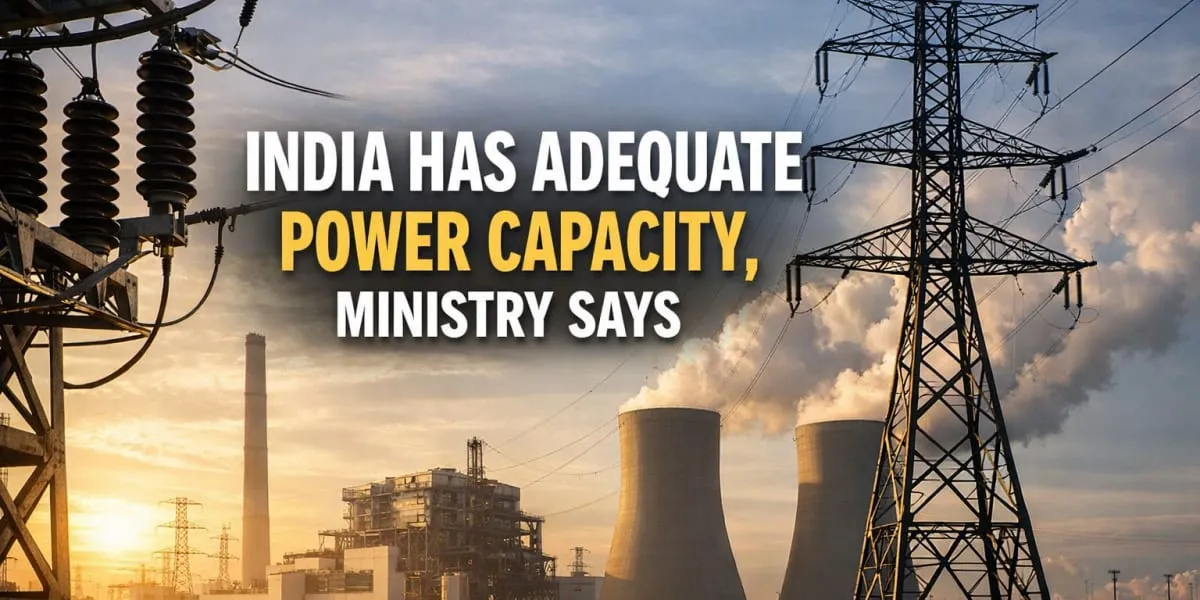
The Ministry of Power reported that the total installed power generation capacity in the country was 520,511 megawatt (MW) as on 31 January 2026 and affirmed that there was adequate availability of power nationwide. The ministry said that the Government had added 296.388 gigawatt (GW) of fresh generation capacity since April 2014, which had transformed the country from power deficit to power sufficient. Current installed generation capacity was cited as 520.51 GW in government records and the ministry noted continued capacity expansion.

The ministry reported that energy supplied had matched energy requirement with only a marginal gap largely attributable to constraints in state transmission and distribution networks. To bridge peak hour shortfalls hydro generation was being scheduled to conserve water for peak periods and planned maintenance of generating units was minimised during high demand. The ministry said steady coal supplies to thermal plants were ensured, generators were advised to maintain full daily availability except during planned or forced outages, and the national grid was being strengthened to transfer power from surplus to deficit regions.

The ministry outlined generation and storage planning under the National Electricity Plan, which projects installed capacity at 874 GW by 2031-32 and requires states to prepare 10-year rolling Resource Adequacy Plans. It said projected thermal capacity requirement by 2034-35 was approximately 307,000 MW against 211,855 MW installed as on 31 March 2023, and that an additional minimum 97,000 MW coal and lignite based capacity was envisaged. The ministry provided progress figures, reporting about 18,160 MW of thermal capacity commissioned since April 2023, 38,745 MW under construction, 22,920 MW with contracts awarded and 24,020 MW identified at various planning stages.

The ministry said hydro, nuclear, renewable and storage projects were progressing with significant capacities under construction and in planning. Transmission planning and right of way guidelines were being advanced and the Minister of State, Shripad Naik, provided the information in a written reply to the Rajya Sabha.

The Ministry of Power reported that the total installed power generation capacity in the country was 520,511 megawatt (MW) as on 31 January 2026 and affirmed that there was adequate availability of power nationwide. The ministry said that the Government had added 296.388 gigawatt (GW) of fresh generation capacity since April 2014, which had transformed the country from power deficit to power sufficient. Current installed generation capacity was cited as 520.51 GW in government records and the ministry noted continued capacity expansion. The ministry reported that energy supplied had matched energy requirement with only a marginal gap largely attributable to constraints in state transmission and distribution networks. To bridge peak hour shortfalls hydro generation was being scheduled to conserve water for peak periods and planned maintenance of generating units was minimised during high demand. The ministry said steady coal supplies to thermal plants were ensured, generators were advised to maintain full daily availability except during planned or forced outages, and the national grid was being strengthened to transfer power from surplus to deficit regions. The ministry outlined generation and storage planning under the National Electricity Plan, which projects installed capacity at 874 GW by 2031-32 and requires states to prepare 10-year rolling Resource Adequacy Plans. It said projected thermal capacity requirement by 2034-35 was approximately 307,000 MW against 211,855 MW installed as on 31 March 2023, and that an additional minimum 97,000 MW coal and lignite based capacity was envisaged. The ministry provided progress figures, reporting about 18,160 MW of thermal capacity commissioned since April 2023, 38,745 MW under construction, 22,920 MW with contracts awarded and 24,020 MW identified at various planning stages. The ministry said hydro, nuclear, renewable and storage projects were progressing with significant capacities under construction and in planning. Transmission planning and right of way guidelines were being advanced and the Minister of State, Shripad Naik, provided the information in a written reply to the Rajya Sabha.

Next Story
Infrastructure Energy

Indian Urea Producers Shut Plants As Iran War Cuts Qatari LNG Supplies

Indian urea producers have shut several plants after the war involving Iran led to cuts in Qatari supplies of liquefied natural gas (LNG), industry participants said. The reduction in LNG shipments has constrained feedstock availability and raised operational pressures at ammonia and urea units across the country, complicating production scheduling and maintenance plans. Producers have scaled back output in response to fuel shortages and logistical challenges affecting domestic fertiliser production and have implemented staggered shutdowns to manage inventories. The disruptions have heightened..

Next Story
Infrastructure Urban

Adani Plans Rs 600 bn Investment In Schools And Hospitals

Adani Group plans a Rs 600 billion (Rs 600 bn) social investment to construct 300 schools and 30 hospitals across India, aimed at expanding educational and healthcare infrastructure nationwide. The initiative is presented as a long term commitment to strengthen community services and address gaps in access to quality education and primary healthcare. The group highlighted investment in both physical infrastructure and associated services to ensure schools and hospitals are functional from opening. The programme will focus on building resilient facilities that meet prevailing regulatory standar..

Next Story
Infrastructure Transport

PM Launches Development Projects Worth Rs 235.5 Billion (bn) From Silchar

The Prime Minister launched development projects worth Rs 235.5 billion (bn) from Silchar in Assam and performed the bhumi pujan for three projects in the Barak Valley. The schemes comprise the Silchar High-Speed Corridor at an estimated cost of Rs 228.6 bn, the Silchar Town Flyover at about Rs 5.65 bn and the Patharkandi College of Agriculture at about Rs 1.22 bn. The announcement was made at a public ceremony in Cachar district. He said that southern Assam's Barak Valley is emerging as a strategic link to Southeast Asia and that the North East is taking a lead in the government's Act East po..

Advertisement

Subscribe to Our Newsletter

Get daily newsletters around different themes from Construction world.

STAY CONNECTED

Advertisement

Advertisement

Advertisement