Indian Scientists Develop High-Voltage Supercapacitor Electrode
POWER & RENEWABLE ENERGY

Indian Scientists Develop High-Voltage Supercapacitor Electrode

Indian researchers have developed a high-voltage supercapacitor electrode that overcomes long-standing safety and performance limitations, opening new possibilities for more efficient solar systems, faster-charging electric vehicles and compact energy-storage solutions.

Scientists at the International Advanced Research Centre for Powder Metallurgy and New Materials (ARCI), an autonomous institute under the Department of Science and Technology, have created a dual-functional porous graphene carbon nanocomposite electrode. The innovation enables supercapacitors to operate at 3.4 volts, surpassing the conventional operating limit of 2.5–3.0 volts.

Addressing voltage and safety constraints

Conventional supercapacitors are restricted by electrolyte instability at higher voltages, which can lead to decomposition and safety risks such as flammability. The new electrode design overcomes this bottleneck while significantly improving energy storage capacity and long-term stability.

The technology delivers around 33 per cent higher energy storage and roughly double the energy density of many existing systems, while supporting higher power output. This translates into greater driving range and faster acceleration for electric vehicles. The higher operating voltage also reduces the need to stack multiple low-voltage cells, simplifying module design and enhancing overall system efficiency.

Material innovation behind performance gains

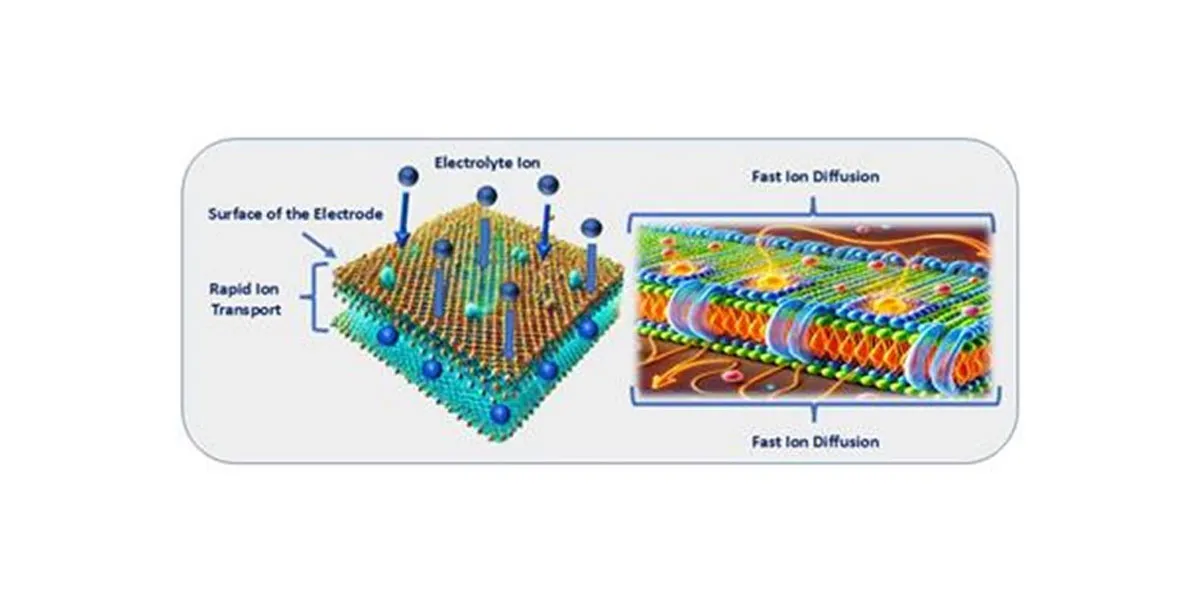
The enhanced performance stems from the engineered surface chemistry of the electrode, which combines water-repellent properties with strong compatibility with organic electrolytes. This dual functionality improves ion transport and electrochemical efficiency, enabling power densities of up to 17,000 W/kg and high durability.

In laboratory testing, the supercapacitor retained 96 per cent of its performance after 15,000 charge–discharge cycles, highlighting its potential for demanding applications such as electric vehicles, grid-scale storage and portable electronics.

Sustainable and scalable manufacturing

The electrodes are produced using an eco-friendly hydrothermal carbonisation process with 1,2-propanediol as the precursor. Conducted at 300°C over 25 hours in a sealed environment, the method avoids harsh chemicals, reduces environmental impact and achieves yields above 20 per cent. The process is also scalable from laboratory to industrial production.

The resulting micro- and mesoporous structure supports rapid ion movement and consistent performance, outperforming conventional commercial carbon electrodes in operating voltage and power output.

Strengthening India’s clean energy ecosystem

The research, published in the Chemical Engineering Journal and supported by the Department of Science and Technology under the Technical Research Centre initiative, strengthens India’s capabilities in advanced energy storage technologies.

By enabling higher-voltage, longer-lasting supercapacitors, the innovation aligns with India’s clean energy and self-reliance goals, supporting electrification, renewable energy integration and next-generation mobility.

Indian researchers have developed a high-voltage supercapacitor electrode that overcomes long-standing safety and performance limitations, opening new possibilities for more efficient solar systems, faster-charging electric vehicles and compact energy-storage solutions. Scientists at the International Advanced Research Centre for Powder Metallurgy and New Materials (ARCI), an autonomous institute under the Department of Science and Technology, have created a dual-functional porous graphene carbon nanocomposite electrode. The innovation enables supercapacitors to operate at 3.4 volts, surpassing the conventional operating limit of 2.5–3.0 volts. Addressing voltage and safety constraints Conventional supercapacitors are restricted by electrolyte instability at higher voltages, which can lead to decomposition and safety risks such as flammability. The new electrode design overcomes this bottleneck while significantly improving energy storage capacity and long-term stability. The technology delivers around 33 per cent higher energy storage and roughly double the energy density of many existing systems, while supporting higher power output. This translates into greater driving range and faster acceleration for electric vehicles. The higher operating voltage also reduces the need to stack multiple low-voltage cells, simplifying module design and enhancing overall system efficiency. Material innovation behind performance gains The enhanced performance stems from the engineered surface chemistry of the electrode, which combines water-repellent properties with strong compatibility with organic electrolytes. This dual functionality improves ion transport and electrochemical efficiency, enabling power densities of up to 17,000 W/kg and high durability. In laboratory testing, the supercapacitor retained 96 per cent of its performance after 15,000 charge–discharge cycles, highlighting its potential for demanding applications such as electric vehicles, grid-scale storage and portable electronics. Sustainable and scalable manufacturing The electrodes are produced using an eco-friendly hydrothermal carbonisation process with 1,2-propanediol as the precursor. Conducted at 300°C over 25 hours in a sealed environment, the method avoids harsh chemicals, reduces environmental impact and achieves yields above 20 per cent. The process is also scalable from laboratory to industrial production. The resulting micro- and mesoporous structure supports rapid ion movement and consistent performance, outperforming conventional commercial carbon electrodes in operating voltage and power output. Strengthening India’s clean energy ecosystem The research, published in the Chemical Engineering Journal and supported by the Department of Science and Technology under the Technical Research Centre initiative, strengthens India’s capabilities in advanced energy storage technologies. By enabling higher-voltage, longer-lasting supercapacitors, the innovation aligns with India’s clean energy and self-reliance goals, supporting electrification, renewable energy integration and next-generation mobility.

Next Story
Real Estate

Union Budge: Infra-Led Urban Shift

The Union Budget FY27 reinforces infrastructure-led urbanisation as the backbone of India’s real estate and housing growth. Higher public capital expenditure, City Economic Regions, risk-mitigation mechanisms and REIT-led asset monetisation are being widely viewed as long-term enablers, even as the industry continues to seek sharper supply-side reforms and affordability-focused measures. Here are a few industry insights:Dr Niranjan Hiranandani, Chairman, NAREDCO & Hiranandani Group“The Union Budget 2026-27 is growth-oriented and stability-focused, supporting consumption and aiming to s..

Next Story
Infrastructure Urban

Budget 2026 Charts Path for Infrastructure-Led, Tech-Driven Growth

The Union Budget 2026–27 signals strong continuity in India’s macroeconomic strategy, anchored in elevated public capital expenditure, fiscal discipline, and a sharper focus on manufacturing, infrastructure, and regional development. With capital outlay pegged at ₹12.2 lakh crore and a fiscal deficit target of around 4.3 per cent, the Budget balances growth ambition with stability, offering long-term visibility to investors and project developers.A dominant theme is the centrality of infrastructure as a multiplier for economic expansion. Public capex now accounts for over 3.3 per cent of..

Next Story
Infrastructure Energy

Tata Power Arm Crosses 10 GW EPC Milestone

Tata Power Renewable Energy Ltd (TPREL) has achieved a major milestone by executing 10 gigawatts of engineering, procurement and construction (EPC) renewable energy projects to date, reinforcing its position in India’s clean energy infrastructure sector. According to the company, the executed portfolio comprises 4.2 gigawatts of in-house projects and 5.8 gigawatts of third-party projects. Of the total 10 gigawatts commissioned so far, 9.7 gigawatts are solar projects and 290 megawatts are wind projects. In the first nine months of FY26, TPREL commissioned 1.88 gigawatts of EPC renewable en..

Advertisement

Subscribe to Our Newsletter

Get daily newsletters around different themes from Construction world.

STAY CONNECTED

Advertisement

Advertisement

Advertisement

Advertisement

Open In App