MERC Approves AEML-D 750 MW RTC Renewable Procurement
POWER & RENEWABLE ENERGY

MERC Approves AEML-D 750 MW RTC Renewable Procurement

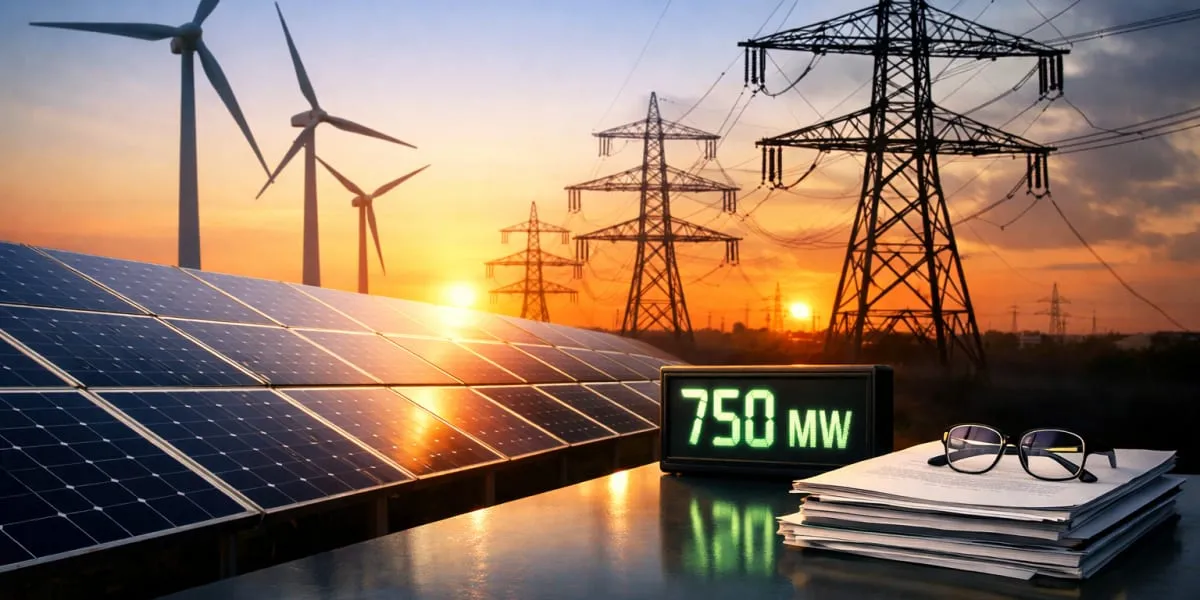
The Maharashtra Electricity Regulatory Commission approved Adani Electricity Mumbai Limited-Distribution (AEML-D) to procure 750 megawatt (MW) of round-the-clock renewable power at a weighted average levelised tariff of Rs 6.38/kWh. The procurement will be from Powerpulse Trading Solutions Limited (PTSL) for 10 years. The commission sanctioned adoption of the tariff found through a competitive bidding process.

AEML-D said it filed the petition to meet rising electricity demand and fulfil Renewable Purchase Obligation requirements. The utility projected peak demand to grow from 2,056 MW in FY25 to around 2,739 MW by FY30 owing to commercial load growth, data centre expansion, transport electrification and higher residential use. It said fresh long-term procurement would be needed from FY28 to ensure reliability.

The auction on 22 April 2025 drew four participants offering a combined 1,500 MW. PTSL emerged as the lowest bidder at Rs 6.38/kWh, marginally below JSW Neo Energy at Rs 6.39/kWh, while MB Power and Goldi Solar quoted Rs 6.40/kWh and Rs 6.56/kWh respectively. PTSL plans to supply the contracted RTC power via a mix of 775 MW of solar, 300 MW of wind and 540 MW of thermal capacity for balancing.

The supplier will assume risks linked to renewable variability and interstate transmission charges and losses under the proposed arrangement. MERC noted the process complied with Ministry of Power guidelines and deemed the discovered tariff reflective. The commission compared the result with MSEDCL's 2,500 MW RE-RTC tender and found that after transmission costs the effective tariff there was around Rs 6.46/kWh at the Maharashtra periphery.

MERC also addressed concerns over availability of non-renewable balancing power and recorded that PTSL would arrange balancing from Vidarbha Industries Power Limited's Butibori thermal plant or alternate sources such as Mahan Energen Ltd under the draft power purchase agreement (PPA). The commission concluded the tariff was reasonable and in consumers' interest and directed AEML-D to file the executed agreement with PTSL. The order marks a step in Maharashtra's move towards firm renewable procurement as utilities seek clean power to meet rising demand and comply with renewable obligations.

The Maharashtra Electricity Regulatory Commission approved Adani Electricity Mumbai Limited-Distribution (AEML-D) to procure 750 megawatt (MW) of round-the-clock renewable power at a weighted average levelised tariff of Rs 6.38/kWh. The procurement will be from Powerpulse Trading Solutions Limited (PTSL) for 10 years. The commission sanctioned adoption of the tariff found through a competitive bidding process. AEML-D said it filed the petition to meet rising electricity demand and fulfil Renewable Purchase Obligation requirements. The utility projected peak demand to grow from 2,056 MW in FY25 to around 2,739 MW by FY30 owing to commercial load growth, data centre expansion, transport electrification and higher residential use. It said fresh long-term procurement would be needed from FY28 to ensure reliability. The auction on 22 April 2025 drew four participants offering a combined 1,500 MW. PTSL emerged as the lowest bidder at Rs 6.38/kWh, marginally below JSW Neo Energy at Rs 6.39/kWh, while MB Power and Goldi Solar quoted Rs 6.40/kWh and Rs 6.56/kWh respectively. PTSL plans to supply the contracted RTC power via a mix of 775 MW of solar, 300 MW of wind and 540 MW of thermal capacity for balancing. The supplier will assume risks linked to renewable variability and interstate transmission charges and losses under the proposed arrangement. MERC noted the process complied with Ministry of Power guidelines and deemed the discovered tariff reflective. The commission compared the result with MSEDCL's 2,500 MW RE-RTC tender and found that after transmission costs the effective tariff there was around Rs 6.46/kWh at the Maharashtra periphery. MERC also addressed concerns over availability of non-renewable balancing power and recorded that PTSL would arrange balancing from Vidarbha Industries Power Limited's Butibori thermal plant or alternate sources such as Mahan Energen Ltd under the draft power purchase agreement (PPA). The commission concluded the tariff was reasonable and in consumers' interest and directed AEML-D to file the executed agreement with PTSL. The order marks a step in Maharashtra's move towards firm renewable procurement as utilities seek clean power to meet rising demand and comply with renewable obligations.

Related Stories

Gold Stories

Next Story
Infrastructure Urban

KONE Opens India's First Digital Experience Centre in Pune

KONE, a global elevator and escalator manufacturer, has inaugurated its first Digital Experience Centre (DEC) in India, located in Pune. The facility aims to showcase how artificial intelligence (AI), connectivity and data-driven technologies can enhance customer experiences and improve building operations.The centre was inaugurated by Jussi Herlin, Executive Vice Chair, KONE Corporation; Philippe Delorme, President and CEO, KONE; and Nandan Nilekani, Co-founder and Chairman of the Board, Infosys.Designed as an interactive customer environment, the facility demonstrates digital solutions cover..

Next Story
Infrastructure Urban

CII GreenCo Launches Circularity Guidelines for Indian Industry

The Confederation of Indian Industry (CII) GreenCo Council has launched the CII GreenCo Circularity Guidelines – Pilot Version at the 17th CII GreenCo Waste & Resource Management Summit 2026 in Chennai. The initiative aims to strengthen resource efficiency, waste reduction and circular economy practices across Indian manufacturing and process industries.The guidelines introduce a structured framework with circularity indices covering raw materials, consumables, packaging and other resource inputs. These indicators will help industries assess existing practices, identify opportunities to ..

Next Story
Infrastructure Energy

Global Electronics Association Launches IPC-1783-CO2E Standard

The Global Electronics Association has introduced IPC-1783-CO2E, a new international standard aimed at improving consistency, transparency and comparability in product carbon footprint reporting across the electronics manufacturing industry.The standard, titled International Standard for Data Collection and Reporting of CO2 Equivalent (CO2e) Emissions for the Electronics Manufacturing Supply Chain, provides industry-specific guidance for collecting, estimating and reporting carbon emissions data.With increasing regulatory requirements and customer expectations, electronics manufacturers face c..

Advertisement

Subscribe to Our Newsletter

Get daily newsletters around different themes from Construction world.

STAY CONNECTED

Advertisement

SPECIAL OFFER
QR Code