ONGC Drills Second Geothermal Well In Ladakh
POWER & RENEWABLE ENERGY

ONGC Drills Second Geothermal Well In Ladakh

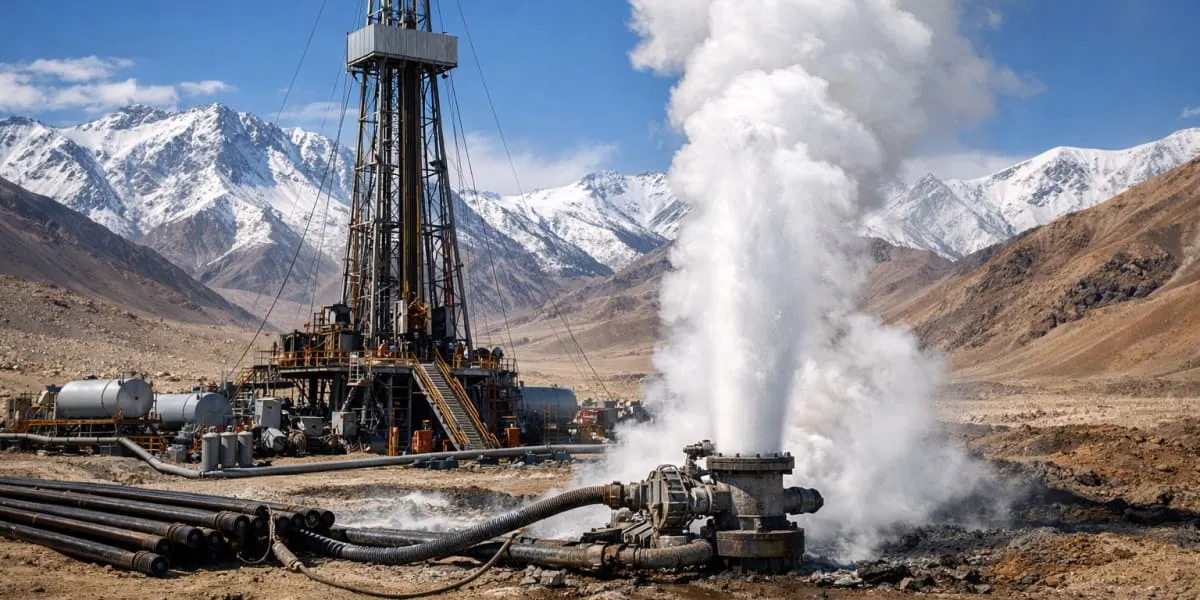
State-run Oil and Natural Gas Corporation completed drilling its second geothermal well in Puga Valley, Ladakh, marking a step towards India's first pilot geothermal power plant. The ONGC Energy Centre drilled the well to a depth of 1,000 metres at an altitude of more than 14,000 feet in about a month, improving on the timeline and cost of the initial campaign. The company reported that the operation built on the earlier well which produced steam at temperatures above the boiling point of water, demonstrating the field's resource potential.\n\nThe second well will support development of India's first one megawatt electric (MW) pilot geothermal power plant and could pave the way for commercial exploitation of geothermal energy in the country. The project next phase includes setting up the one megawatt electric pilot plant and pursuing longer term development of geothermal resources to provide reliable baseload electricity for Ladakh. The Puga geothermal field in eastern Ladakh has long been identified as the country's most promising geothermal resource.\n\nGeothermal energy harnesses heat from beneath the earth's surface to generate electricity and provide heating, offering round the clock low carbon power unlike solar and wind whose output depends on weather conditions. Exploratory work at Puga has been intermittent for decades, and commercial geothermal power generation has not yet taken off in India because of technical and economic challenges. The recent progress is part of a broader effort to diversify the renewable energy mix beyond solar, wind and hydropower.\n\nIndia is working towards a target of installing 500 GW of non fossil fuel electricity capacity by 2030, and geothermal could complement other technologies by contributing steady output. The drilling team completed the second well within a shorter timeframe and reduced cost compared with the first campaign, demonstrating improved operational capability in a high altitude environment. Further work will be required to validate resource sustainability and to integrate geothermal output into local grids before larger scale deployment.

State-run Oil and Natural Gas Corporation completed drilling its second geothermal well in Puga Valley, Ladakh, marking a step towards India's first pilot geothermal power plant. The ONGC Energy Centre drilled the well to a depth of 1,000 metres at an altitude of more than 14,000 feet in about a month, improving on the timeline and cost of the initial campaign. The company reported that the operation built on the earlier well which produced steam at temperatures above the boiling point of water, demonstrating the field's resource potential.\n\nThe second well will support development of India's first one megawatt electric (MW) pilot geothermal power plant and could pave the way for commercial exploitation of geothermal energy in the country. The project next phase includes setting up the one megawatt electric pilot plant and pursuing longer term development of geothermal resources to provide reliable baseload electricity for Ladakh. The Puga geothermal field in eastern Ladakh has long been identified as the country's most promising geothermal resource.\n\nGeothermal energy harnesses heat from beneath the earth's surface to generate electricity and provide heating, offering round the clock low carbon power unlike solar and wind whose output depends on weather conditions. Exploratory work at Puga has been intermittent for decades, and commercial geothermal power generation has not yet taken off in India because of technical and economic challenges. The recent progress is part of a broader effort to diversify the renewable energy mix beyond solar, wind and hydropower.\n\nIndia is working towards a target of installing 500 GW of non fossil fuel electricity capacity by 2030, and geothermal could complement other technologies by contributing steady output. The drilling team completed the second well within a shorter timeframe and reduced cost compared with the first campaign, demonstrating improved operational capability in a high altitude environment. Further work will be required to validate resource sustainability and to integrate geothermal output into local grids before larger scale deployment.

Next Story
Infrastructure Transport

Surya Roshni delivers customised lighting for NCRTC RRTS stations

Surya Roshni has supplied customised indoor lighting solutions for 18 elevated stations on the National Capital Region Transport Corporation's (NCRTC) Rapid Rail Transit System (RRTS), strengthening its presence in India's infrastructure lighting segment.The project involved the design and deployment of lighting systems for platforms, concourses, foot overbridges (FOBs) and back-of-house (BOH) areas. According to the company, the luminaires were developed specifically to meet NCRTC's design, operational and performance requirements rather than using standard products.Surya introduced two custo..

Next Story
Real Estate

Hilton debuts Tapestry Collection brand in Vietnam

Hilton has opened NHAAN Resort & Spa Hoi An, Tapestry Collection by Hilton, marking the debut of the Tapestry Collection brand in Vietnam and expanding its lifestyle hospitality portfolio in Southeast Asia.Located along the Co Co River in Cam Thanh village, the 174-key resort provides access to Hoi An Ancient Town, Cua Dai Beach and the Cam Thanh Nipa Forest. The property has been designed by Vietnamese architect Vo Trong Nghia, incorporating biophilic architecture, locally sourced materials and riverfront landscapes.The resort offers a mix of guest rooms and suites, including family-frien..

Next Story
Building Material

Electrent expands lithium energy storage system portfolio

Electrent Energy has expanded its lithium-based energy storage portfolio with the launch of the ESS 850 and ESS 1050, targeting compact and maintenance-free power backup solutions for Indian homes.The new systems integrate a Home UPS and a LiFePO4 lithium battery into a single unit, extending the company's product range following the launch of its ESS 1350 and ESS 2500 models.Designed for apartments and smaller homes, the ESS 850 provides up to 1 hour 15 minutes of backup, while the ESS 1050 offers up to 1 hour 45 minutes on a typical 400 W household load. The systems can power essential appli..

Advertisement

Subscribe to Our Newsletter

Get daily newsletters around different themes from Construction world.

STAY CONNECTED

Advertisement

Advertisement

Advertisement