+
Pace Digitek Doubles BESS Capacity To Five GWh
POWER & RENEWABLE ENERGY

Pace Digitek Doubles BESS Capacity To Five GWh

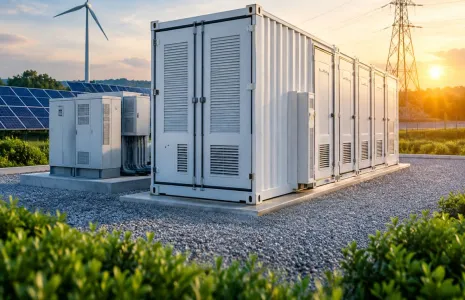
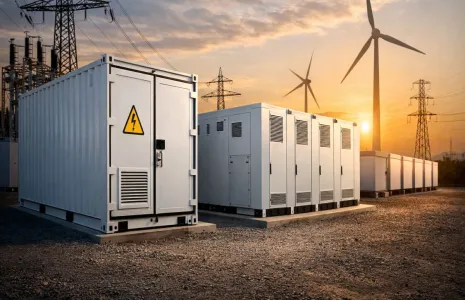
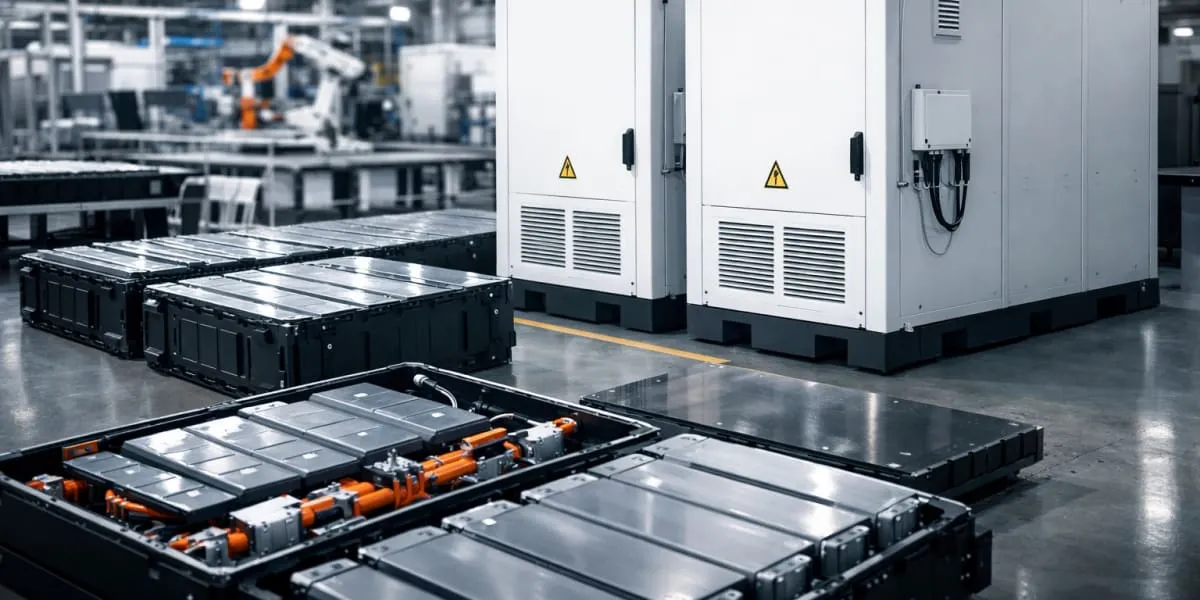
Pace Digitek has doubled its battery energy storage system (BESS) manufacturing capacity to five gigawatt-hour (GWh) with the commissioning of a new production line, the company said. The expansion raises the firm’s total BESS output to five GWh and establishes a larger manufacturing footprint in the Asia Pacific region. The move follows increased demand for grid and commercial energy storage solutions.

The company defined a battery energy storage system as an integrated solution for storing electrical energy and said the new production line will enhance throughput and operational efficiency. The facility is designed to serve grid-scale projects, renewable integrations and commercial installations across regional markets. Pace Digitek positioned the rise in capacity as a step towards meeting customers’ requirements for larger and faster-delivered systems.

The additional capacity allows the manufacturer to scale production of modular BESS products and supports standardisation across product families. It also strengthens the supply chain by enabling closer coordination with component suppliers and system integrators. Industry observers view the development as part of broader efforts to localise energy storage manufacturing in the region.

The new line incorporates enhanced quality assurance measures and production controls to improve reliability and consistency of deployed systems. Improved manufacturing discipline will reduce lead times and increase the predictability of deliveries for project developers. The company reported that investments in production infrastructure will continue as demand evolves.

Pace Digitek characterised the expansion as a strategic investment to accelerate deployment of renewable energy and bolster grid resilience in Asia Pacific. The firm indicated that further capacity enhancements remain under consideration as market needs progress. The company reaffirmed its focus on scaling manufacturing to support large?scale energy transition projects.

Pace Digitek has doubled its battery energy storage system (BESS) manufacturing capacity to five gigawatt-hour (GWh) with the commissioning of a new production line, the company said. The expansion raises the firm’s total BESS output to five GWh and establishes a larger manufacturing footprint in the Asia Pacific region. The move follows increased demand for grid and commercial energy storage solutions. The company defined a battery energy storage system as an integrated solution for storing electrical energy and said the new production line will enhance throughput and operational efficiency. The facility is designed to serve grid-scale projects, renewable integrations and commercial installations across regional markets. Pace Digitek positioned the rise in capacity as a step towards meeting customers’ requirements for larger and faster-delivered systems. The additional capacity allows the manufacturer to scale production of modular BESS products and supports standardisation across product families. It also strengthens the supply chain by enabling closer coordination with component suppliers and system integrators. Industry observers view the development as part of broader efforts to localise energy storage manufacturing in the region. The new line incorporates enhanced quality assurance measures and production controls to improve reliability and consistency of deployed systems. Improved manufacturing discipline will reduce lead times and increase the predictability of deliveries for project developers. The company reported that investments in production infrastructure will continue as demand evolves. Pace Digitek characterised the expansion as a strategic investment to accelerate deployment of renewable energy and bolster grid resilience in Asia Pacific. The firm indicated that further capacity enhancements remain under consideration as market needs progress. The company reaffirmed its focus on scaling manufacturing to support large?scale energy transition projects.

Related Stories

Gold Stories

Next Story
Real Estate

BMC OC Amnesty Scheme Requires Key Approvals from Mumbai Societies

The Brihanmumbai Municipal Corporation (BMC) has clarified that housing societies applying under its Occupation Certificate (OC) amnesty scheme must possess key approvals linked to the original construction. The requirements include a valid Intimation of Disapproval (IOD), an approved building plan and a Commencement Certificate (CC), along with a No Objection Certificate (NOC) from the developer or original construction applicant. The Standard Operating Procedure (SOP) makes clear that the absence of an OC alone will not qualify a building for relief. Societies must establish that their build..

Next Story
Real Estate

Gurugram Emerges as Luxury Senior Living Hub

Gurugram is emerging as a potential hub for luxury senior living, supported by available land, healthcare infrastructure, connectivity and a concentration of affluent professionals, high-net-worth individuals and non-resident Indians. These factors could give the city an advantage over land-constrained metros such as Mumbai. A report by the Association of Senior Living India (ASLI) and JLL estimates that India’s organised senior living market could represent a $10.1 bn opportunity by 2030. The sector had about 25,050 organised units as of June 2026, while penetration stood at only 1.5 per ce..

Next Story
Real Estate

Corrosion Costs India’s Infrastructure Rs. 142 bn Annually

Corrosion costs India an estimated Rs. 1.42 tn annually, equivalent to 4.3 per cent of gross domestic product, according to a report by the Confederation of Indian Industry and the National Research Institute. Infrastructure accounts for Rs. 142 bn of the annual burden, making it the sector with the largest absolute cost among those examined. The report, presented at the CII Annual Infrastructure Summit 2026, said the infrastructure-sector cost equals about 2.9 per cent of the sector’s gross domestic product. It estimated that effective measures could generate maximum savings of Rs. 495.8 bn..

Advertisement

Subscribe to Our Newsletter

Get daily newsletters around different themes from Construction world.

STAY CONNECTED

Advertisement

SPECIAL OFFER
QR Code