+
PM's Kashi Sees 17,698 Homes Switch To Rooftop Solar
POWER & RENEWABLE ENERGY

PM's Kashi Sees 17,698 Homes Switch To Rooftop Solar

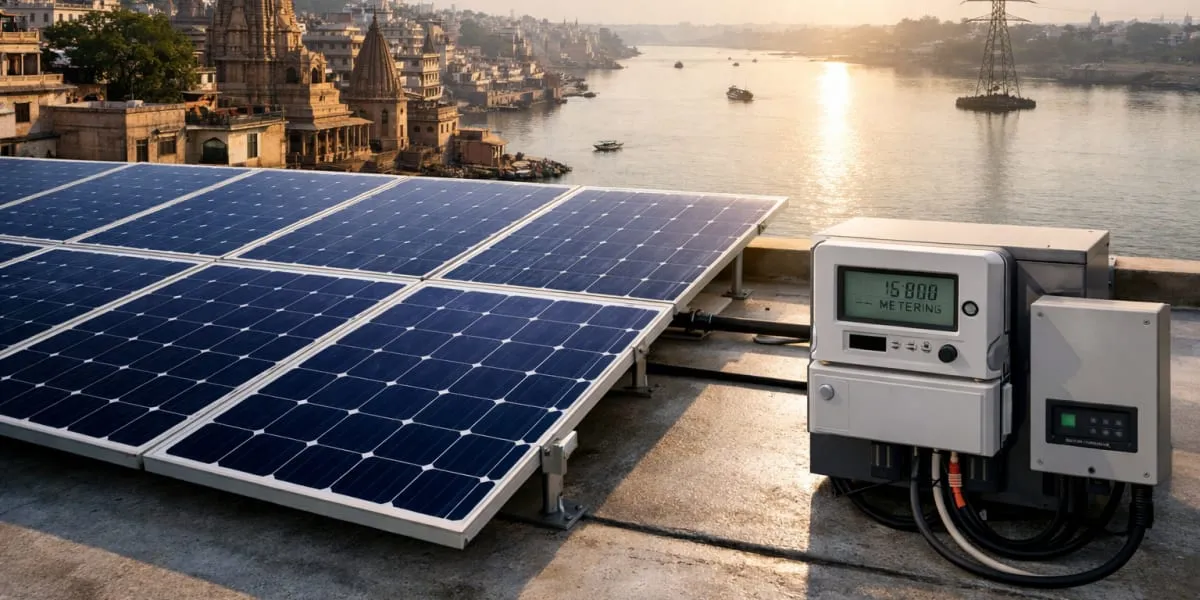
Varanasi, popularly known as PM's Kashi, has emerged as a prominent example of urban rooftop solar adoption after 17,698 households achieved zero electricity bills following the installation of rooftop solar systems. The outcome follows an expansion of government-supported clean energy programmes that encourage households to generate electricity on their premises and participate in net metering arrangements. By producing electricity during daylight hours and exporting surplus to the grid, participating homes have been able to offset a large share of their consumption and remove monthly charges. The scale of uptake reflects accelerating public engagement with decentralised renewable energy.

For residents the shift has delivered both economic relief and environmental benefit. Lower electricity expenses increase household savings and improve disposable income, while local generation reduces dependence on conventional fossil fuel based supply. Wider adoption has been supported by improved awareness, easier financing, subsidy support and streamlined approvals, alongside steady declines in equipment costs that make solar systems an increasingly attractive long term investment.

The mass rollout also eases pressure on the urban power distribution network when thousands of homes supply energy during peak solar hours, reducing local demand on the grid and lowering technical losses. Improvements in system efficiency can result from reduced strain on transformers and feeders in densely populated neighbourhoods, and utilities may see deferred investment needs in distribution upgrades. From an environmental perspective the cumulative clean energy delivered by nearly 18,000 households contributes to lower greenhouse gas emissions and local air quality gains.

As a heritage and spiritual city, Varanasi adopting large scale rooftop solar sends a message that cultural identity and modern sustainability can coexist. The local experience is expected to encourage further residential, institutional and commercial installations if policymakers sustain awareness campaigns, technical assistance and robust net metering implementation. The milestone of zero power bills for 17,698 households underlines the potential of distributed solar to reduce household costs, strengthen energy security and support urban sustainability.

Varanasi, popularly known as PM's Kashi, has emerged as a prominent example of urban rooftop solar adoption after 17,698 households achieved zero electricity bills following the installation of rooftop solar systems. The outcome follows an expansion of government-supported clean energy programmes that encourage households to generate electricity on their premises and participate in net metering arrangements. By producing electricity during daylight hours and exporting surplus to the grid, participating homes have been able to offset a large share of their consumption and remove monthly charges. The scale of uptake reflects accelerating public engagement with decentralised renewable energy. For residents the shift has delivered both economic relief and environmental benefit. Lower electricity expenses increase household savings and improve disposable income, while local generation reduces dependence on conventional fossil fuel based supply. Wider adoption has been supported by improved awareness, easier financing, subsidy support and streamlined approvals, alongside steady declines in equipment costs that make solar systems an increasingly attractive long term investment. The mass rollout also eases pressure on the urban power distribution network when thousands of homes supply energy during peak solar hours, reducing local demand on the grid and lowering technical losses. Improvements in system efficiency can result from reduced strain on transformers and feeders in densely populated neighbourhoods, and utilities may see deferred investment needs in distribution upgrades. From an environmental perspective the cumulative clean energy delivered by nearly 18,000 households contributes to lower greenhouse gas emissions and local air quality gains. As a heritage and spiritual city, Varanasi adopting large scale rooftop solar sends a message that cultural identity and modern sustainability can coexist. The local experience is expected to encourage further residential, institutional and commercial installations if policymakers sustain awareness campaigns, technical assistance and robust net metering implementation. The milestone of zero power bills for 17,698 households underlines the potential of distributed solar to reduce household costs, strengthen energy security and support urban sustainability.

Related Stories

Gold Stories

Next Story
Infrastructure Urban

Infrastructure Opportunity Outlook by IMPACCT.Info

India’s infrastructure pipeline is witnessing dynamic activity across stages — from immediate bidding to future planning. IMPACCT segments these into three categories: Immediate, 3–6 Month, and Future Opportunities, enabling businesses to identify, prepare, and participate in high-value tenders and projects across sectors.To read full article Click Here ..

Next Story
Real Estate

Glass, Reframed!

Glass façades, quintessential aesthetic building envelopes globally, have been widely adopted in India as well. But when the focus is high-performance building systems that deliver energy efficiency, comfort and architectural identity, glass isn’t the only preference. Combination solutions, involving glass and some other material, improve façade outcomes. Some combinations come at comparable prices, some at a higher price. Here is a selection of performance-oriented solutions...To read the full story Click Here ..

Next Story
Infrastructure Urban

Beyond Building Faster

India’s cities are expanding at an unprecedented pace, bringing new infrastructure and development opportunities while also intensifying challenges around mobility, public spaces, liveability and supporting infrastructure. The question, therefore, is not simply whether India can build faster, but whether it can build cities that work better.At a CW webinar, Are We Designing Better Cities – or Just Building Faster?, moderator Ar. Samir Shaikh, Founding Principal, AR&UD Studio, brought together perspectives from design, development, master planning and technology...To read the full artic..

Advertisement

Subscribe to Our Newsletter

Get daily newsletters around different themes from Construction world.

STAY CONNECTED

Advertisement

SPECIAL OFFER
QR Code