PM's Kashi Turns Solar as 17,698 Homes Eliminate Power Bills
POWER & RENEWABLE ENERGY

PM's Kashi Turns Solar as 17,698 Homes Eliminate Power Bills

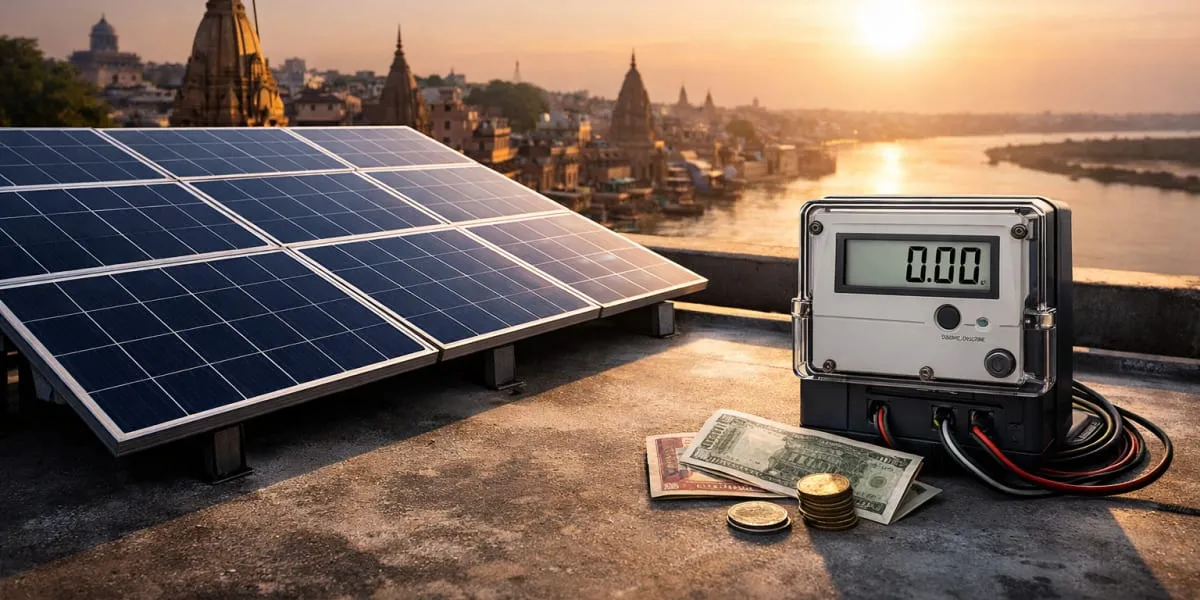
Varanasi, known as PM's Kashi, has emerged as a significant example of urban rooftop solar adoption, with 17,698 households achieving zero electricity bills after installing solar systems. This development highlights the growing success of decentralised renewable energy initiatives and shows how rooftop solar can directly benefit consumers by reducing monthly electricity expenditure. The shift is associated with expansion of government clean energy programmes that encourage households to generate electricity. By producing power during daylight hours and exporting surplus to the grid through net metering, many households have offset consumption and eliminated bills.

For residents the shift represents both economic and environmental gains. Lower electricity expenses improve household savings while locally generated renewable power reduces dependence on fossil fuel based supply. Over the life of a rooftop solar system cumulative savings can be substantial, making solar adoption an increasingly attractive long term investment for urban consumers. Improved awareness, easier financing options, subsidies and streamlined approvals have contributed to wider uptake.

The large number of participating households indicates growing public confidence in rooftop solar technology and in policy support. The initiative has also helped ease pressure on the urban power distribution network because thousands of homes generate electricity during the day and local demand on the grid declines, particularly during peak solar generation hours. Reduced stress on distribution infrastructure can lower technical losses and improve overall system efficiency in densely populated areas. Continued quality standards and efficient net metering implementation are likely to support further growth.

From an environmental perspective widespread rooftop solar adoption helps cut greenhouse gas emissions by replacing a portion of electricity that would otherwise come from conventional sources, with cumulative gains contributing to local air quality improvement and broader climate mitigation. As an ancient and prominent cultural city Kashi embracing large scale rooftop solar sends a message that heritage and modern clean energy solutions can coexist. The achievement of zero power bills for 17,698 households marks a milestone in the city's renewable energy journey and illustrates the potential of distributed generation in Indian urban settings.

Varanasi, known as PM's Kashi, has emerged as a significant example of urban rooftop solar adoption, with 17,698 households achieving zero electricity bills after installing solar systems. This development highlights the growing success of decentralised renewable energy initiatives and shows how rooftop solar can directly benefit consumers by reducing monthly electricity expenditure. The shift is associated with expansion of government clean energy programmes that encourage households to generate electricity. By producing power during daylight hours and exporting surplus to the grid through net metering, many households have offset consumption and eliminated bills. For residents the shift represents both economic and environmental gains. Lower electricity expenses improve household savings while locally generated renewable power reduces dependence on fossil fuel based supply. Over the life of a rooftop solar system cumulative savings can be substantial, making solar adoption an increasingly attractive long term investment for urban consumers. Improved awareness, easier financing options, subsidies and streamlined approvals have contributed to wider uptake. The large number of participating households indicates growing public confidence in rooftop solar technology and in policy support. The initiative has also helped ease pressure on the urban power distribution network because thousands of homes generate electricity during the day and local demand on the grid declines, particularly during peak solar generation hours. Reduced stress on distribution infrastructure can lower technical losses and improve overall system efficiency in densely populated areas. Continued quality standards and efficient net metering implementation are likely to support further growth. From an environmental perspective widespread rooftop solar adoption helps cut greenhouse gas emissions by replacing a portion of electricity that would otherwise come from conventional sources, with cumulative gains contributing to local air quality improvement and broader climate mitigation. As an ancient and prominent cultural city Kashi embracing large scale rooftop solar sends a message that heritage and modern clean energy solutions can coexist. The achievement of zero power bills for 17,698 households marks a milestone in the city's renewable energy journey and illustrates the potential of distributed generation in Indian urban settings.

Related Stories

Gold Stories

Next Story
Infrastructure Transport

Innovision Wins NHAI Toll Collection Contract at Aashpur Fee Plaza

Innovision Limited has informed stock exchanges that it has been awarded a user fee collection and facility maintenance contract by the National Highways Authority of India (NHAI). The letter of award was issued on 10 August 2026 for operations at Aashpur Fee Plaza at design kilometre 231.100 on National Highway number 91 between Aligarh and Kanpur in Uttar Pradesh. The engagement covers collection of user fees for four and more lane sections and the upkeep and maintenance of adjacent toilet blocks including replenishment of consumable items. The contract was secured through a competitive e-te..

Next Story
Infrastructure Urban

Bharat Electronics Secures Rs.5,410 mn In Orders

Bharat Electronics Limited (BEL), a Navratna Defence Public Sector Undertaking, has secured additional orders worth Rs.5,410 million (mn) since the last disclosure on 31 July 2026. The fresh awards raise the company's recently reported intake and were announced by way of a regulatory filing on 10 August 2026. The orders span multiple business verticals and are incremental to contracts already under execution. The update follows the company's routine disclosure obligations to the stock exchanges. Major orders received include communication equipment, electro optics, ammunition fuzes, Chemical B..

Next Story
Infrastructure Urban

United Drilling Tools Receives US Order For Gas Lift Mandrel

United Drilling Tools Limited said it has received an order from Tri Lift Services Inc of the United States for the supply of a gas lift mandrel to be used in the oil and gas industry. The company said the disclosure was made to listing authorities under the Securities and Exchange Board of India listing rules and the SEBI master circular of November 2024. The notice set out the nature of the contract as commercial and awarded by an international entity. The order is to be executed in the ordinary course of business and carries an estimated contract value of Rs four point eight three million (..

Advertisement

Subscribe to Our Newsletter

Get daily newsletters around different themes from Construction world.

STAY CONNECTED

Advertisement

Advertisement

Advertisement