Rajasthan charts path to $4.3-trn green industrial economy by 2047
POWER & RENEWABLE ENERGY

Rajasthan charts path to $4.3-trn green industrial economy by 2047

The Rajasthan Government has unveiled ‘Developed Rajasthan @2047’, an ambitious long-term strategy aimed at transforming the state into a major industrial and renewable energy powerhouse by 2047. The roadmap targets a $4.3 trillion economy, positioning Rajasthan as a significant contributor to India’s future growth.

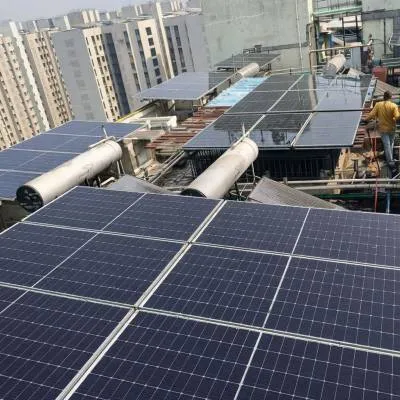
A key component of the blueprint is raising the share of manufacturing and industry to 20 per cent of the Gross State Value Added (GSVA) by 2047. Leveraging its vast desert landscape and high solar irradiation, the state seeks to emerge as a national leader in clean and renewable energy generation.

The strategy is built around four core pillars:

• Social empowerment

• Rapid economic expansion

• Sustainable development

• Governance reforms

Thirteen priority sectors have been identified, spanning renewable energy, manufacturing, agriculture, tourism and infrastructure, among others. Milestone targets for 2030, 2035 and 2040 have been set to track the state’s progress over the next two decades.

Delivering on this vision will require sustained investment in industrial infrastructure, energy transition, skill development and private-sector participation. The plan reflects a decisive shift from Rajasthan’s traditional agrarian and mining-driven economy towards a future anchored in industrialisation, green energy and sustainability, in line with India’s broader development goals.

The Rajasthan Government has unveiled ‘Developed Rajasthan @2047’, an ambitious long-term strategy aimed at transforming the state into a major industrial and renewable energy powerhouse by 2047. The roadmap targets a $4.3 trillion economy, positioning Rajasthan as a significant contributor to India’s future growth. A key component of the blueprint is raising the share of manufacturing and industry to 20 per cent of the Gross State Value Added (GSVA) by 2047. Leveraging its vast desert landscape and high solar irradiation, the state seeks to emerge as a national leader in clean and renewable energy generation. The strategy is built around four core pillars: • Social empowerment • Rapid economic expansion • Sustainable development • Governance reforms Thirteen priority sectors have been identified, spanning renewable energy, manufacturing, agriculture, tourism and infrastructure, among others. Milestone targets for 2030, 2035 and 2040 have been set to track the state’s progress over the next two decades. Delivering on this vision will require sustained investment in industrial infrastructure, energy transition, skill development and private-sector participation. The plan reflects a decisive shift from Rajasthan’s traditional agrarian and mining-driven economy towards a future anchored in industrialisation, green energy and sustainability, in line with India’s broader development goals.

Next Story
Infrastructure Transport

Dhalbhumgarh Airport Faces 150-km Rule Hurdle

The issue has resurfaced following a recent statement by Union Civil Aviation Minister Ram Mohan Naidu, who said that under existing aviation policy, a new greenfield airport is generally not permitted within an aerial distance of 150 kilometres of an operational civilian airport. He added, however, that if a formal proposal is submitted, its impact on the existing airport can be examined and relaxations may be considered on a case-by-case basis. While the clarification has revived some hope for Dhalbhumgarh, it has also underlined the scale of the technical challenge facing the project. Unde..

Next Story
Infrastructure Transport

Stakeholders Seek Parallel Ops For Vizag Airports

With road and metro rail links to Bhogapuram still several years away, stakeholders in north Andhra Pradesh have renewed demands to continue civil operations at INS Dega even after the commissioning of Bhogapuram International Airport. The new airport is expected to begin commercial operations from June. Officials said close to 80 per cent of the airport infrastructure at Bhogapuram, including the terminal building and internal approach roads, has already been completed. However, inadequate external connectivity remains a key concern. Making a case for parallel operations, Andhra Pradesh Air ..

Next Story
Infrastructure Transport

Govt To Roll Out V2V Tech To Cut Road Crashes

In an effort to curb road accidents, particularly in low-visibility conditions such as dense fog, the government is set to roll out vehicle-to-vehicle (V2V) communication technology that will allow cars to exchange real-time data and alert drivers to potential dangers. The announcement was made by Union Road Transport and Highways Minister Nitin Gadkari after the 43rd meeting of the Transport Development Council. The technology involves installing an on-board unit (OBU) in vehicles, enabling wireless data exchange between nearby cars. This will allow vehicles to share information such as spee..

Advertisement

Subscribe to Our Newsletter

Get daily newsletters around different themes from Construction world.

STAY CONNECTED

Advertisement

Advertisement

Advertisement

Advertisement

Open In App