Rajasthan Mandates Tree Plantation in Renewable Energy Projects
POWER & RENEWABLE ENERGY

Rajasthan Mandates Tree Plantation in Renewable Energy Projects

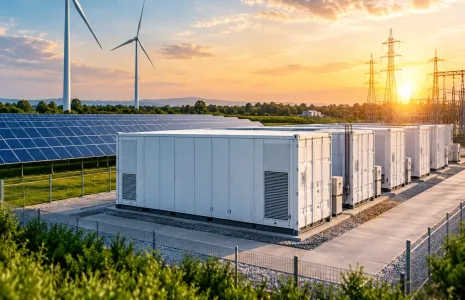
The Rajasthan government has mandated tree plantation as a condition for approvals of renewable energy projects across the state. The new policy requires project proponents to incorporate afforestation and green cover measures into project design, site restoration and long term land management plans. The requirement applies to solar, wind and hybrid projects and to associated infrastructure such as transmission corridors and substations. Authorities have framed the measure as part of a broader push to balance clean energy development with ecological stewardship.

Developers will be obliged to prepare a detailed plantation plan that identifies native species, planting schedules and responsibilities for maintenance and replacement. The mandate specifies on site planting where feasible and compensatory planting on adjacent land where direct planting is constrained by technical or land use considerations. The state will require documentation of survival rates and sustained upkeep for a defined period to ensure that initial planting translates into durable green cover.

Implementation will be coordinated through state renewable energy and forestry departments which will integrate the plantation requirement into project permitting workflows. Monitoring mechanisms will include periodic site inspections, satellite imagery verification and submission of compliance reports as part of routine project audits. Penalties and corrective actions for non compliance will be processed through existing regulatory channels to preserve the integrity of approvals and to incentivise adherence to the afforestation commitments.

The policy aims to enhance biodiversity, soil health and local ecosystem services while complementing renewables expansion in Rajasthan. Industry participants will need to factor the plantation obligations into project budgets and timelines and to engage with local communities and forest authorities in planning and execution. Observers noted that aligning renewable deployment with ecological safeguards can strengthen social licence and support long term sustainability objectives at state and national levels.

The Rajasthan government has mandated tree plantation as a condition for approvals of renewable energy projects across the state. The new policy requires project proponents to incorporate afforestation and green cover measures into project design, site restoration and long term land management plans. The requirement applies to solar, wind and hybrid projects and to associated infrastructure such as transmission corridors and substations. Authorities have framed the measure as part of a broader push to balance clean energy development with ecological stewardship. Developers will be obliged to prepare a detailed plantation plan that identifies native species, planting schedules and responsibilities for maintenance and replacement. The mandate specifies on site planting where feasible and compensatory planting on adjacent land where direct planting is constrained by technical or land use considerations. The state will require documentation of survival rates and sustained upkeep for a defined period to ensure that initial planting translates into durable green cover. Implementation will be coordinated through state renewable energy and forestry departments which will integrate the plantation requirement into project permitting workflows. Monitoring mechanisms will include periodic site inspections, satellite imagery verification and submission of compliance reports as part of routine project audits. Penalties and corrective actions for non compliance will be processed through existing regulatory channels to preserve the integrity of approvals and to incentivise adherence to the afforestation commitments. The policy aims to enhance biodiversity, soil health and local ecosystem services while complementing renewables expansion in Rajasthan. Industry participants will need to factor the plantation obligations into project budgets and timelines and to engage with local communities and forest authorities in planning and execution. Observers noted that aligning renewable deployment with ecological safeguards can strengthen social licence and support long term sustainability objectives at state and national levels.

Related Stories

Gold Stories

Next Story
Infrastructure Urban

EMO Energy and e-Sprinto to Deploy 8,000 Electric Scooters

EMO Energy has announced a partnership with electric two-wheeler maker e-Sprinto to deploy 8,000 electric scooters across India this financial year. The rollout will include both low-speed and high-speed models and will be phased across several cities. The scooters will be aimed at quick-commerce and last-mile delivery operations where uptime and energy efficiency are prioritised. EMO Energy said the scooters will use its patented ZenPac liquid-cooled battery platform with active thermal management, battery intelligence and energy optimisation to improve reliability and performance. ZenPac con..

Next Story
Infrastructure Energy

Octillion Opens Third EV Battery Plant in India

Octillion Power Systems has opened its third manufacturing facility in Halol, Gujarat, adding production capacity as demand for electric vehicle battery systems grows across passenger, commercial and public transport segments. The facility covers more than 13,000 square metres and was converted from an empty structure into an operational battery manufacturing plant in less than eight months. At full capacity the Gujarat plant will manufacture more than 48,000 battery systems annually, representing over three GWh of energy storage capacity. With the addition of the Halol facility Octillion's co..

Next Story
Real Estate

Land Reforms Could Unlock Urban Affordable Housing

Former cabinet secretary and NITI Aayog member Rajeev Gauba said India’s urban housing shortage could be tackled by unlocking 10 million (mn) vacant homes and using excess unutilised land held by public sector undertakings (PSUs). He said land availability lay at the heart of the problem and estimated that land accounted for as much as 50 to 70 per cent of total project cost. He urged states to waive land?use change fees and exempt stamp duty on land and transactions linked to affordable housing. He noted that urban population was projected to rise from 500 million to nearly 900 million by 2..

Advertisement

Subscribe to Our Newsletter

Get daily newsletters around different themes from Construction world.

STAY CONNECTED

Advertisement