RecycleKaro and Bajaj Auto form partnership for EV battery
POWER & RENEWABLE ENERGY

RecycleKaro and Bajaj Auto form partnership for EV battery

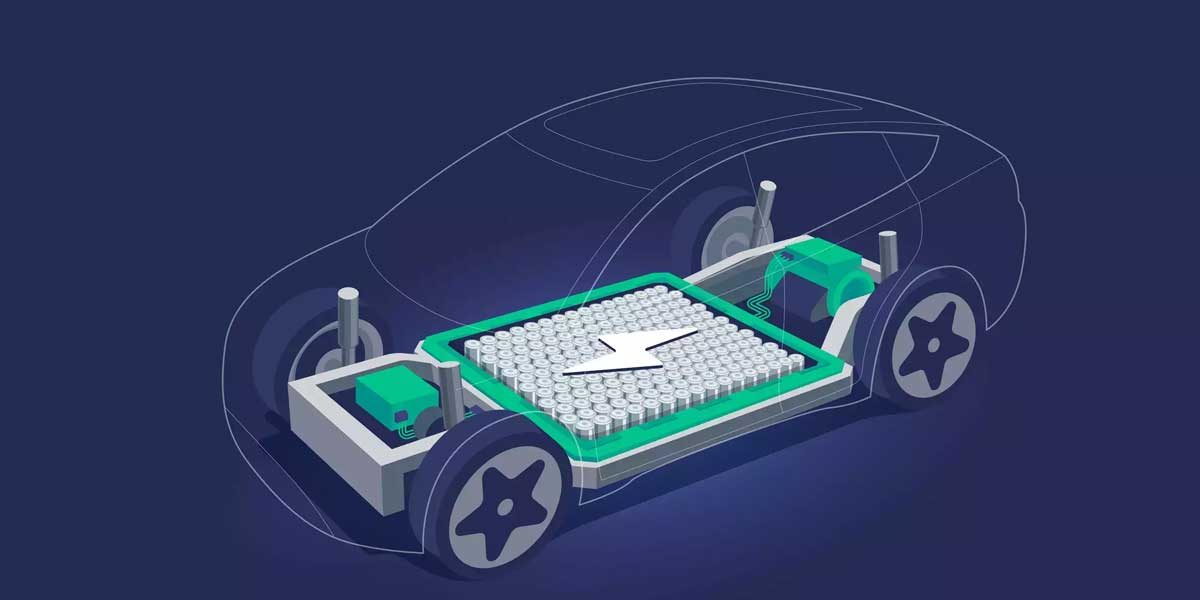
RecycleKaro, a leading company specializing in lithium-ion battery recycling, has announced a groundbreaking partnership with prominent automotive manufacturer Bajaj Auto. The collaboration aims to tackle the critical challenge of recycling lithium-ion batteries efficiently and sustainably, aligning with international sustainability goals and the principles of a circular economy.

RecycleKaro intends to leverage its cutting-edge Hydrometallurgy technology to recycle lithium-ion batteries sourced from Bajaj Auto vehicles. The innovative process promises to recover as much as 95% of vital battery raw materials, including cobalt, lithium, nickel, and manganese. These recovered materials can subsequently be employed in the production of new batteries, effectively closing the loop on resource utilization.

The partnership is expected to manage an estimated 500 metric tonnes of batteries each year, marking a significant step towards addressing the mounting issue of battery waste. This collaboration underscores the growing emphasis on sustainability and eco-friendly practices within the automotive industry.

Bajaj Auto's decision to join forces with RecycleKaro reflects the company's commitment to environmental responsibility and resource management. By fostering the recycling of lithium-ion batteries, this partnership is set to contribute to a more sustainable and eco-conscious automotive sector, in line with global sustainability targets.

RecycleKaro, a leading company specializing in lithium-ion battery recycling, has announced a groundbreaking partnership with prominent automotive manufacturer Bajaj Auto. The collaboration aims to tackle the critical challenge of recycling lithium-ion batteries efficiently and sustainably, aligning with international sustainability goals and the principles of a circular economy. RecycleKaro intends to leverage its cutting-edge Hydrometallurgy technology to recycle lithium-ion batteries sourced from Bajaj Auto vehicles. The innovative process promises to recover as much as 95% of vital battery raw materials, including cobalt, lithium, nickel, and manganese. These recovered materials can subsequently be employed in the production of new batteries, effectively closing the loop on resource utilization. The partnership is expected to manage an estimated 500 metric tonnes of batteries each year, marking a significant step towards addressing the mounting issue of battery waste. This collaboration underscores the growing emphasis on sustainability and eco-friendly practices within the automotive industry. Bajaj Auto's decision to join forces with RecycleKaro reflects the company's commitment to environmental responsibility and resource management. By fostering the recycling of lithium-ion batteries, this partnership is set to contribute to a more sustainable and eco-conscious automotive sector, in line with global sustainability targets.

Next Story
Infrastructure Urban

Implementation Status of Jal Jeevan Mission

Since August 2019 the Government has implemented Jal Jeevan Mission to provide assured potable water through household tap connections in rural India. At the start of the mission only 32.3 million (mn) rural households, representing 16.7 per cent, were reported to have tap water connections. States and union territories have reported that 125.8 mn additional rural households have since been provided with tap connections. As a result, of about 193.6 mn rural households roughly 158.2 mn, or 81.71 per cent, are reported to have tap water supply at home.\n\nThe State, district and village level st..

Next Story
Infrastructure Urban

Jal Jeevan Mission Reaches Eighty One Per Cent Rural Coverage

The Government reported substantial progress under the Jal Jeevan Mission, launched in August 2019 to provide tap water to every rural household. At launch only 32.3 million (mn) rural households had tap connections and states and Union territories reported provision of 125.8 mn additional households by March 2026. Consequently, out of about 193.6 mn rural households around 158.2 mn, or 81.71 per cent, are reported to have tap water at home. The Finance Minister announced extension of the mission until 2028 in the 2025-26 budget speech. The Swachh Bharat Mission Grameen, launched in October 20..

Next Story
Infrastructure Urban

Empowering Local Governance for Sustainable Rural Water Supply

The Ministry of Jal Shakti has aligned the Jal Jeevan Mission (JJM) with the 73rd Amendment to strengthen village level planning and community ownership of water supply. Gram Panchayats, village water and sanitation committees and Pani Samitis are to plan, implement, manage and maintain piped water systems, with gram sabha processes formalising handover and oversight. Implementation support agencies including non government organisations, community based organisations and self help groups have been empanelled to train local committees and promote women participation. Under JJM, the department ..

Advertisement

Subscribe to Our Newsletter

Get daily newsletters around different themes from Construction world.

STAY CONNECTED

Advertisement

Advertisement

Advertisement