REIL Floats Tender For 17.5 MW Rooftop Solar Projects
POWER & RENEWABLE ENERGY

REIL Floats Tender For 17.5 MW Rooftop Solar Projects

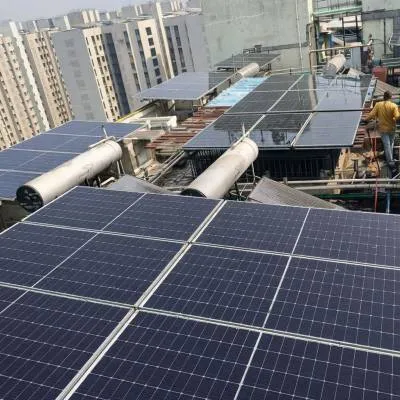
Rajasthan Electronics & Instruments Limited has invited bids for the installation of 17.5 MWp of grid-connected rooftop solar power capacity under the RESCO model across government, semi-government and autonomous body buildings in multiple states and union territories.

The project aims to reduce dependence on fossil fuel-based electricity and support the transition towards self-sustaining public buildings. Electricity generated from the rooftop solar systems will be used for captive consumption, with surplus power exported to the grid in line with applicable net-metering regulations.

REIL will act as the implementing agency for the programme, while the selected developers will be responsible for the end-to-end execution of the solar power plants. This includes the design, installation, commissioning, operation and maintenance of the projects, which will be primarily located on rooftops and available surplus land at identified buildings.

The scope of work covers the identification of suitable rooftops and surplus land, assessment of solar potential, finalisation of plant capacity, submission of detailed proposals and execution of power purchase agreements. Developers will also be responsible for complete design and engineering, manufacturing, supply, testing and commissioning of the systems, grid interconnection for net metering, and operation and maintenance for a period of 25 years from the date of commissioning. In addition, bidders must assess and certify the structural strength of the buildings on which the rooftop solar plants will be installed.

The initiative forms part of broader efforts to expand decentralised solar capacity and promote cleaner energy adoption across public infrastructure in India.

Rajasthan Electronics & Instruments Limited has invited bids for the installation of 17.5 MWp of grid-connected rooftop solar power capacity under the RESCO model across government, semi-government and autonomous body buildings in multiple states and union territories. The project aims to reduce dependence on fossil fuel-based electricity and support the transition towards self-sustaining public buildings. Electricity generated from the rooftop solar systems will be used for captive consumption, with surplus power exported to the grid in line with applicable net-metering regulations. REIL will act as the implementing agency for the programme, while the selected developers will be responsible for the end-to-end execution of the solar power plants. This includes the design, installation, commissioning, operation and maintenance of the projects, which will be primarily located on rooftops and available surplus land at identified buildings. The scope of work covers the identification of suitable rooftops and surplus land, assessment of solar potential, finalisation of plant capacity, submission of detailed proposals and execution of power purchase agreements. Developers will also be responsible for complete design and engineering, manufacturing, supply, testing and commissioning of the systems, grid interconnection for net metering, and operation and maintenance for a period of 25 years from the date of commissioning. In addition, bidders must assess and certify the structural strength of the buildings on which the rooftop solar plants will be installed. The initiative forms part of broader efforts to expand decentralised solar capacity and promote cleaner energy adoption across public infrastructure in India.

Next Story
Infrastructure Transport

MMRDA advances 250 m on Orange Gate–Marine Drive tunnel

The Mumbai Metropolitan Region Development Authority (MMRDA) has completed 250 m of underground tunnelling for the Orange Gate–Marine Drive Urban Road Tunnel using India’s largest slurry shield tunnel boring machine (TBM) deployed for an urban road project.The project involves twin tunnels extending over 7 km beneath critical transport corridors, including Central Railway, Western Railway and Metro Line 3. The work requires high-precision engineering to navigate densely developed urban infrastructure.Once completed, the tunnel is expected to reduce travel time between Orange Gate and Marin..

Next Story
Infrastructure Urban

Hindustan Zinc Pays Rs 188.46 Billion in FY26

Hindustan Zinc contributed Rs 188.46 billion to the public exchequer in FY 2025-26, according to its 9th Tax Transparency Report. The contribution, equivalent to 46 per cent of the company’s revenue, included direct and indirect taxes, government royalties, dividends to the Government of India, withholding taxes and other statutory levies.The company’s five-year cumulative contribution to the exchequer stood at Rs 915.72 billion. In FY26, Hindustan Zinc reported revenue of Rs 408.44 billion, EBITDA of Rs 221.62 billion and profit after tax of Rs 138.32 billion. It also achieved its highest..

Next Story
Infrastructure Urban

World of Concrete India 2026 Opens in Mumbai

Informa Markets in India will host the 12th edition of World of Concrete India 2026 from 3–5 June 2026 at the Bombay Exhibition Centre, Mumbai. The specialised B2B exhibition will bring together manufacturers, suppliers, contractors, developers, architects, consultants, infrastructure companies, project leaders and government stakeholders.The event is expected to feature over 350 brands and more than 18,000 trade professionals. It will cover concrete and cement, dry mortar, precast technologies, formwork, construction chemicals, industrial and commercial flooring, scaffolding, safety solutio..

Advertisement

Subscribe to Our Newsletter

Get daily newsletters around different themes from Construction world.

STAY CONNECTED

Advertisement

Advertisement

Advertisement