Reliance Pauses Battery Cell Plans After China Tech Setback
POWER & RENEWABLE ENERGY

Reliance Pauses Battery Cell Plans After China Tech Setback

Reliance Industries Ltd has paused plans to manufacture lithium-ion battery cells in India after failing to secure Chinese technology, underscoring the challenges faced by Indian companies in building an independent clean-energy supply chain, according to people familiar with the matter.

The Mukesh Ambani-led group had aimed to begin cell manufacturing this year and was in talks with Xiamen Hithium Energy Storage Technology Co to license lithium iron phosphate cell technology. However, the discussions stalled after the Chinese company withdrew amid Beijing’s tighter curbs on overseas technology transfers in strategic sectors.

Following the setback, Reliance has refocused on assembling battery energy storage systems for its renewable power projects, the people said. China has increased scrutiny of clean-energy technology deals to protect its strategic advantage, complicating localisation efforts for foreign manufacturers. The development highlights the hurdles facing Indian companies expected to support Prime Minister Narendra Modi’s target of making India carbon neutral by 2070.

A Reliance spokesperson said there has been no change in the company’s broader plans, noting that battery energy storage systems, battery packs and cell manufacturing have always been part of its energy storage strategy and that execution is progressing. The company did not comment on its engagement with Xiamen Hithium, which did not respond to requests for comment.

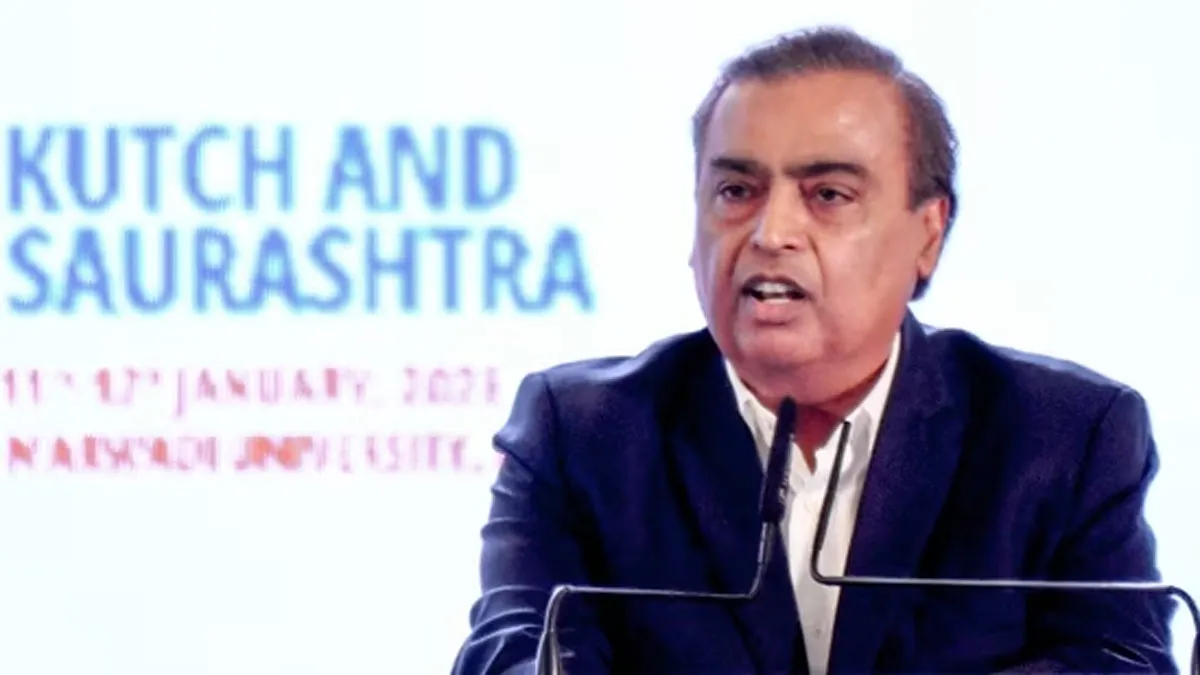
In August 2025, Mukesh Ambani told shareholders that Reliance’s battery gigafactory would start operations in 2026. While the pause in cell manufacturing does not pose an immediate financial impact, given the group’s core revenues from oil refining and consumer businesses, it highlights the execution risks in its green energy ambitions. In 2021, Ambani had announced plans to set up four gigafactories as part of a USD 10 billion investment push to transition away from fossil fuels.

Reliance’s internal assessments concluded that proceeding without proven Chinese cell technology would significantly increase costs and execution risks, particularly amid global oversupply of batteries. Alternatives from Japan, Europe and South Korea were evaluated but found to be substantially more expensive and less competitive for large-scale deployment in India.

Similar challenges are being seen across corporate India as conglomerates race to secure battery capacity to support rapidly expanding renewable power businesses. Despite a recent diplomatic thaw between India and China, technology transfer bottlenecks persist. Other major groups such as Adani Group and JSW Group are also prioritising battery pack and container assembly over full-scale cell manufacturing, according to people familiar with their strategies.

India has long sought to build domestic battery manufacturing capacity. In 2022, Reliance’s renewable energy arm, Reliance New Energy, was among three companies selected under the government’s production-linked incentive scheme for advanced chemistry cell manufacturing. The programme offered subsidies of up to Rs 181 billion linked to milestones for creating 30 gigawatt-hours of capacity.

Under the scheme, companies were required to achieve minimum committed capacity and at least 25 per cent local value addition within two years, rising to 50 per cent within five years. Reliance New Energy was penalised earlier this year for missing deadlines, indicating that current incentives may be insufficient at a time when global markets are flooded with low-cost Chinese batteries.

With cell manufacturing constrained by technology access, battery energy storage system projects are gaining momentum. In November, Adani Group announced plans to build a multi-billion-rupee battery storage project in western India with a proposed capacity of 1,126 MW. JSW Group has also begun operating a 30 MW battery storage pilot at Vijayanagar in Karnataka for captive use.

According to estimates by BloombergNEF, India’s energy storage market is expected to reach around 87 GW by 2035, more than 300 times the capacity installed in 2024.

Reliance Industries Ltd has paused plans to manufacture lithium-ion battery cells in India after failing to secure Chinese technology, underscoring the challenges faced by Indian companies in building an independent clean-energy supply chain, according to people familiar with the matter. The Mukesh Ambani-led group had aimed to begin cell manufacturing this year and was in talks with Xiamen Hithium Energy Storage Technology Co to license lithium iron phosphate cell technology. However, the discussions stalled after the Chinese company withdrew amid Beijing’s tighter curbs on overseas technology transfers in strategic sectors. Following the setback, Reliance has refocused on assembling battery energy storage systems for its renewable power projects, the people said. China has increased scrutiny of clean-energy technology deals to protect its strategic advantage, complicating localisation efforts for foreign manufacturers. The development highlights the hurdles facing Indian companies expected to support Prime Minister Narendra Modi’s target of making India carbon neutral by 2070. A Reliance spokesperson said there has been no change in the company’s broader plans, noting that battery energy storage systems, battery packs and cell manufacturing have always been part of its energy storage strategy and that execution is progressing. The company did not comment on its engagement with Xiamen Hithium, which did not respond to requests for comment. In August 2025, Mukesh Ambani told shareholders that Reliance’s battery gigafactory would start operations in 2026. While the pause in cell manufacturing does not pose an immediate financial impact, given the group’s core revenues from oil refining and consumer businesses, it highlights the execution risks in its green energy ambitions. In 2021, Ambani had announced plans to set up four gigafactories as part of a USD 10 billion investment push to transition away from fossil fuels. Reliance’s internal assessments concluded that proceeding without proven Chinese cell technology would significantly increase costs and execution risks, particularly amid global oversupply of batteries. Alternatives from Japan, Europe and South Korea were evaluated but found to be substantially more expensive and less competitive for large-scale deployment in India. Similar challenges are being seen across corporate India as conglomerates race to secure battery capacity to support rapidly expanding renewable power businesses. Despite a recent diplomatic thaw between India and China, technology transfer bottlenecks persist. Other major groups such as Adani Group and JSW Group are also prioritising battery pack and container assembly over full-scale cell manufacturing, according to people familiar with their strategies. India has long sought to build domestic battery manufacturing capacity. In 2022, Reliance’s renewable energy arm, Reliance New Energy, was among three companies selected under the government’s production-linked incentive scheme for advanced chemistry cell manufacturing. The programme offered subsidies of up to Rs 181 billion linked to milestones for creating 30 gigawatt-hours of capacity. Under the scheme, companies were required to achieve minimum committed capacity and at least 25 per cent local value addition within two years, rising to 50 per cent within five years. Reliance New Energy was penalised earlier this year for missing deadlines, indicating that current incentives may be insufficient at a time when global markets are flooded with low-cost Chinese batteries. With cell manufacturing constrained by technology access, battery energy storage system projects are gaining momentum. In November, Adani Group announced plans to build a multi-billion-rupee battery storage project in western India with a proposed capacity of 1,126 MW. JSW Group has also begun operating a 30 MW battery storage pilot at Vijayanagar in Karnataka for captive use. According to estimates by BloombergNEF, India’s energy storage market is expected to reach around 87 GW by 2035, more than 300 times the capacity installed in 2024.

Next Story
Building Material

Industry Bodies Call for Wider Use of Cement Co-Processing

Leading industry organisations have called for stronger policy support to accelerate the adoption of cement industry co-processing as a sustainable solution for managing non-recyclable and non-reusable waste. In a joint statement, bodies including the Global Cement and Concrete Association, European Composites Industry Association, International Solid Waste Association – Africa, Mission Possible Partnership and the Global Waste-to-Energy Research and Technology Council highlighted the role co-processing can play in addressing the growing global waste challenge.Co-processing enables the use o..

Next Story
Resources

German Chancellor Friedrich Merz Visits Bosch India Campus

Friedrich Merz, Federal Chancellor of the Federal Republic of Germany, visited the Bosch campus at Adugodi, Bengaluru, as part of his official India trip, underscoring the strong and long-standing partnership between India and Germany. The delegation was hosted by Guruprasad Mudlapur, President of the Bosch Group in India and Managing Director, Bosch Limited, at the company’s Indian headquarters.During the visit, the Chancellor was briefed on key innovations developed by Bosch India, reflecting the country’s growing role as a global hub for technology and engineering. “We feel honoured t..

Next Story
Infrastructure Transport

Odisha To Get Six New Amrit Bharat Express Trains

Indian Railways is set to significantly expand the footprint of the Amrit Bharat Express in Odisha with the introduction of six new services that will pass through several major stations across the state. With this addition, the total number of Amrit Bharat Express trains operating through Odisha will rise to seven. At present, Odisha is served by a single Amrit Bharat Express on the Berhampur–Udhna (Surat) route. The East Coast Railway said the newly introduced non-air-conditioned sleeper trains are designed to improve passenger comfort through modern LHB coaches, enhanced seating layouts ..

Advertisement

Subscribe to Our Newsletter

Get daily newsletters around different themes from Construction world.

STAY CONNECTED

Advertisement

Advertisement

Advertisement

Advertisement

Open In App