RMP Group Installs 433 kW Rooftop Solar at Faridabad Unit
POWER & RENEWABLE ENERGY

RMP Group Installs 433 kW Rooftop Solar at Faridabad Unit

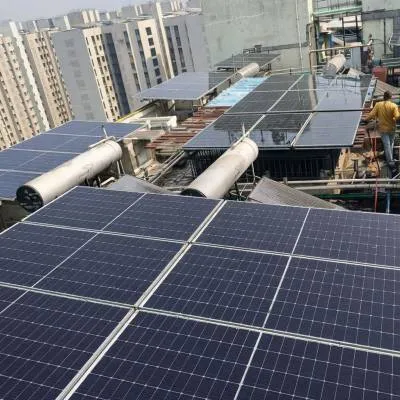
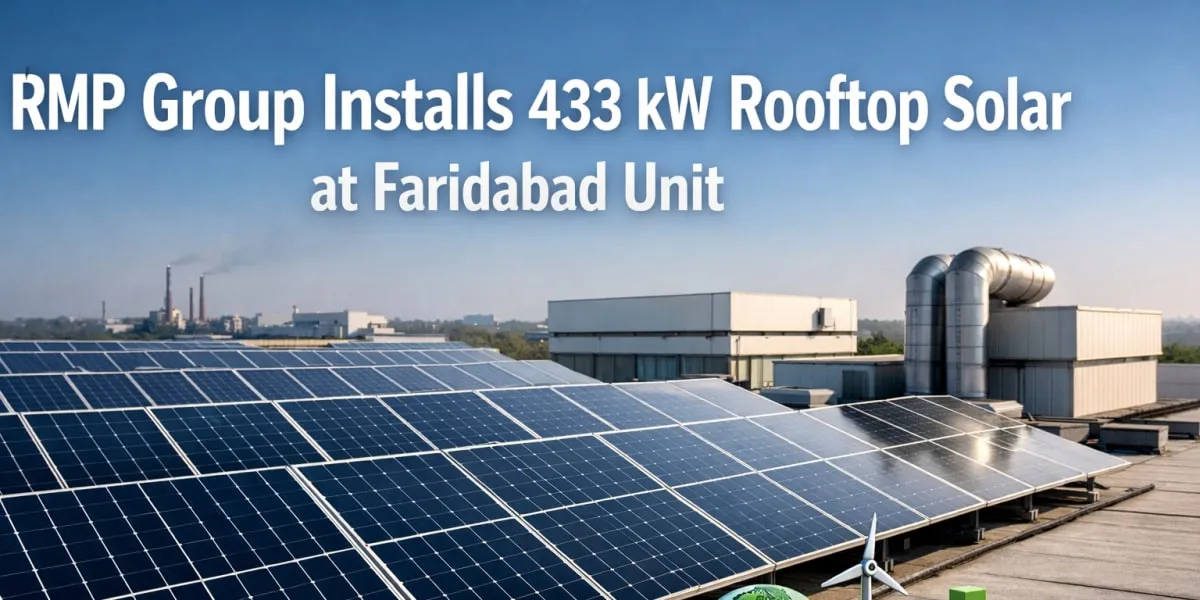
RMP Group has installed a 433 kilowatt (kW) rooftop solar plant at its Faridabad manufacturing unit as part of a staged programme to enhance on-site renewable energy capacity. The installation provides a substantial portion of the unit's daytime electricity demand and reduces reliance on grid supply. The system is configured for on?site consumption to support manufacturing operations and ancillary services. The move follows a broader industry push towards decarbonisation and the adoption of distributed generation at industrial sites.

The 433 kW capacity reflects the aggregate nameplate output of the modules and inverters mounted on available roof area. The plant includes grid connectivity to allow surplus generation to be exported when production exceeds on?site demand. Output is measured in kilowatts and the installation contributes to a steady flow of low?carbon electricity. Design considerations included module orientation and structural assessment of roof loading to ensure long?term performance.

RMP Group described the project as a component of its broader sustainability strategy aimed at lowering operational carbon intensity and improving energy resilience. The company stated that investments in renewable infrastructure at manufacturing sites form part of its commitment to responsible production. The initiative aligns with industry moves to adopt clean energy solutions across supply chains. The company intends to integrate operational data into its sustainability reporting framework and to measure emissions reductions against established baselines.

Company representatives indicated that the installation will deliver long?term reductions in energy expenditure and greenhouse gas emissions at the Faridabad unit. The project serves as a model for potential rollouts at other facilities within the group. The firm plans to monitor performance data to inform optimisation and replication. Ongoing monitoring will guide maintenance schedules and optimise yield over the asset life.

RMP Group has installed a 433 kilowatt (kW) rooftop solar plant at its Faridabad manufacturing unit as part of a staged programme to enhance on-site renewable energy capacity. The installation provides a substantial portion of the unit's daytime electricity demand and reduces reliance on grid supply. The system is configured for on?site consumption to support manufacturing operations and ancillary services. The move follows a broader industry push towards decarbonisation and the adoption of distributed generation at industrial sites. The 433 kW capacity reflects the aggregate nameplate output of the modules and inverters mounted on available roof area. The plant includes grid connectivity to allow surplus generation to be exported when production exceeds on?site demand. Output is measured in kilowatts and the installation contributes to a steady flow of low?carbon electricity. Design considerations included module orientation and structural assessment of roof loading to ensure long?term performance. RMP Group described the project as a component of its broader sustainability strategy aimed at lowering operational carbon intensity and improving energy resilience. The company stated that investments in renewable infrastructure at manufacturing sites form part of its commitment to responsible production. The initiative aligns with industry moves to adopt clean energy solutions across supply chains. The company intends to integrate operational data into its sustainability reporting framework and to measure emissions reductions against established baselines. Company representatives indicated that the installation will deliver long?term reductions in energy expenditure and greenhouse gas emissions at the Faridabad unit. The project serves as a model for potential rollouts at other facilities within the group. The firm plans to monitor performance data to inform optimisation and replication. Ongoing monitoring will guide maintenance schedules and optimise yield over the asset life.

Next Story
Infrastructure Transport

Surya Roshni delivers customised lighting for NCRTC RRTS stations

Surya Roshni has supplied customised indoor lighting solutions for 18 elevated stations on the National Capital Region Transport Corporation's (NCRTC) Rapid Rail Transit System (RRTS), strengthening its presence in India's infrastructure lighting segment.The project involved the design and deployment of lighting systems for platforms, concourses, foot overbridges (FOBs) and back-of-house (BOH) areas. According to the company, the luminaires were developed specifically to meet NCRTC's design, operational and performance requirements rather than using standard products.Surya introduced two custo..

Next Story
Real Estate

Hilton debuts Tapestry Collection brand in Vietnam

Hilton has opened NHAAN Resort & Spa Hoi An, Tapestry Collection by Hilton, marking the debut of the Tapestry Collection brand in Vietnam and expanding its lifestyle hospitality portfolio in Southeast Asia.Located along the Co Co River in Cam Thanh village, the 174-key resort provides access to Hoi An Ancient Town, Cua Dai Beach and the Cam Thanh Nipa Forest. The property has been designed by Vietnamese architect Vo Trong Nghia, incorporating biophilic architecture, locally sourced materials and riverfront landscapes.The resort offers a mix of guest rooms and suites, including family-frien..

Next Story
Building Material

Electrent expands lithium energy storage system portfolio

Electrent Energy has expanded its lithium-based energy storage portfolio with the launch of the ESS 850 and ESS 1050, targeting compact and maintenance-free power backup solutions for Indian homes.The new systems integrate a Home UPS and a LiFePO4 lithium battery into a single unit, extending the company's product range following the launch of its ESS 1350 and ESS 2500 models.Designed for apartments and smaller homes, the ESS 850 provides up to 1 hour 15 minutes of backup, while the ESS 1050 offers up to 1 hour 45 minutes on a typical 400 W household load. The systems can power essential appli..

Advertisement

Subscribe to Our Newsletter

Get daily newsletters around different themes from Construction world.

STAY CONNECTED

Advertisement

Advertisement

Advertisement