State Scales up Renewable Energy Capacity in Line with National Climate Goals
POWER & RENEWABLE ENERGY

State Scales up Renewable Energy Capacity in Line with National Climate Goals

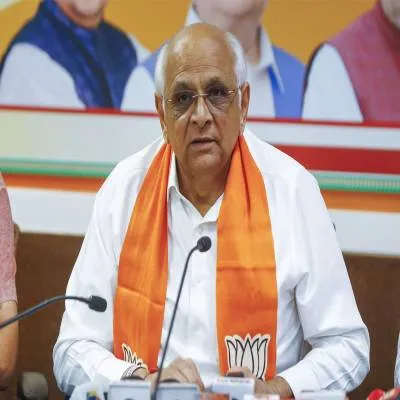
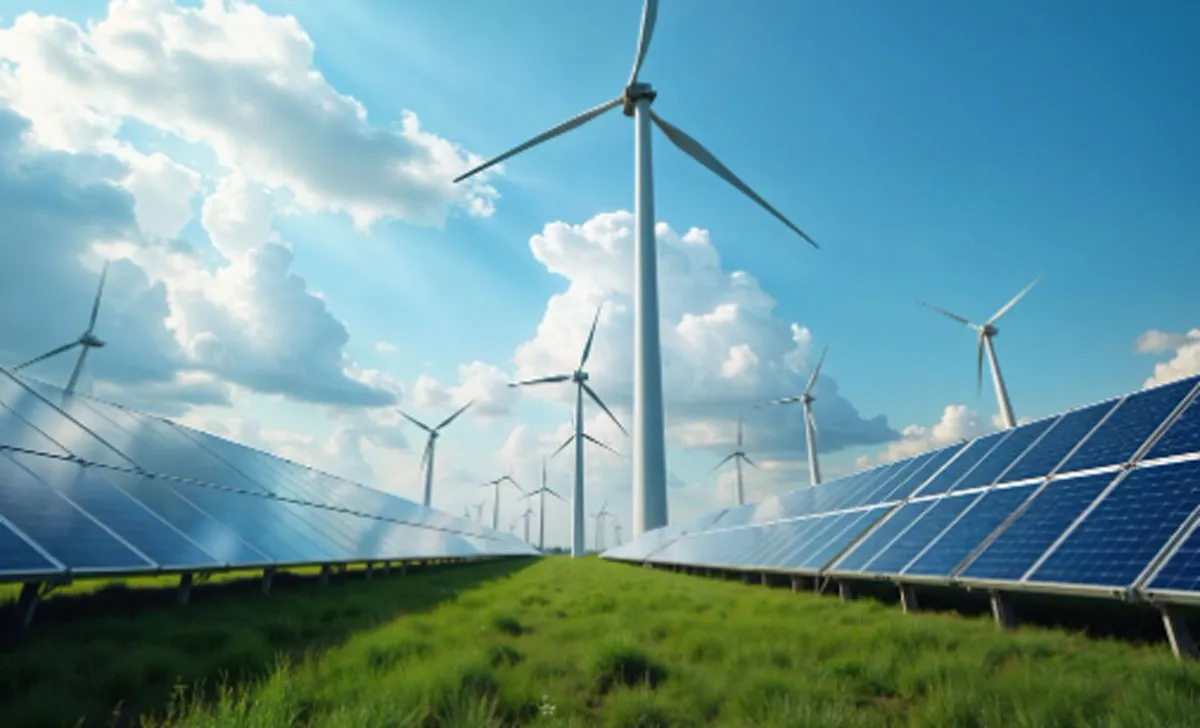
Earlier this month, the Gujarat government introduced the Integrated Renewable Energy Policy–2025 at a State-level event chaired by Chief Minister Bhupendra Patel. The policy replaces technology-specific regulations with a unified framework covering solar, wind, hybrid projects and emerging clean energy technologies. It aligns with India’s Panchamrut commitments, Nationally Determined Contributions under the Paris Agreement, and Gujarat’s vision of Developed Gujarat @2047. The State has set a target of installing over 100 GW of renewable energy capacity by 2030, contributing to India’s 500 GW non-fossil fuel goal.

Officials said the policy focuses on ease of doing business, grid stability and investment certainty. Key provisions include flexible commissioning timelines, revised evacuation planning based on voltage levels, and strong emphasis on energy storage. Battery Energy Storage Systems (BESS), both grid-connected and co-located, are actively promoted, with strategic planning to be undertaken by the Gujarat Energy Development Agency in coordination with GETCO, the State Load Dispatch Centre and distribution companies. The policy also introduces a structured framework for wind turbine repowering and encourages pilot projects in emerging technologies such as ocean energy, geothermal power and agrivoltaics.

Complementing utility-scale reforms, Gujarat has crossed five lakh rooftop solar installations with a cumulative capacity of 1,879 MW under the PM Surya Ghar: Muft Bijli Yojana. Overall, the State has installed more than 11 lakh rooftop systems across categories, achieving 50% of its residential rooftop target ahead of schedule. Subsidies worth ₹3,778 crore have been disbursed so far, supported by simplified regulations and cost waivers.

Energy Minister Rushikesh Patel said the new digital electricity demand planning platform, Urja Sanvardhanam, will play a key role in aligning grid preparedness with rising demand and renewable penetration, supporting Gujarat’s long-term clean energy transition.

News source: ANI

Earlier this month, the Gujarat government introduced the Integrated Renewable Energy Policy–2025 at a State-level event chaired by Chief Minister Bhupendra Patel. The policy replaces technology-specific regulations with a unified framework covering solar, wind, hybrid projects and emerging clean energy technologies. It aligns with India’s Panchamrut commitments, Nationally Determined Contributions under the Paris Agreement, and Gujarat’s vision of Developed Gujarat @2047. The State has set a target of installing over 100 GW of renewable energy capacity by 2030, contributing to India’s 500 GW non-fossil fuel goal.Officials said the policy focuses on ease of doing business, grid stability and investment certainty. Key provisions include flexible commissioning timelines, revised evacuation planning based on voltage levels, and strong emphasis on energy storage. Battery Energy Storage Systems (BESS), both grid-connected and co-located, are actively promoted, with strategic planning to be undertaken by the Gujarat Energy Development Agency in coordination with GETCO, the State Load Dispatch Centre and distribution companies. The policy also introduces a structured framework for wind turbine repowering and encourages pilot projects in emerging technologies such as ocean energy, geothermal power and agrivoltaics.Complementing utility-scale reforms, Gujarat has crossed five lakh rooftop solar installations with a cumulative capacity of 1,879 MW under the PM Surya Ghar: Muft Bijli Yojana. Overall, the State has installed more than 11 lakh rooftop systems across categories, achieving 50% of its residential rooftop target ahead of schedule. Subsidies worth ₹3,778 crore have been disbursed so far, supported by simplified regulations and cost waivers.Energy Minister Rushikesh Patel said the new digital electricity demand planning platform, Urja Sanvardhanam, will play a key role in aligning grid preparedness with rising demand and renewable penetration, supporting Gujarat’s long-term clean energy transition.News source: ANI

Next Story
Infrastructure Urban

Rosatom Delivers Nuclear Fuel for Kudankulam Unit 3

Rosatom has recently supplied nuclear fuel for the initial loading of the VVER-1000 reactor core at Unit 3 of the Kudankulam Nuclear Power Plant, marking a key milestone in the second stage of the Russian-designed nuclear power project in southern India.The fuel was supplied by Rosatom’s Nuclear Fuel Division, managed by TVEL, and manufactured at the Novosibirsk Chemical Concentrates Plant. The delivery includes the initial reactor load along with reserve fuel assemblies and is part of a long-term contract covering the entire operational life of Units 3 and 4.Building on operational experien..

Next Story
Infrastructure Transport

CBL International Enables First LNG Bunkering at Xiaomo Port

CBL International recently completed the first-ever LNG bunkering operation at Xiaomo Port, supplying liquefied natural gas to vessels operated by BYD in support of its maritime decarbonisation strategy. The operation was facilitated through a physical supplier in collaboration with China National Offshore Oil Corporation (CNOOC), which supported the port’s inaugural LNG bunkering activity. The milestone represents a strategic expansion of CBL International's sustainable fuel offerings beyond biofuels, while also diversifying revenue streams. As global shipping intensifies efforts to cut em..

Next Story
Infrastructure Urban

Aimtron, Aurassure Partner for IoT Weather Systems

Aimtron Electronics has recently entered into an OEM manufacturing engagement with Aurassure to produce new-age, IoT-enabled weather and environmental monitoring systems in India. The collaboration supports the growing demand for real-time environmental intelligence across urban, industrial and infrastructure applications. The engagement comes as global focus on climate-risk management and data-driven planning accelerates. The global weather monitoring systems market, valued at around USD 2.1 billion in 2024, is projected to reach nearly USD 4.8 billion by 2034, driven by the rapid adoption o..

Advertisement

Subscribe to Our Newsletter

Get daily newsletters around different themes from Construction world.

STAY CONNECTED

Advertisement

Advertisement

Advertisement

Advertisement

Open In App