+
Telangana Weighs Floating Solar Projects to Meet Rising Demand
POWER & RENEWABLE ENERGY

Telangana Weighs Floating Solar Projects to Meet Rising Demand

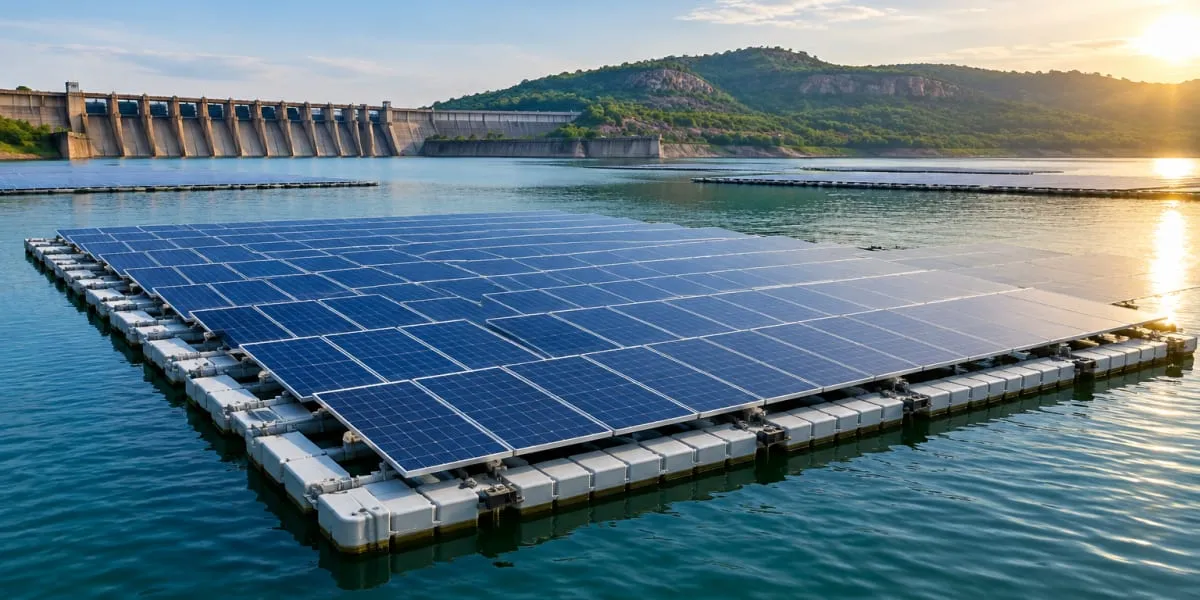
Telangana is assessing floating solar projects on major reservoirs to meet rising electricity demand and reduce the burden of power subsidies, Deputy Chief Minister Mallu Bhatti Vikramarka told the state Assembly. The Energy and Irrigation departments are examining the feasibility of installing such projects at reservoirs including Nagarjunasagar, Srisailam, Pulichintala, Sriramsagar, Sripada Yellampalli, Devadula, Komaram Bheem, Palair, Wyra, Mallannasagar, LMD, Mid Manair and Pocharam.

Vikramarka said floating solar plants had higher costs than conventional ground-mounted projects. Although the Union government had announced viability gap funding of up to Rs. 10 mn per MW, requirements such as the mandatory use of domestically manufactured equipment added about Rs. 13 mn per MW. He said relaxing these conditions could help attract more investors.

The state government spends about Rs. 140 bn a year on free electricity for agricultural pump sets. It also spends another Rs. 50 bn to provide up to 200 free units of power a month to around 5.5 mn households.

Telangana’s peak power demand has increased from about 15,000 MW when the Congress government assumed office in December 2023 to 18,543 MW on September 9, 2026. The government is also examining a pilot project to solarise about 80 villages in the Amrabad tribal region through a micro-grid supplied by solar panels installed on houses.

The state is assessing whether about 670,000 acres distributed to landless tribal families under the Forest Rights Act can be used for solar generation. Vikramarka said floating solar projects would be taken up wherever they were technically and economically viable, and urged legislators to encourage farmers and local communities to explore solar power generation.

Telangana is assessing floating solar projects on major reservoirs to meet rising electricity demand and reduce the burden of power subsidies, Deputy Chief Minister Mallu Bhatti Vikramarka told the state Assembly. The Energy and Irrigation departments are examining the feasibility of installing such projects at reservoirs including Nagarjunasagar, Srisailam, Pulichintala, Sriramsagar, Sripada Yellampalli, Devadula, Komaram Bheem, Palair, Wyra, Mallannasagar, LMD, Mid Manair and Pocharam. Vikramarka said floating solar plants had higher costs than conventional ground-mounted projects. Although the Union government had announced viability gap funding of up to Rs. 10 mn per MW, requirements such as the mandatory use of domestically manufactured equipment added about Rs. 13 mn per MW. He said relaxing these conditions could help attract more investors. The state government spends about Rs. 140 bn a year on free electricity for agricultural pump sets. It also spends another Rs. 50 bn to provide up to 200 free units of power a month to around 5.5 mn households. Telangana’s peak power demand has increased from about 15,000 MW when the Congress government assumed office in December 2023 to 18,543 MW on September 9, 2026. The government is also examining a pilot project to solarise about 80 villages in the Amrabad tribal region through a micro-grid supplied by solar panels installed on houses. The state is assessing whether about 670,000 acres distributed to landless tribal families under the Forest Rights Act can be used for solar generation. Vikramarka said floating solar projects would be taken up wherever they were technically and economically viable, and urged legislators to encourage farmers and local communities to explore solar power generation.

Related Stories

Gold Stories

Next Story
Real Estate

BMC OC Amnesty Scheme Requires Key Approvals from Mumbai Societies

The Brihanmumbai Municipal Corporation (BMC) has clarified that housing societies applying under its Occupation Certificate (OC) amnesty scheme must possess key approvals linked to the original construction. The requirements include a valid Intimation of Disapproval (IOD), an approved building plan and a Commencement Certificate (CC), along with a No Objection Certificate (NOC) from the developer or original construction applicant. The Standard Operating Procedure (SOP) makes clear that the absence of an OC alone will not qualify a building for relief. Societies must establish that their build..

Next Story
Real Estate

Gurugram Emerges as Luxury Senior Living Hub

Gurugram is emerging as a potential hub for luxury senior living, supported by available land, healthcare infrastructure, connectivity and a concentration of affluent professionals, high-net-worth individuals and non-resident Indians. These factors could give the city an advantage over land-constrained metros such as Mumbai. A report by the Association of Senior Living India (ASLI) and JLL estimates that India’s organised senior living market could represent a $10.1 bn opportunity by 2030. The sector had about 25,050 organised units as of June 2026, while penetration stood at only 1.5 per ce..

Next Story
Real Estate

Corrosion Costs India’s Infrastructure Rs. 142 bn Annually

Corrosion costs India an estimated Rs. 1.42 tn annually, equivalent to 4.3 per cent of gross domestic product, according to a report by the Confederation of Indian Industry and the National Research Institute. Infrastructure accounts for Rs. 142 bn of the annual burden, making it the sector with the largest absolute cost among those examined. The report, presented at the CII Annual Infrastructure Summit 2026, said the infrastructure-sector cost equals about 2.9 per cent of the sector’s gross domestic product. It estimated that effective measures could generate maximum savings of Rs. 495.8 bn..

Advertisement

Subscribe to Our Newsletter

Get daily newsletters around different themes from Construction world.

STAY CONNECTED

Advertisement

SPECIAL OFFER
QR Code