+
Tripura Targets 500 MW Renewable Energy Capacity by 2030
POWER & RENEWABLE ENERGY

Tripura Targets 500 MW Renewable Energy Capacity by 2030

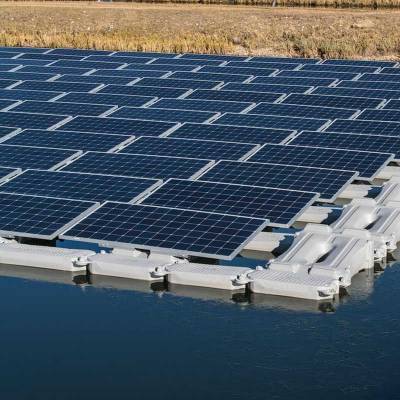
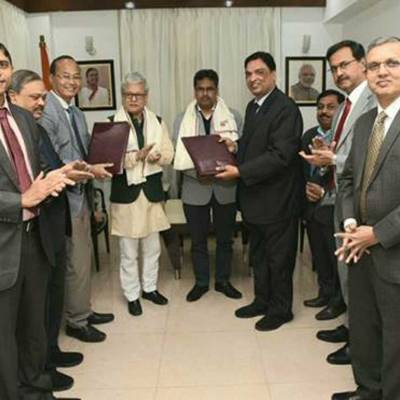
Tripura has set a target of achieving 500 MW of renewable energy capacity by 2030, Power Minister Ratan Lal Nath said at the launch of the Tripura Clean Energy Roadmap, Green Skilling Programme and TREAT Initiative Workshop in Agartala. The state plans to expand clean energy generation while developing a skilled workforce for its growing solar sector.

Nath said the UTSA, or Unnayan through Transformative Solar Applications, programme would support skills development for the renewable energy industry. The Tripura Renewable Energy Development Agency (TREDA), in collaboration with the Tripura Rural Livelihood Mission (TRLM) and Tripura State Electricity Corporation (TSECL), is implementing training programmes including Suryamitra and Solar PV Technician.

The programme is supported by the Ministry of New and Renewable Energy and aligned with an Asian Development Bank-supported initiative for transforming renewable energy in Tripura. The minister said central and state schemes were extending clean energy access to farmers, households, public institutions and communities through solar pumps, rooftop systems, micro-grids, green hydrogen, micro hydel projects, pumped storage, battery storage and biogas.

Tripura currently has around 58.76 MW of renewable energy capacity. Under PM-KUSUM, 9,401 solar pumps have been installed and another 1,709 are under implementation, supporting nearly 18,802 acres. Solarisation of 1,341 grid-connected pumps is generating 4.40 mn units annually, saving around Rs. 7.67 mn and enabling farmers to produce clean energy.

Solar micro-grids are supplying clean energy to around 9,762 families under PM-DevINE and 1,703 households under PM-JANMAN. Nath said the state had received national recognition for its renewable energy work, including an award in 2025 for its 2.09 MW solar micro-grid project and recognition as the best-performing Northeastern state for installing solar pumps under PM-KUSUM.

The 500 MW target will include green villages, rooftop solar on government buildings and homes, ground-mounted plants, micro-grids and decentralised renewable energy-based livelihood applications. Nath said UTSA would support the Tripura Energy Vision 2030 and the 6Ds Clean Energy Road Map 2025-2035 by preparing personnel for rooftop solar, mini-grids and battery storage projects.

Tripura has set a target of achieving 500 MW of renewable energy capacity by 2030, Power Minister Ratan Lal Nath said at the launch of the Tripura Clean Energy Roadmap, Green Skilling Programme and TREAT Initiative Workshop in Agartala. The state plans to expand clean energy generation while developing a skilled workforce for its growing solar sector. Nath said the UTSA, or Unnayan through Transformative Solar Applications, programme would support skills development for the renewable energy industry. The Tripura Renewable Energy Development Agency (TREDA), in collaboration with the Tripura Rural Livelihood Mission (TRLM) and Tripura State Electricity Corporation (TSECL), is implementing training programmes including Suryamitra and Solar PV Technician. The programme is supported by the Ministry of New and Renewable Energy and aligned with an Asian Development Bank-supported initiative for transforming renewable energy in Tripura. The minister said central and state schemes were extending clean energy access to farmers, households, public institutions and communities through solar pumps, rooftop systems, micro-grids, green hydrogen, micro hydel projects, pumped storage, battery storage and biogas. Tripura currently has around 58.76 MW of renewable energy capacity. Under PM-KUSUM, 9,401 solar pumps have been installed and another 1,709 are under implementation, supporting nearly 18,802 acres. Solarisation of 1,341 grid-connected pumps is generating 4.40 mn units annually, saving around Rs. 7.67 mn and enabling farmers to produce clean energy. Solar micro-grids are supplying clean energy to around 9,762 families under PM-DevINE and 1,703 households under PM-JANMAN. Nath said the state had received national recognition for its renewable energy work, including an award in 2025 for its 2.09 MW solar micro-grid project and recognition as the best-performing Northeastern state for installing solar pumps under PM-KUSUM. The 500 MW target will include green villages, rooftop solar on government buildings and homes, ground-mounted plants, micro-grids and decentralised renewable energy-based livelihood applications. Nath said UTSA would support the Tripura Energy Vision 2030 and the 6Ds Clean Energy Road Map 2025-2035 by preparing personnel for rooftop solar, mini-grids and battery storage projects.

Related Stories

Gold Stories

Next Story
Real Estate

BMC OC Amnesty Scheme Requires Key Approvals from Mumbai Societies

The Brihanmumbai Municipal Corporation (BMC) has clarified that housing societies applying under its Occupation Certificate (OC) amnesty scheme must possess key approvals linked to the original construction. The requirements include a valid Intimation of Disapproval (IOD), an approved building plan and a Commencement Certificate (CC), along with a No Objection Certificate (NOC) from the developer or original construction applicant. The Standard Operating Procedure (SOP) makes clear that the absence of an OC alone will not qualify a building for relief. Societies must establish that their build..

Next Story
Real Estate

Gurugram Emerges as Luxury Senior Living Hub

Gurugram is emerging as a potential hub for luxury senior living, supported by available land, healthcare infrastructure, connectivity and a concentration of affluent professionals, high-net-worth individuals and non-resident Indians. These factors could give the city an advantage over land-constrained metros such as Mumbai. A report by the Association of Senior Living India (ASLI) and JLL estimates that India’s organised senior living market could represent a $10.1 bn opportunity by 2030. The sector had about 25,050 organised units as of June 2026, while penetration stood at only 1.5 per ce..

Next Story
Real Estate

Corrosion Costs India’s Infrastructure Rs. 142 bn Annually

Corrosion costs India an estimated Rs. 1.42 tn annually, equivalent to 4.3 per cent of gross domestic product, according to a report by the Confederation of Indian Industry and the National Research Institute. Infrastructure accounts for Rs. 142 bn of the annual burden, making it the sector with the largest absolute cost among those examined. The report, presented at the CII Annual Infrastructure Summit 2026, said the infrastructure-sector cost equals about 2.9 per cent of the sector’s gross domestic product. It estimated that effective measures could generate maximum savings of Rs. 495.8 bn..

Advertisement

Subscribe to Our Newsletter

Get daily newsletters around different themes from Construction world.

STAY CONNECTED

Advertisement

SPECIAL OFFER
QR Code