UERC Keeps Uttarakhand Solar Tariff for 2026-27
POWER & RENEWABLE ENERGY

UERC Keeps Uttarakhand Solar Tariff for 2026-27

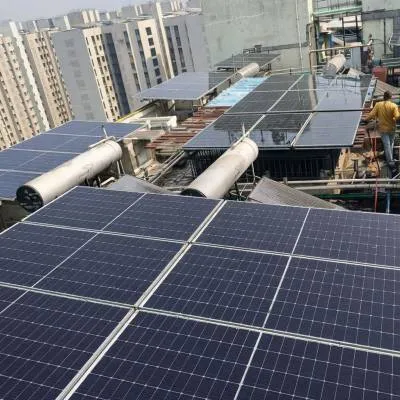
The Uttarakhand Electricity Regulatory Commission (UERC) has finalised generic renewable energy tariffs for financial year 2026-27 after considering submissions from 36 stakeholders. The commission retained the solar photovoltaic tariff at Rs four point ten per kilowatt hour (kWh), reversing a draft proposal that had proposed Rs three point ninety six per kWh. The decision followed stakeholder concerns over module price volatility, exchange rate movement and rising metal prices.

Within the same tariff framework canal bank single point mooring solar photovoltaic plants were aligned at Rs four point ten per kWh while canal top installations were set at Rs four point twenty per kWh. Rooftop and small solar photovoltaic installations under net metering were fixed at Rs two point zero zero per kWh. The commission also noted additional costs associated with hilly terrain and compliance with the approved list of models and manufacturers and domestic content requirements.

The order established battery energy storage system (BESS) capacity charges at Rs 259,244 per megawatt (MW) per month for systems commissioned in FY 2026-27 and provided a methodology for monthly recovery of capacity costs. The commission said the charge reflects capital and operating cost considerations for storage assets and will apply to hybrid projects that pair storage with solar PV. Stakeholders had submitted comments on charging cycles and seasonal variability and the commission addressed those technical points in the final order.

The commission clarified that micro, small and medium enterprise policy incentives will not be treated as a reduction to the solar PV benchmark cost or tariff unless such support is directly linked to project development. The final order intends to provide certainty to developers and distribution companies while recognising regional cost differentials. The Ministry of New and Renewable Energy was cited as the source of technical inputs in the commission note and the commission said the measure seeks to balance investor viability with consumer interest.

The Uttarakhand Electricity Regulatory Commission (UERC) has finalised generic renewable energy tariffs for financial year 2026-27 after considering submissions from 36 stakeholders. The commission retained the solar photovoltaic tariff at Rs four point ten per kilowatt hour (kWh), reversing a draft proposal that had proposed Rs three point ninety six per kWh. The decision followed stakeholder concerns over module price volatility, exchange rate movement and rising metal prices. Within the same tariff framework canal bank single point mooring solar photovoltaic plants were aligned at Rs four point ten per kWh while canal top installations were set at Rs four point twenty per kWh. Rooftop and small solar photovoltaic installations under net metering were fixed at Rs two point zero zero per kWh. The commission also noted additional costs associated with hilly terrain and compliance with the approved list of models and manufacturers and domestic content requirements. The order established battery energy storage system (BESS) capacity charges at Rs 259,244 per megawatt (MW) per month for systems commissioned in FY 2026-27 and provided a methodology for monthly recovery of capacity costs. The commission said the charge reflects capital and operating cost considerations for storage assets and will apply to hybrid projects that pair storage with solar PV. Stakeholders had submitted comments on charging cycles and seasonal variability and the commission addressed those technical points in the final order. The commission clarified that micro, small and medium enterprise policy incentives will not be treated as a reduction to the solar PV benchmark cost or tariff unless such support is directly linked to project development. The final order intends to provide certainty to developers and distribution companies while recognising regional cost differentials. The Ministry of New and Renewable Energy was cited as the source of technical inputs in the commission note and the commission said the measure seeks to balance investor viability with consumer interest.

Next Story
Building Material

Saint-Gobain, CEPT partner on sustainable construction

Saint-Gobain and CEPT University have entered into a strategic partnership to establish a Tech Commons Centre aimed at advancing research, innovation and skill development in sustainable and energy-efficient construction.The centre will serve as a platform for building science research, prototyping, industry collaboration and knowledge exchange, bringing together Saint-Gobain's expertise in sustainable construction and CEPT's capabilities in education and research. The collaboration will focus on sustainability, energy efficiency, climate resilience and wellbeing in the built environment.Accor..

Next Story
Building Material

Aludecor launches Stonic ACP surface series

Aludecor Lamination has launched its Stonic aluminium composite panel (ACP) surface series and the second phase of its 'Test Nahi Toh Trust Nahi' campaign as part of its 24th Foundation Day celebrations.Inspired by the natural craquelure patterns found in aged stone, the Stonic series is available in seven finishes and has been developed using the company's Spray Fusion technology. The ACP range is designed for use in façades, feature walls, entranceways, soffits, balcony fascia, ceilings and other commercial, residential and hospitality applications.The company also introduced 'The Fikar-Fre..

Next Story
Real Estate

NABARD, MAHAPREIT partner on rural green infrastructure

NABARD has signed a memorandum of understanding (MoU) with Mahatma Phule Renewable Energy and Infrastructure Technology (MAHAPREIT) to finance and promote green, climate-resilient infrastructure in rural India, with an initial focus on Maharashtra.The partnership will combine NABARD's expertise in rural development and climate finance with MAHAPREIT's experience in renewable energy and sustainable infrastructure. The collaboration will identify, develop and finance projects aimed at strengthening village infrastructure, Panchayati Raj Institutions and other community assets.Priority areas incl..

Advertisement

Subscribe to Our Newsletter

Get daily newsletters around different themes from Construction world.

STAY CONNECTED

Advertisement

Advertisement

Advertisement