+
Cement demand expected to rise by up to 20% in fiscal 2022: ICRA
Cement

Cement demand expected to rise by up to 20% in fiscal 2022: ICRA

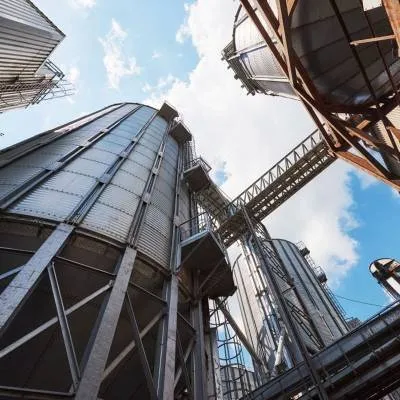
Cement demand is expected to increase by up to 20 per cent in the next fiscal year with volume touching FY19-FY20 levels, rating agency ICRA has said in the second week of January 2021. "...

Cement demand is expected to increase by up to 20 per cent in the next fiscal year with volume touching FY19-FY20 levels, rating agency ICRA has said in the second week of January 2021. ICRA expects cement demand to increase by 18-20 per cent in FY2022 over FY2021 with the volumes reaching back to around FY2019-FY2020 levels, the rating agency said in a statement. The growth would be supported by rural demand, including affordable housing, and recovery in infrastructure segment. The volume growth is also likely to support operating margins in FY22 at around 20 to 21 per cent, notwithstanding some cost-side pressures, it added. Capacity additions are expected to get back to around 20-22 MTPA (million tons per annum) in FY2022 from around 15-17 MTPA in FY2021, it said. The eastern region is likely to lead the expansion by adding around 15-17 MTPA capacity during the said period. With the revival in demand in FY2022 by around 20 per cent, the utilization is likely to improve to around 64 per cent during the fiscal from the low levels of 56 per cent in the earlier year..., it said. On input costs, it said, while coal prices continue to remain soft, pet coke prices have increased in the recent months. Diesel prices also have increased in the current fiscal. Further, with pet coke and diesel prices linked to crude, the prices are likely to remain elevated, it said. Going forward, coal price will remain sensitive to demand from China and India, and to the extent of change in the energy mix from coal to natural gas and renewables globally. ICRA Assistant Vice President Anupama Reddy said rural offtake is likely to be supported by positive farm sentiment with timely rabi sowing and favourable groundwater and reservoir levels, which are likely to boost rabi yields. The traction in Pradhan Mantri Awas Yojana-Gramin (PMAY-Gramin) is expected to continue and PMAY-Urban has also picked up faster in recent months as against other housing segments owing to low ticket sizes and government incentives. Although urban housing has also seen a pick up in the recent months in select markets, the sustainability remains to be seen, she said. In addition, the recent announcements, with focus on real estate, PMAY-Urban and infrastructure sector as part of the 'Atmanirbhar Bharat 3.0' package, are likely to support cement demand. On the infrastructure side, the pace of execution of projects in the transportation segment - roads, metros, railways and airports - is expected to aid cement volume expansion going forward, Reddy added. According to the Cement Manufacturers Association (CMA), the total installed capacity in Indian cement sector is approximately 545 million tons per annum and it is the fourth-largest revenue contributor to the exchequer. The Indian cement sector accounts for over 7 per cent of the global installed capacity and is the second-largest in the world after China, as per the CMA.

Next Story
Infrastructure Urban

Implementation Status of Jal Jeevan Mission

Since August 2019 the Government has implemented Jal Jeevan Mission to provide assured potable water through household tap connections in rural India. At the start of the mission only 32.3 million (mn) rural households, representing 16.7 per cent, were reported to have tap water connections. States and union territories have reported that 125.8 mn additional rural households have since been provided with tap connections. As a result, of about 193.6 mn rural households roughly 158.2 mn, or 81.71 per cent, are reported to have tap water supply at home.\n\nThe State, district and village level st..

Next Story
Infrastructure Urban

Jal Jeevan Mission Reaches Eighty One Per Cent Rural Coverage

The Government reported substantial progress under the Jal Jeevan Mission, launched in August 2019 to provide tap water to every rural household. At launch only 32.3 million (mn) rural households had tap connections and states and Union territories reported provision of 125.8 mn additional households by March 2026. Consequently, out of about 193.6 mn rural households around 158.2 mn, or 81.71 per cent, are reported to have tap water at home. The Finance Minister announced extension of the mission until 2028 in the 2025-26 budget speech. The Swachh Bharat Mission Grameen, launched in October 20..

Next Story
Infrastructure Urban

Empowering Local Governance for Sustainable Rural Water Supply

The Ministry of Jal Shakti has aligned the Jal Jeevan Mission (JJM) with the 73rd Amendment to strengthen village level planning and community ownership of water supply. Gram Panchayats, village water and sanitation committees and Pani Samitis are to plan, implement, manage and maintain piped water systems, with gram sabha processes formalising handover and oversight. Implementation support agencies including non government organisations, community based organisations and self help groups have been empanelled to train local committees and promote women participation. Under JJM, the department ..

Advertisement

Subscribe to Our Newsletter

Get daily newsletters around different themes from Construction world.

STAY CONNECTED

Advertisement

Advertisement

Advertisement