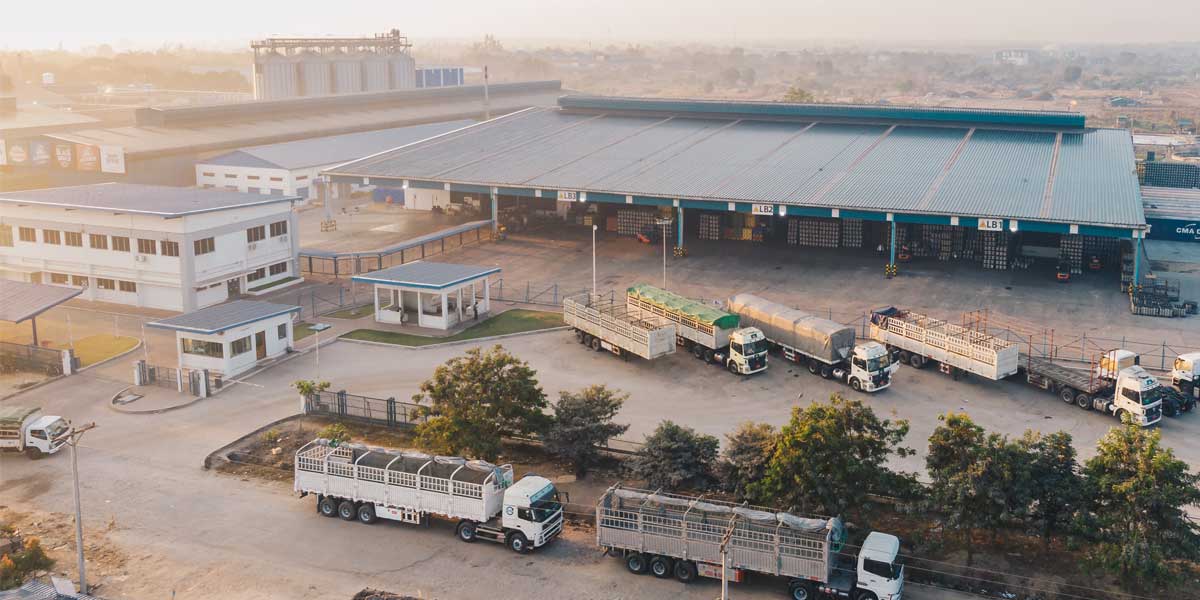
Cement Distribution: Objective functions and alignment
Cement

Cement Distribution: Objective functions and alignment

Conventional metrics in cement distribution would lead us from the factory gates to the final consumption point and to the role of efficiency in distribution with a range of intra-firm channel partners embedded in the chain from exclusivity to inclusivity, but that does not answer many questions tha...

Conventional metrics in cement distribution would lead us from the factory gates to the final consumption point and to the role of efficiency in distribution with a range of intra-firm channel partners embedded in the chain from exclusivity to inclusivity, but that does not answer many questions that must be asked if a number of objective functions have to be met. The performance of a channel can be measured across multiple dimensions. The parameters that are measured usually are effectiveness, efficiency, productivity, equity and profitability of the channel. Cement Industry as a whole has settled for some objectives that remain non-negotiable, while there are new objects on the horizon for the future, sustainability being one of them. As a substantial percentage of the cost is embedded in logistics, the focus on logistics therefore subsumes many of the other competing objective functions, sustainability will not make it less onerous. The indispensable element The Indian cement industry has recently moved beyond the base requirements of ROCE. Some of the leaders demonstrate that they can deliver returns that fully exceed the cost of capital, equity included, but those heavily invested have some catching up to do. It is in this context that the distribution channel assumes far more importance as quite a substantial component of the capital is employed in the service of distributing cement to the end consumer; working capital embedded in the channel plays a distinct role in improving ROCE. Distribution data among industry firms is not readily available as transparently nor are they used for benchmarking. But indirectly the data shows that in most firms as high as 25 per cent of the capital employed is in the working capital for servicing inventory and receivables alone. This may not be obvious if one goes by the peculiarity of the cement industry, with a channel structure built around distributing from the cement producing plant to the market within a catchment area of at maximum 300km on average as otherwise transportation cost would be too high to make the distribution economical. Thus the network optimisation programmes run to see how the transportation cost could be optimised with an Integrated plant approach versus a Hub & Spoke with several models of channels around them. But either way an average outbound logistics cost of Rs 1,350/T for the industry (all models aggregated) talks of 25 per cent of the cost of sales dedicated to the distribution logistics alone. Capital and costs The focus on logistics cost leads the industry to use inventory buffers that can effectively reduce this cost through shipment bundles, utilisation of logistics capacity and scale densities as well, with warehousing capacity as an important piece of the puzzle. The channel partners also play a role in ensuring that the logistics cost remains the primary focus at all times and thus demand aggregation must fulfill logistics cost minimisation. This is where the objective functions clash with each other and working capital must also be included as an equally potent metric. A shift away from logistics cost as the primary metric and including total cash blocked in the distribution would perhaps ensure a fairer share of the importance of cash conversion as an important driver of business results. Cement supply chains starting from factory to the consumption point (almost a majority of the cases) work on the push-mode with the decoupling points as warehousing facilities or large exclusive dealerships who work as distributors to the final retail outlets in dealer shops. Vertical integration as attempted in Ready Mix Concrete supply chains (who also become decoupling points) work much better in smoothening the demand supply equation and thus closer to Just-in-Time methods as visible signs that take out a sizeable chunk of inventory holding waiting for demand aggregation. This is still a minuscule component of the overall pie, thus pull systems remain low in penetration. The end-to-end supply chain of cement must on the other hand streamline product concepts to market, rationalizing product portfolio and drive smart assortment plans and allocation strategies across the distribution chain. For this, a prediction of the market demand (almost on a daily basis) for each product in the portfolio while optimising inventory in a multi-echelon distribution channel comes as the most challenging task as cost effective throughput would mean logistics cost minimisation while that could raise the cost of working capital in the entire channel. Streamlined processes Gaining access to tailored data, integrating signals well in advance and providing a positive supply to quickly meet demand requirements though smart allocation is where the current technologies are headed; local optima versus the global is where the blind spots confront the more onerous objectives of the business; thus inventory and receivable management could have a sharper tool as aids in decision support systems. The various channels have different purposes in the value chain; however, each task needs to support the overall corporate goals. As the number of channel partners increase, it is difficult to ensure that the channel partners are performing their specific roles as effectively as required. Aligning corporate objectives all through the chain remains a challenging task, especially with more sobering tasks mandated by Net Zero are already on the anvil. Driving sustainability together with the channel partners would ensure that accountability for the environment reaches to the furthest precincts of the channel right up to the customer; educating the customer on construction materials and sustainability then would be more comprehensive. - Procyon Mukherjee

Next Story
Infrastructure Transport

Shivraj Chouhan Launches PMGSY IV and Announces Package for Madhya Pradesh

Union Minister Shivraj Singh Chouhan launched the Pradhan Mantri Gram Sadak Yojana (PMGSY) IV at Bhairunda in Sehore district during the 25 year celebrations and announced a development package for Madhya Pradesh. The programme was organised by the Union Ministry of Rural Development and attended by Chief Minister Dr Mohan Yadav, ministers of state, state ministers, legislators and senior officials from the centre and the state. The minister said the central government under the Prime Minister is committed to strengthening rural livelihoods through improved connectivity, housing and women's in..

Next Story
Infrastructure Urban

DMR Engineering Reports FY 25-26 Financial Results

DMR Engineering reported its half year results for the financial year ended 31 March 2026 and published full year figures on a standalone basis. Standalone revenue from operations decreased by 2.01 per cent year-over-year to Rs 102.58 million (mn), while profit after tax declined by 43.94 per cent to nine point five six mn, leaving a profit after tax margin of nine point zero five per cent. Earnings per share stood at Rs zero point nine two, a fall of 44.71 per cent year-over-year. The company attributed part of the decline to one-off provisioning for bad debts and additional financing charges..

Next Story
Infrastructure Urban

Atlanta Electricals Posts Strong FY26 Growth And Debt Free Finish

Atlanta Electricals reported audited consolidated results for the quarter and year ended 31 March 2026. The company recorded significant year-on-year revenue growth driven by capacity ramp-up at new facilities and higher utilisation at legacy plants. The announcement summarised operating improvements and strategic milestones achieved during the year. For Q4 the company reported revenue of Rs 7.48 bn and for FY26 revenue of Rs 18.52 bn, representing robust growth versus the prior year. EBITDA in Q4 was Rs. 1.49 bn and Rs. 3.44 bn for the full year, with margins expanding to 20 per cent in the q..

Advertisement

Subscribe to Our Newsletter

Get daily newsletters around different themes from Construction world.

STAY CONNECTED

Advertisement

Advertisement

Advertisement