India has been rapidly changing for the past decade. The pace for infrastructure construction has picked up substantially and many foreign firms have entered the country. All this has necessitated substantially increased pace of work, higher quality standards, and health, safety and environment standards matching international norms.
On the other hand, the availability of competent engineers and skilled manpower has decreased owing to easy access to more comfortable jobs for engineers and a tendency to run away from the hard conditions of project execution. With these challenges and the fact that projects can be bagged only at competitive prices, there is a dire need for out-of-the-box, non-conventional solutions. And many of these must be based on the premise that there will be a huge shortage of skilled manpower considering the increasing scales of work.
In fact, productivity or the total economic output per worker has remained flat in the construction industry. In comparison, productivity has grown 1,500 per cent in retail, manufacturing and agriculture since 1945. One of the reasons for this is that construction is one of the most under-digitised industries in the world and slow to adopt new technologies. As the saying goes, ‘If you’re not growing and adapting, you’re dead.’ Companies that stagnate tend to be left behind by a fast-moving, forward-thinking commercial environment.
The so-called ‘brick-and-mortar’ industry is entering the digital age and the time is right to set up a real digital strategy in construction for continuous success in the years to come. The following construction technologies are currently available.
AI and IoT
In simple terms, artificial intelligence or AI is a computational software that learns from data gathered from sensors, humans and experiences, and can perform tasks that normally require different forms of natural intelligence. The use of AI in construction is gaining market traction and attention, from geotechnical engineering for soil analysis to throwaway sensors and algorithms that can more accurately predict concrete curing times. A few early-stage examples for firms to take advantage of AI range from lowering project costs and driving efficiency, ensuring on-schedule production and delivery and remote performance monitoring to improving safety and compliance.
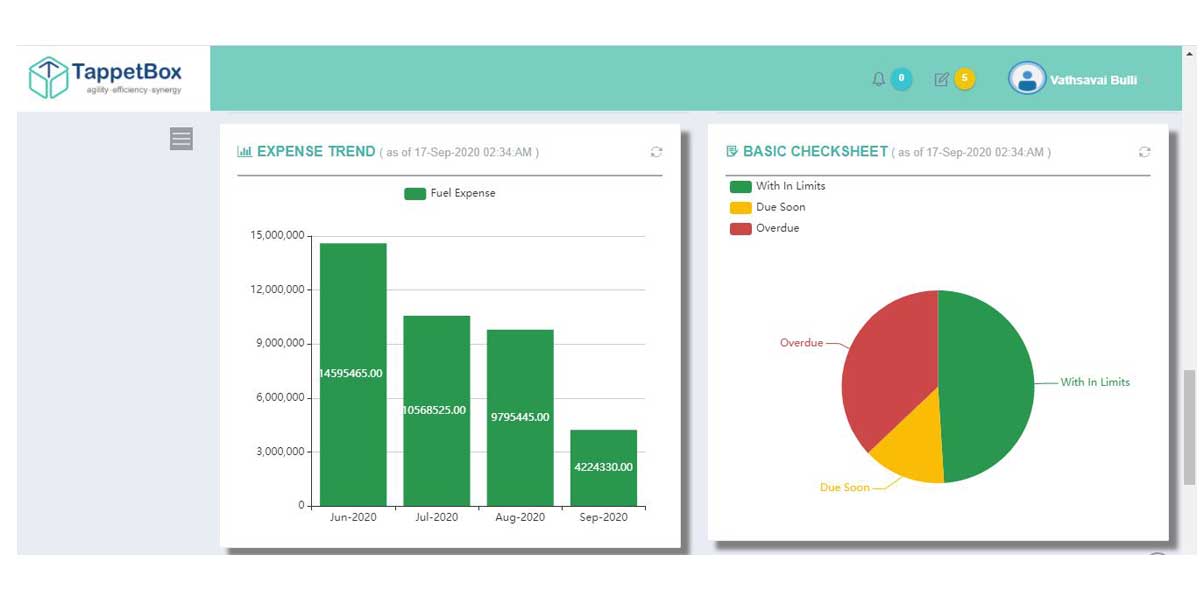
Internet of Things (IOT) sensors for remote monitoring of construction equipment coupled with the ability to perform analytics of status and location can be employed to reduce costs and limit the idle time of machines. At NCC, we are using IOT-based sensors in our Samrudhi Expressway project to monitor the huge fleet of construction equipment being deployed to execute the Rs 2,800-crore 74-km greenfield project.
An AI technique like reinforcement learning, which allows algorithms to learn based on trial and error,
has the potential to improve project planning and scheduling through enabling the assessment of
endless combinations and alternatives based on similar projects, optimising the best path and self-correcting over time.
VR and AR
Virtual reality (VR) refers to the creation of an entirely simulated environment and has a relatively
long history in construction, particularly to view how any project will look once completed. Augmented reality (AR) involves superimposing computer-oriented images and information on real-world images.
Construction managers would be able to use AR to do a walkthrough of a site while viewing overlay building information modelling (BIM) on top of the physical view to assess and compare changes and review project documentation. They could then instantly take pictures or video record the AR walkthrough and send it back to the design team for clarification if an issue arises. VR and AR can allow the construction team to detect errors ahead of time and avoid costly mistakes. With AR, an architect would be able to hold a smart phone or tablet with the camera facing the site and view a scaled-up model of the design. These real-time visualisations allow stakeholders more insight into the finer details and progress of construction projects than would otherwise be
accessible via 2D drawings and plans.
Further, job safety can be vastly improved through the use of AR and VR tech within construction. AR and VR
can be used to increase the awareness of job site conditions without physically subjecting managers or workers to safety hazards.
BIM
BIM is an intelligent 3D model-based process that gives architecture, engineering and construction (AEC) professionals the insight and tools to more efficiently plan, design, construct and manage buildings and infrastructure. We are using 3D BIM in our EPC projects, like AIIMS, Bathinda, which is a 750-bed hospital.
We are also in discussions with Trimble for the Trimble Constructible BIM solution for our Metro Bhavan
project in Mumbai. This 150-m high-rise building has a command control room from where all metro operations will be controlled and monitored. The BIM solution includes modelling, clash detection, construction documentation, quantity estimation, construction planning, team collaboration and progress monitoring. The features and benefits are as follows:
Higher level of detail (LOD) constructible 3D BIM model helps execute projects, extract quantities, establish bar-bending schedules, prepare shop drawings, etc
Concrete pour planning, project scheduling and project visualisation
Integrated solution to complete tasks from design and detailing to estimation and project planning
Cloud-based service connectivity between design office and site office
Eliminates rework
Controls material wastage
Helps better decision-making with 3D model visualisation of actual work.
Getting future-ready at NCC
At NCC, we are focusing on implementing the following protocols and technologies:
Transform the existing ERP to a next-generation ERP
Establish IOT-based equipment productivity monitoring across all machines to know the real-time visibility of utilisation, integrate with all types of OEMs and get advanced analytics for preventive maintenance
Digitisation in material management for simplified ordering, tracking of inventories and deliveries and analytics to identify leakages
5D BIM platform to drive significant efficiencies across the project lifecycle, from design and planning to project management and cost-tracking
In project management, digital lean planning for planning and progress, mobile-based procedures for processes and workflow, RFID technology for material management, IoT for manpower and equipment, drone 3D scanning for quantity surveying, AR in quality management and smart PPE for health and safety
Productivity and profitability are undoubtedly interconnected. For the construction industry, achieving improved productivity for better profitability has always been a challenge. The only way to overcome it is through amalgamation of technologies in workflows.About the Author: PNVS Murthy, Vice-President – Technical, NCC Ltd, has been working for the company for the past 26 years. He is project coordinator for the Lucknow and Mumbai regions.